Hematology Branch, National Heart, Lung, and Blood Institute, National Institutes of Health, Bldg 10-CRC, Rm 3E-5216, 9000 Rockville Pike, Bethesda, MD 20892, USA.
BMC Med Genet. 2014 Jun 19;15:68. doi: 10.1186/1471-2350-15-68.
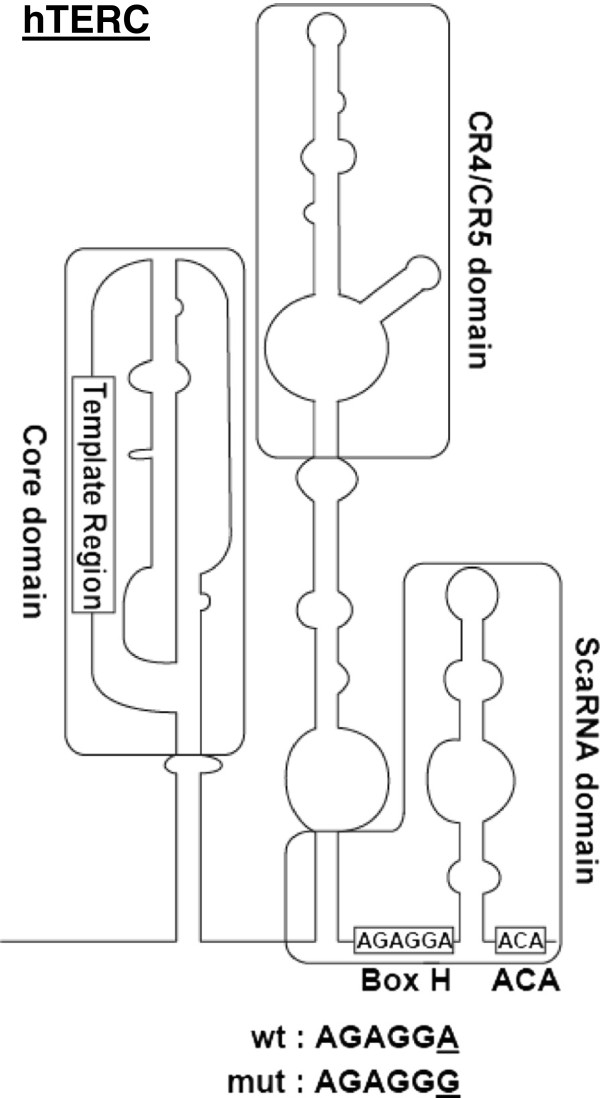
Telomeres are repeated sequences (the hexanucleotide TTAGGG in vertebrates) located at chromosome ends of eukaryotes, protecting DNA from end joining or degradation. Telomeres become shorter with each cell cycle, but telomerase, a ribonucleoprotein complex, alleviates this attrition. The telomerase RNA component (TERC) is an essential element of telomerase, serving as a template for telomere elongation. The H/ACA domain of TERC is indispensable for telomere biogenesis. Mutations in the telomerase components allow accelerated telomere loss, resulting in various disease manifestations, including bone marrow failure. To date, this is the first detailed report of an H-box mutation in TERC that is related to human disease.
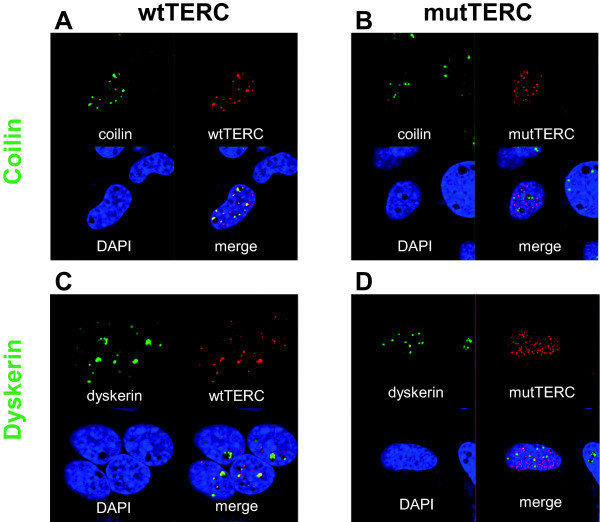
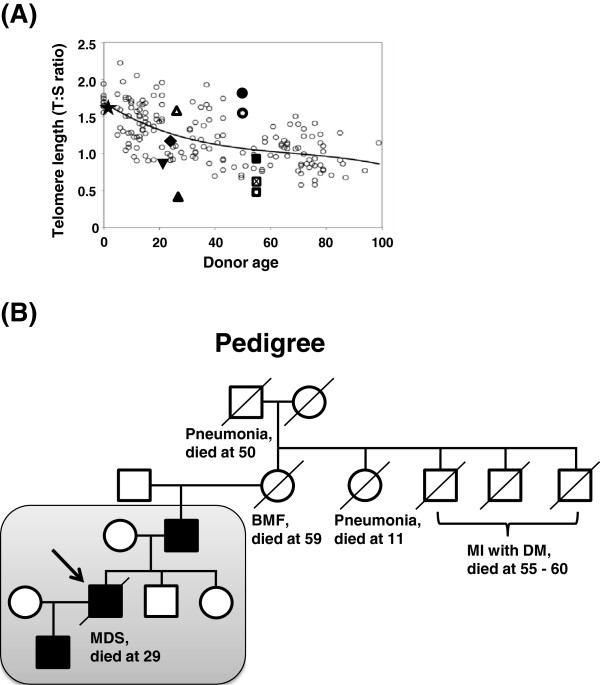
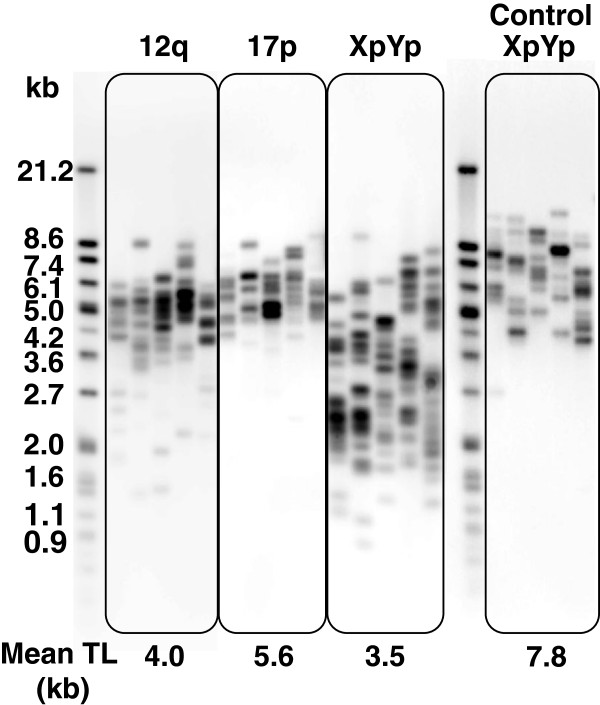
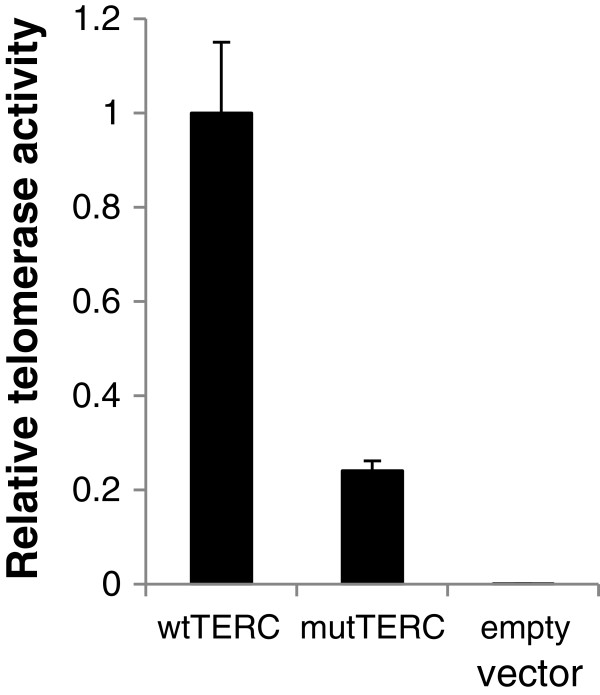
A 26-year-old man with myelodysplastic syndrome (MDS) had very short telomeres. Sequencing identified a single heterozygous mutation in the H box of the patient's TERC gene. The same mutation was also present in his father and his son, demonstrating that it was germline in origin. The telomere length in the father's blood was shorter compared to age-matched healthy controls, while it was normal in the son and also in the sperm cells of the patient. In vitro experiments suggested that the mutation was responsible for the telomere shortening in the patient's leukocytes and contributed to the pathogenesis of bone marrow failure in our patient.
We analyzed a mutation (A377G) in the H box of TERC in a young MDS patient who had significantly short-for-age telomeres. As telomeres protect chromosomes from instability, it is highly plausible that this genetic lesion was responsible for the patient's hematological manifestations, including marrow failure and aneuploidy in the hematopoietic stem cell compartment.
端粒是真核生物染色体末端的重复序列(脊椎动物中的六核苷酸 TTAGGG),可保护 DNA 免受末端连接或降解。端粒在每个细胞周期都会缩短,但端粒酶是一种核糖核蛋白复合物,可以缓解这种损耗。端粒酶 RNA 成分(TERC)是端粒酶的重要组成部分,作为端粒延长的模板。TERC 的 H/ACA 结构域对于端粒的生物发生是必不可少的。端粒酶成分的突变允许加速端粒丢失,导致各种疾病表现,包括骨髓衰竭。迄今为止,这是第一个与人类疾病相关的 TERC 中 H 盒突变的详细报告。
一名 26 岁男性患有骨髓增生异常综合征(MDS),端粒非常短。测序确定了患者 TERC 基因 H 盒的单个杂合突变。他的父亲和儿子也存在相同的突变,表明这是种系来源。与年龄匹配的健康对照相比,父亲血液中的端粒长度较短,而儿子和患者的精子细胞中的端粒长度正常。体外实验表明,该突变导致患者白细胞的端粒缩短,并导致我们患者的骨髓衰竭发病机制。
我们分析了一名年轻 MDS 患者 TERC 中 H 盒的突变(A377G),该患者的端粒明显短于年龄。由于端粒保护染色体免受不稳定性,因此该遗传病变很可能是导致患者血液学表现的原因,包括骨髓衰竭和造血干细胞中染色体非整倍性。