Department of Biology, Carleton University , Ottawa, ON , Canada.
PeerJ. 2014 Jun 10;2:e437. doi: 10.7717/peerj.437. eCollection 2014.
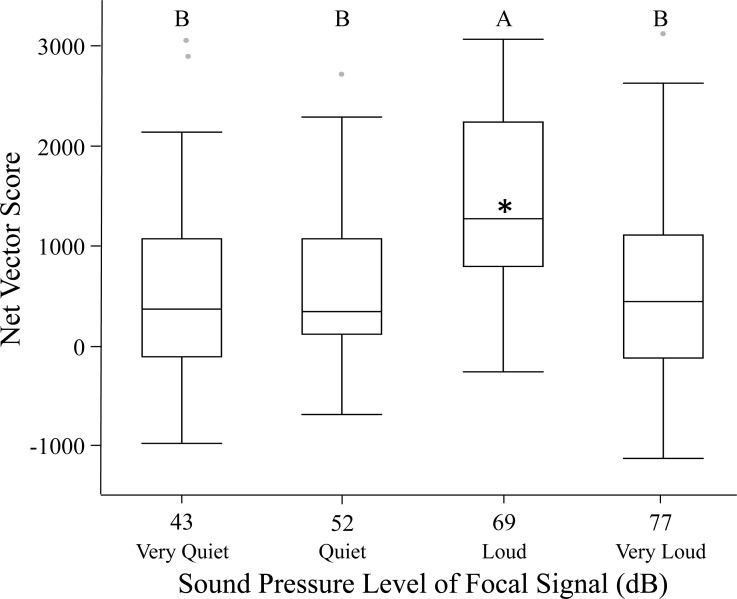
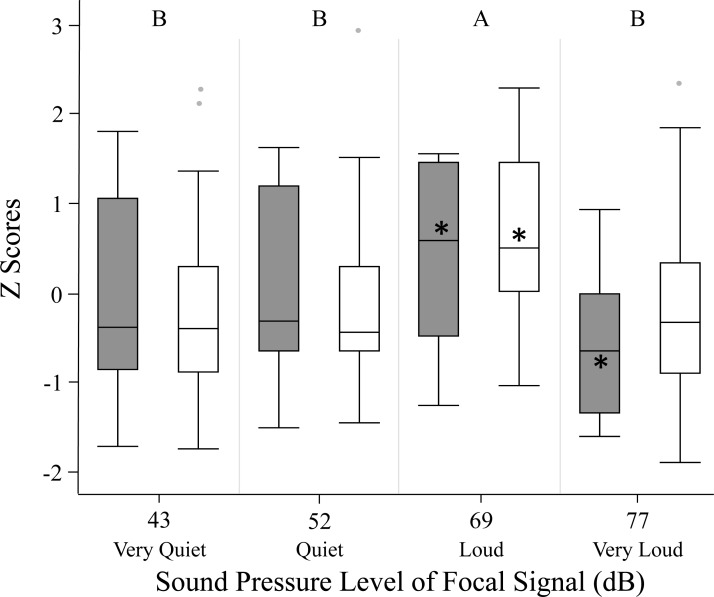
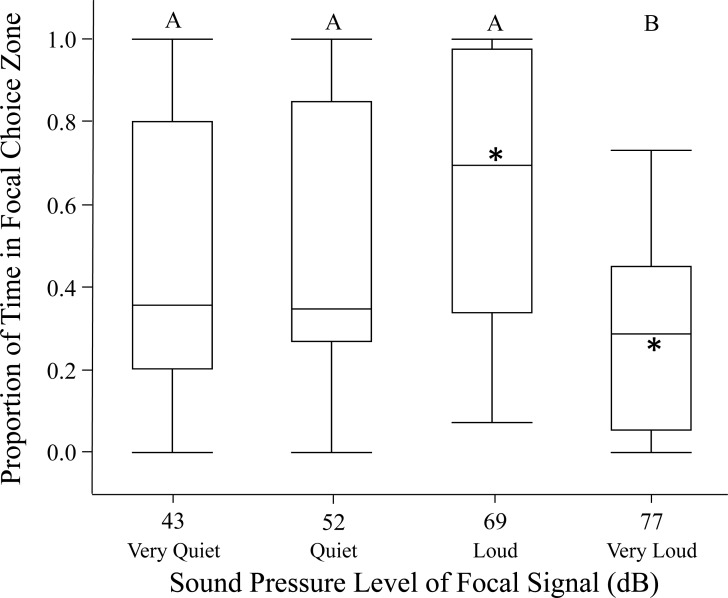
Understanding female mate preference is important for determining the strength and direction of sexual trait evolution. The sound pressure level (SPL) acoustic signalers use is often an important predictor of mating success because higher sound pressure levels are detectable at greater distances. If females are more attracted to signals produced at higher sound pressure levels, then the potential fitness impacts of signalling at higher sound pressure levels should be elevated beyond what would be expected from detection distance alone. Here we manipulated the sound pressure level of cricket mate attraction signals to determine how female phonotaxis was influenced. We examined female phonotaxis using two common experimental methods: spherical treadmills and open arenas. Both methods showed similar results, with females exhibiting greatest phonotaxis towards loud sound pressure levels relative to the standard signal (69 vs. 60 dB SPL) but showing reduced phonotaxis towards very loud sound pressure level signals relative to the standard (77 vs. 60 dB SPL). Reduced female phonotaxis towards supernormal stimuli may signify an acoustic startle response, an absence of other required sensory cues, or perceived increases in predation risk.
了解雌性配偶偏好对于确定性特征进化的强度和方向非常重要。声音压力水平(SPL)是发声者常用的重要预测交配成功的指标,因为更高的声压水平在更远的距离也能被检测到。如果雌性对更高声压水平产生的信号更具吸引力,那么与仅通过检测距离所预期的相比,在更高声压水平下发出信号的潜在适合度影响应该更高。在这里,我们操纵蟋蟀求偶信号的声压水平,以确定雌性的声向性是如何受到影响的。我们使用两种常见的实验方法来研究雌性的声向性:球形跑步机和开放式竞技场。这两种方法都得到了相似的结果,与标准信号(60dB SPL)相比,雌性对响亮的声压水平表现出最大的声向性(69dB SPL),但与标准信号相比,对非常响亮的声压水平信号的声向性降低(77dB SPL 对 60dB SPL)。雌性对超正常刺激的声向性降低可能表明存在声学惊跳反应、缺乏其他必需的感官线索,或感知到捕食风险增加。