Department of Gastroenterology, Hepatopancreatology and Digestive Oncology, Erasme Hospital, Université Libre de Bruxelles, 808 Route de Lennik, B 1070 Brussels, Belgium.
Endosc Ultrasound. 2014 Jan;3(1):3-11. doi: 10.4103/2303-9027.127122.
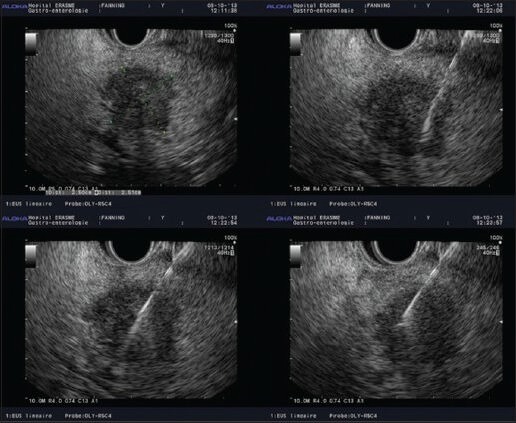
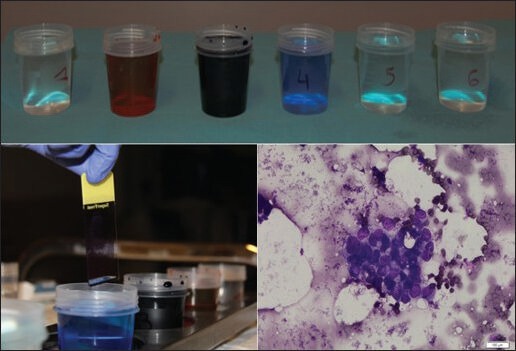
Tissue acquisition plays a key role before treatment decision in most of oncological pathologies but also in several benign diseases. By offering tissue sampling, endoscopic ultrasound-guided fine-needle aspiration (EUS-FNA) has become an essential tool in the diagnostic processes. One of the reasons for the success of the technique is related to its excellent diagnostic performance. The diagnostic accuracy of EUS-FNA is above 80% for most of the usual indications. These performances are however dependent on some factors related to both the disease and patient's medical history but also related to medical staff expertise. Endoscopist needs to know how to reach a lesion but also how to efficiently acquire good tissue samples. This review aims to report general recommendations available in the literature for high quality EUS-FNA. Sample processing and sample interpretation also influence diagnostic accuracy of FNA. This paper includes a discussion on sample processing and benefits of the on-site pathology examination. It also provides the results reported in the literature of sample adequacy and diagnostic performance of EUS-FNA for most common indications: Pancreatic diseases, sub-mucosal lesion, mucosal thickenings, lymph nodes, cystic lesion and free fluids.
在大多数肿瘤性病变以及一些良性疾病的治疗决策前,组织采集都起着关键作用。通过提供组织采样,内镜超声引导下细针抽吸(EUS-FNA)已成为诊断过程中的重要工具。该技术成功的原因之一与它出色的诊断性能有关。对于大多数常见适应证,EUS-FNA 的诊断准确性超过 80%。然而,这些性能取决于一些与疾病和患者病史相关的因素,也与医务人员的专业知识有关。内镜医生需要知道如何到达病变部位,还需要知道如何有效地获取良好的组织样本。本文旨在报告文献中提供的有关高质量 EUS-FNA 的一般建议。样本处理和样本解释也会影响 FNA 的诊断准确性。本文还讨论了样本处理以及现场病理检查的益处。它还报告了文献中报道的 EUS-FNA 在大多数常见适应证(胰腺疾病、黏膜下病变、黏膜增厚、淋巴结、囊性病变和游离液体)中的样本充足性和诊断性能的结果。