Lumetti Simone, Mazzotta Silvia, Ferrillo Sara, Piergianni Maddalena, Piemontese Marilina, Passeri Giovanni, Macaluso Guido Maria, Galli Carlo
Section of Periodontology and Implant Dentistry, Centro di Odontoiatria, University of Parma, Via Gramsci 14, 43126 Parma, Italy.
Department of Clinical and Experimental Medicine, University of Parma, Via Gramsci 14, 43126 Parma, Italy.
Biomed Res Int. 2014;2014:401859. doi: 10.1155/2014/401859. Epub 2014 May 14.
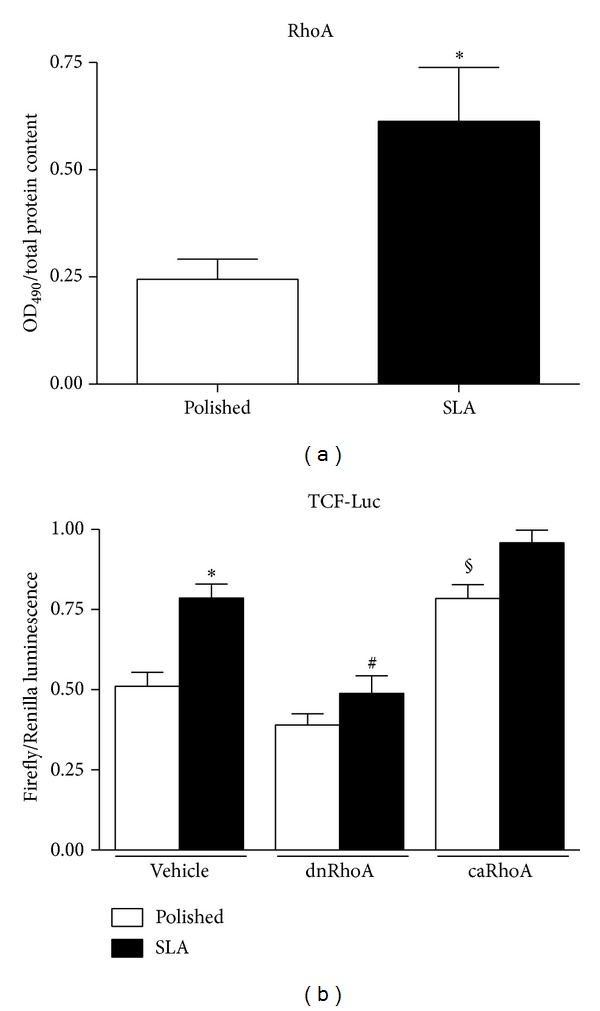
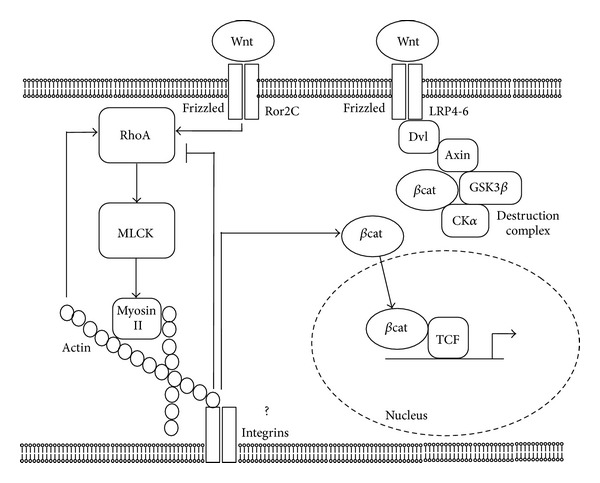
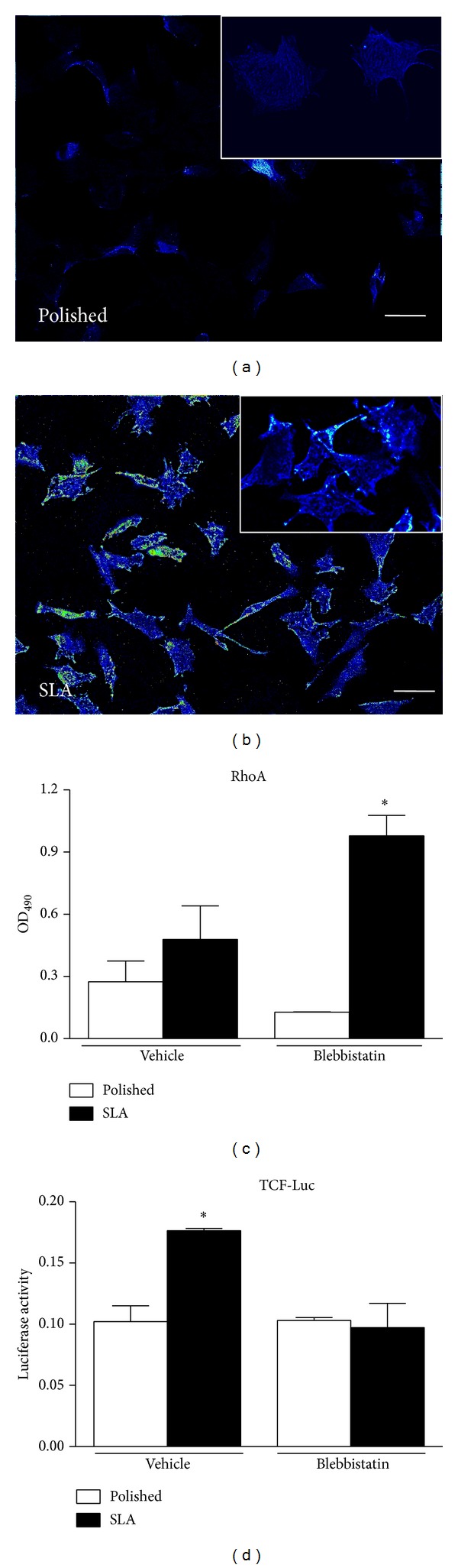
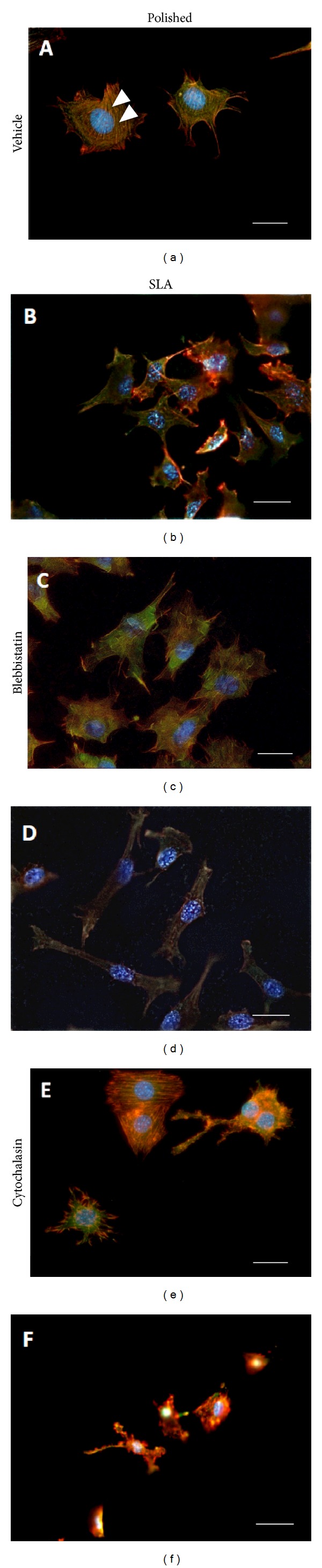
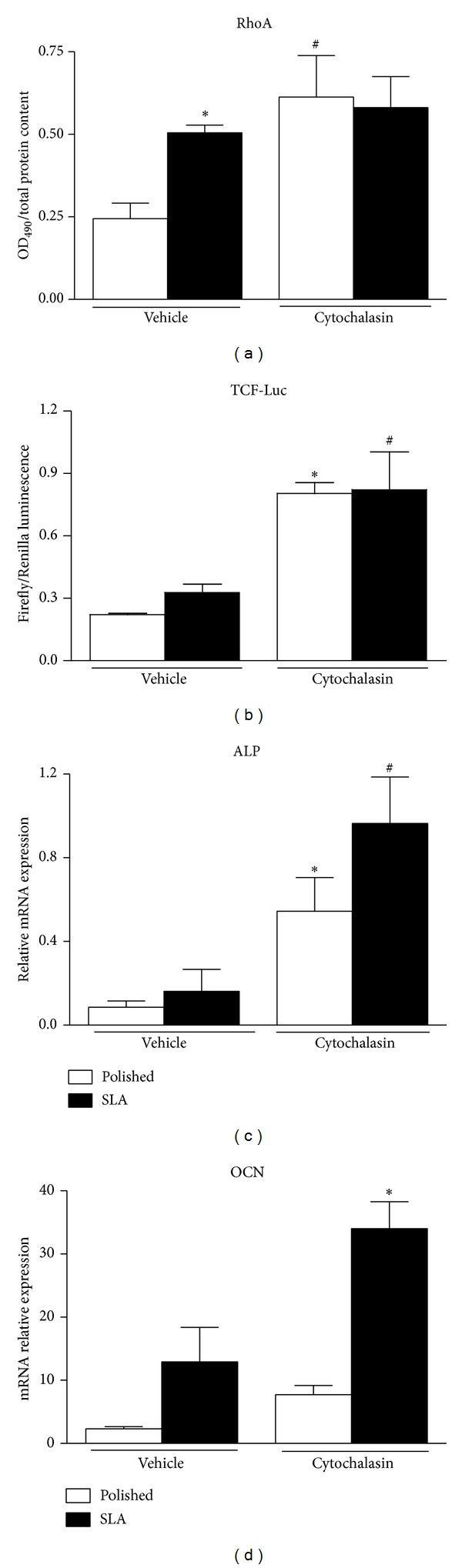
Rough topography enhances the activation of Wnt canonical signaling in vitro, and this mediates its effects on cell differentiation. However, the molecular mechanisms underlying topography-dependent control of Wnt signaling are still poorly understood. As the small GTPase RhoA controls cytoskeletal reorganization and actomyosin-induced tensional forces, we hypothesized that RhoA could affect the activation of Wnt signaling in cells on micropatterned titanium surfaces. G-LISA assay revealed that RhoA activation was higher in C2C12 cells on rough (SLA) surfaces under basal conditions than on smooth (Polished) titanium. Transfection with dominant negative RhoA decreased Wnt activation by normalized TCF-Luc activity on SLA, whilst transfection with constitutively active RhoA increased TCF-Luc activation on Polished titanium. One mM Myosin II inhibitor Blebbistatin increased RhoA activation but decreased Wnt activation on SLA surfaces, indicating that tension-generating structures are required for canonical Wnt modulation on titanium surfaces. Actin inhibitor Cytochalasin markedly enhanced RhoA and TCF-Luc activation on both surfaces and increased the expression of differentiation markers in murine osteoblastic MC3T3 cells. Taken together, these data show that RhoA is upregulated in cells on rough surfaces and it affects the activation of Wnt canonical signaling through Myosin II modulation.
粗糙的表面形貌在体外增强了Wnt经典信号通路的激活,并且这介导了其对细胞分化的影响。然而,表面形貌依赖性调控Wnt信号的分子机制仍知之甚少。由于小GTP酶RhoA控制细胞骨架重组和肌动球蛋白诱导的张力,我们推测RhoA可能影响微图案化钛表面上细胞中Wnt信号的激活。G-LISA分析显示,在基础条件下,粗糙(SLA)表面上的C2C12细胞中RhoA的激活高于光滑(抛光)钛表面上的细胞。用显性负性RhoA转染通过SLA上标准化的TCF-Luc活性降低了Wnt激活,而用组成型活性RhoA转染增加了抛光钛上的TCF-Luc激活。1 mM肌球蛋白II抑制剂Blebbistatin增加了RhoA激活,但降低了SLA表面上的Wnt激活,表明产生张力的结构是钛表面上经典Wnt调节所必需的。肌动蛋白抑制剂细胞松弛素显著增强了两个表面上的RhoA和TCF-Luc激活,并增加了小鼠成骨MC3T3细胞中分化标志物的表达。综上所述,这些数据表明RhoA在粗糙表面上的细胞中上调,并且它通过肌球蛋白II调节影响Wnt经典信号的激活。