Németh Eszter, Schilli Gabriella K, Nagy Gábor, Hasenhindl Christoph, Gyurcsik Béla, Oostenbrink Chris
Department of Inorganic and Analytical Chemistry, University of Szeged, Dóm tér 7, Szeged, 6720, Hungary.
J Comput Aided Mol Des. 2014 Aug;28(8):841-50. doi: 10.1007/s10822-014-9765-8. Epub 2014 Jun 22.
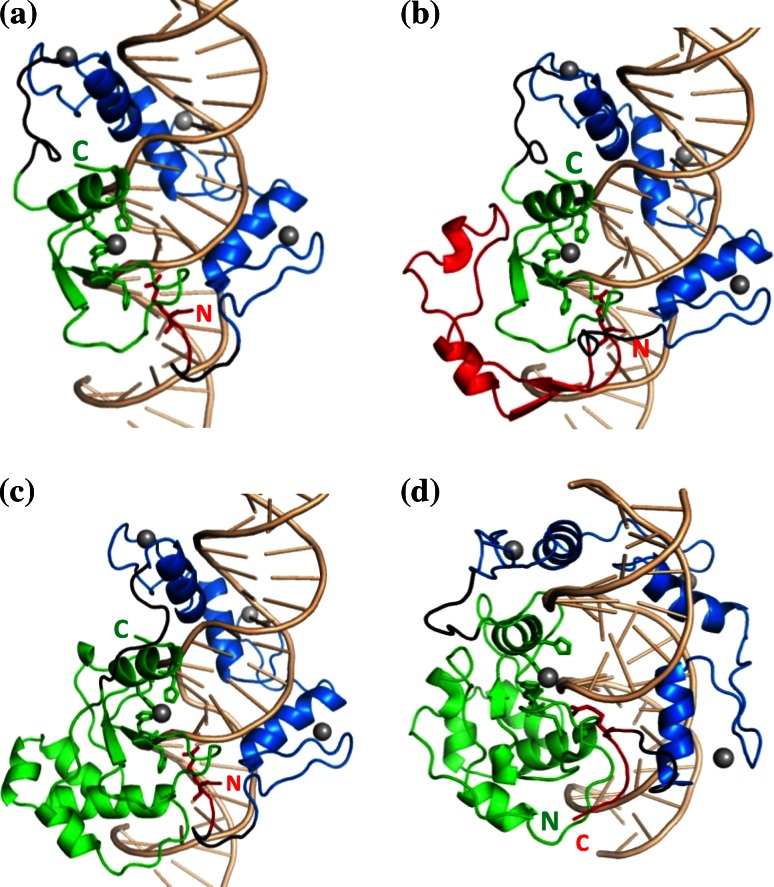
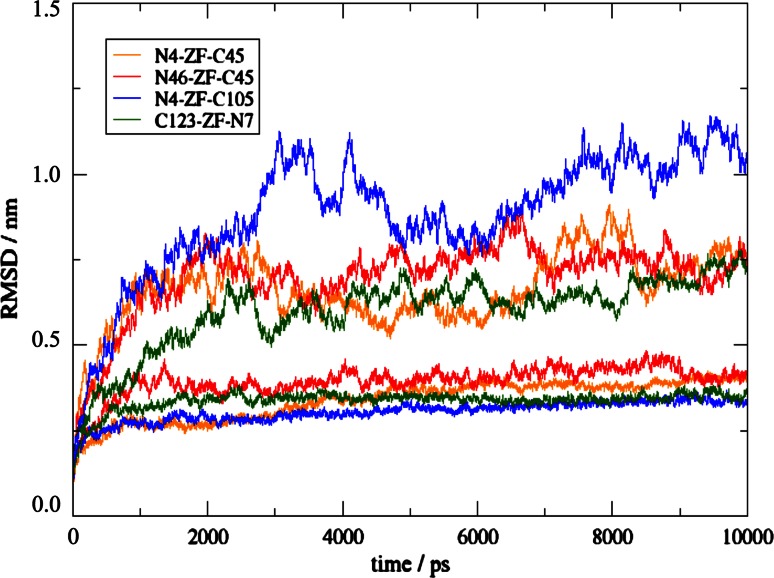
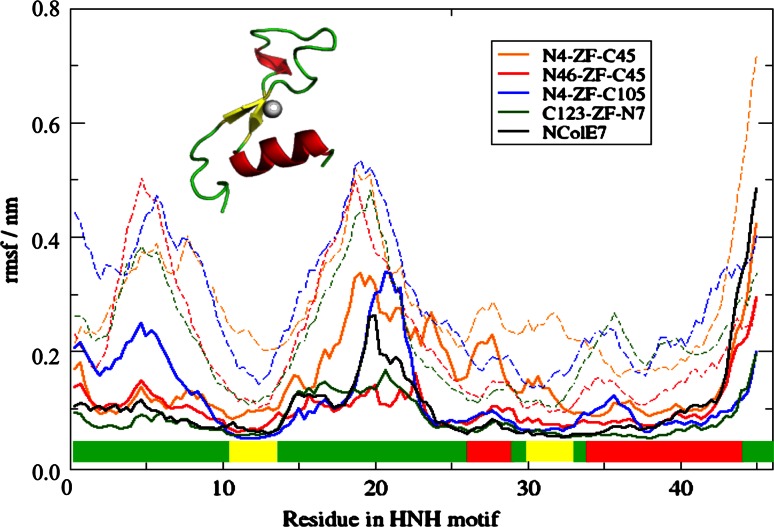
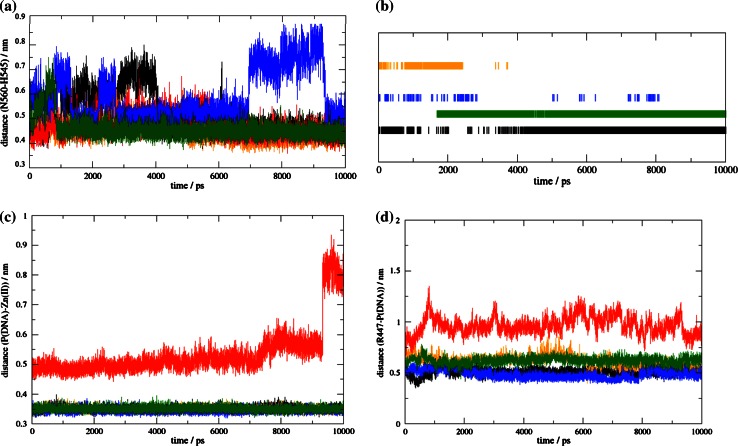
Colicin E7 is a natural bacterial toxin. Its nuclease domain (NColE7) enters the target cell and kills it by digesting the nucleic acids. The HNH-motif as the catalytic centre of NColE7 at the C-terminus requires the positively charged N-terminal loop for the nuclease activity-offering opportunities for allosteric control in a NColE7-based artificial nuclease. Accordingly, four novel zinc finger nucleases were designed by computational methods exploiting the special structural features of NColE7. The constructed models were subjected to MD simulations. The comparison of structural stability and functional aspects showed that these models may function as safely controlled artificial nucleases. This study was complemented by random mutagenesis experiments identifying potentially important residues for NColE7 function outside the catalytic region.
大肠杆菌素E7是一种天然细菌毒素。其核酸酶结构域(NColE7)进入靶细胞并通过消化核酸将其杀死。位于C端的作为NColE7催化中心的HNH基序需要带正电荷的N端环来实现核酸酶活性,这为基于NColE7的人工核酸酶的变构控制提供了机会。因此,利用NColE7的特殊结构特征通过计算方法设计了四种新型锌指核酸酶。对构建的模型进行了分子动力学模拟。结构稳定性和功能方面的比较表明,这些模型可能作为安全可控的人工核酸酶发挥作用。这项研究通过随机诱变实验得到补充,该实验确定了催化区域之外对NColE7功能潜在重要的残基。