Kim Chun, Pasparakis Manolis
Institute for Genetics, Cologne Excellence Cluster on Cellular Stress Responses in Aging-Associated Diseases (CECAD), Centre for Molecular Medicine (CMMC), University of Cologne, Cologne, Germany.
Institute for Genetics, Cologne Excellence Cluster on Cellular Stress Responses in Aging-Associated Diseases (CECAD), Centre for Molecular Medicine (CMMC), University of Cologne, Cologne, Germany
EMBO Mol Med. 2014 Jul;6(7):970-83. doi: 10.15252/emmm.201303541.
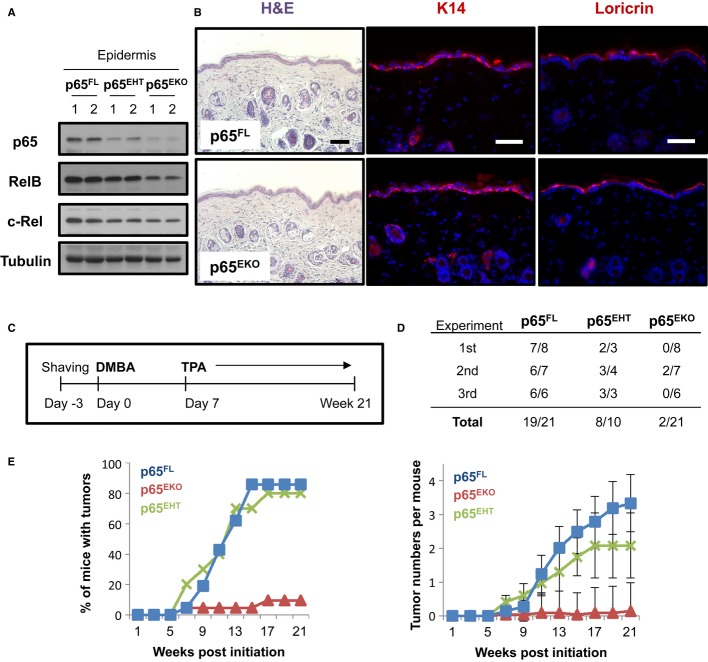
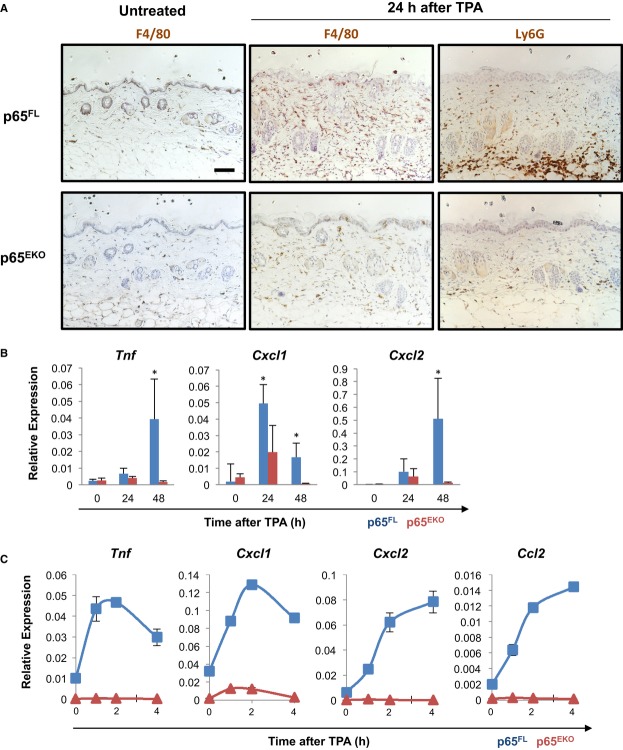
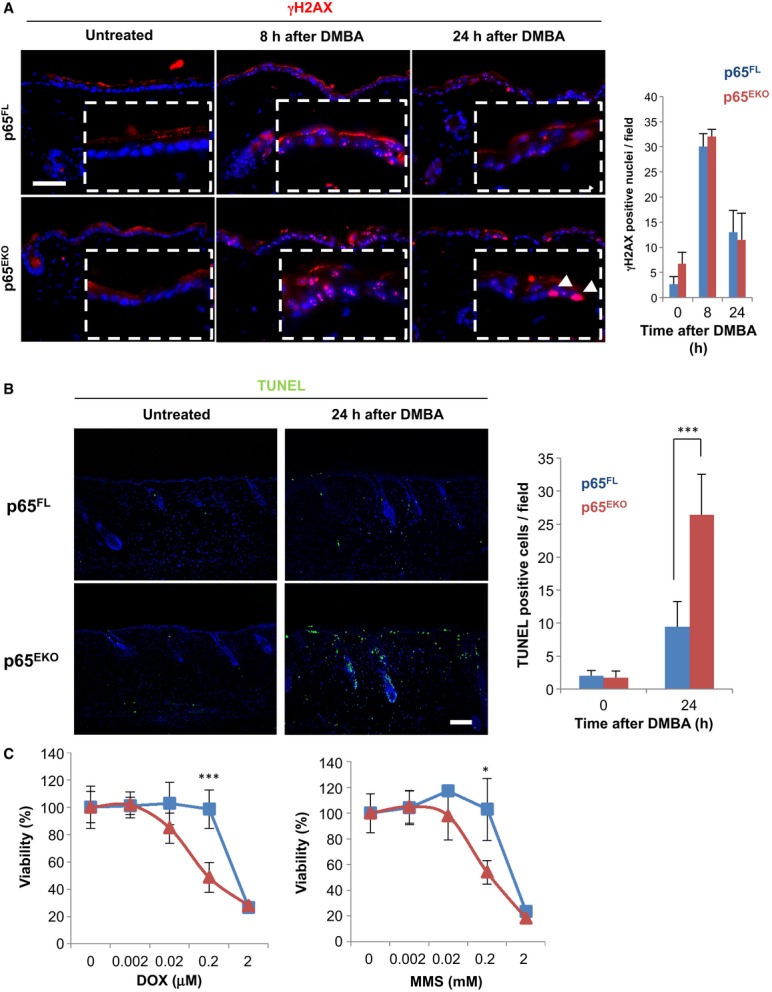
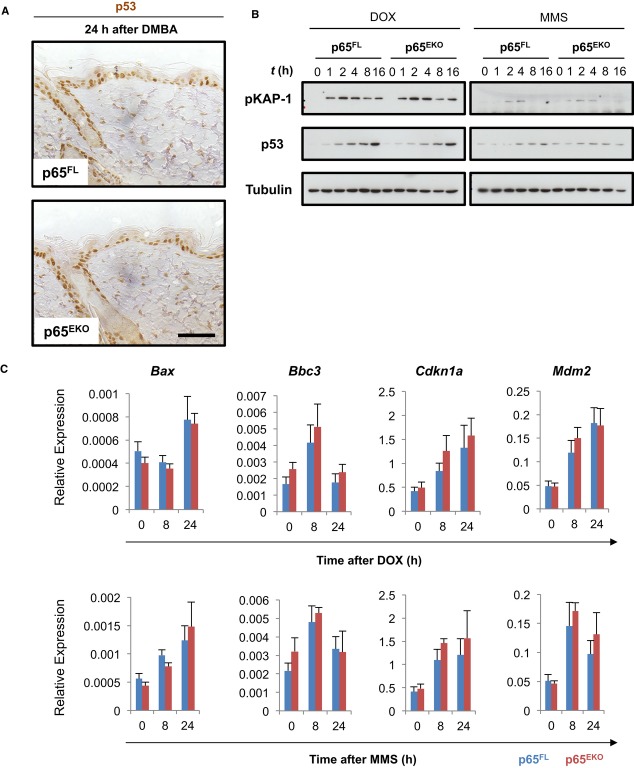
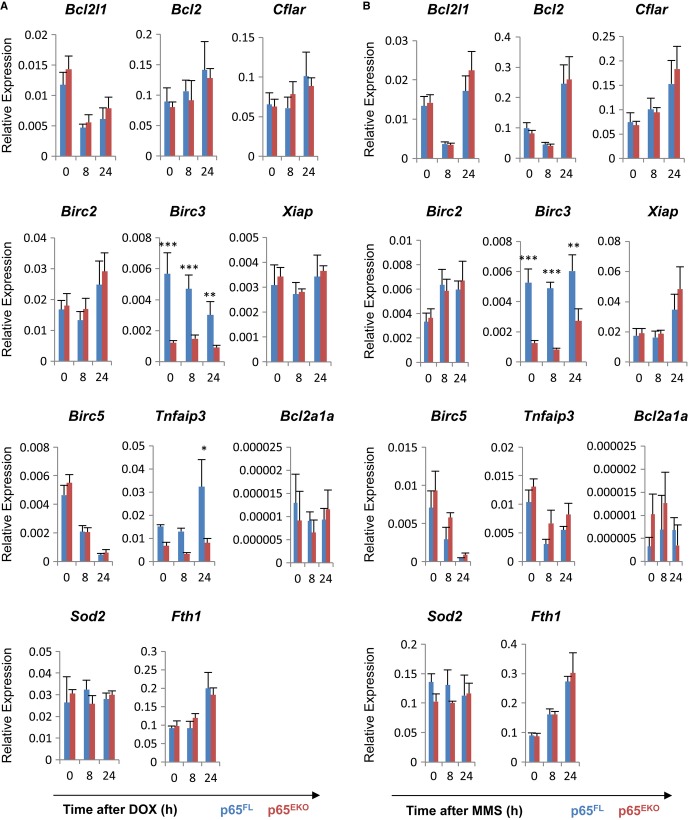
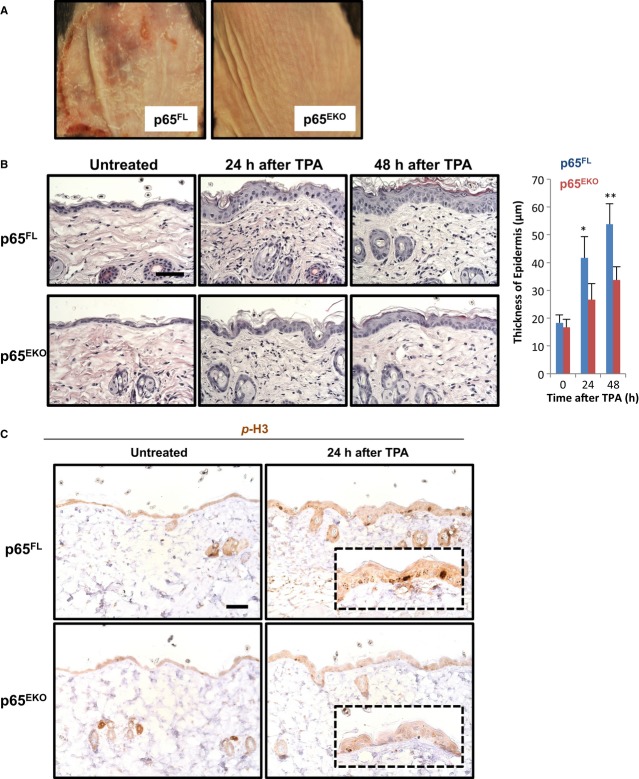
The nuclear factor kappa B (NF-κB) signalling pathway exhibits both tumour-promoting and tumour-suppressing functions in different tissues and models of carcinogenesis. In particular in epidermal keratinocytes, NF-κB signalling was reported to exert primarily growth inhibitory and tumour-suppressing functions. Here, we show that mice with keratinocyte-restricted p65/RelA deficiency were resistant to 7, 12-dimethylbenz(a)anthracene (DMBA)-/12-O-tetra decanoylphorbol-13 acetate (TPA)-induced skin carcinogenesis. p65 deficiency sensitized epidermal keratinocytes to DNA damage-induced death in vivo and in vitro, suggesting that inhibition of p65-dependent prosurvival functions prevented tumour initiation by facilitating the elimination of cells carrying damaged DNA. In addition, lack of p65 strongly inhibited TPA-induced epidermal hyperplasia and skin inflammation by suppressing the expression of proinflammatory cytokines and chemokines by epidermal keratinocytes. Therefore, p65-dependent NF-κB signalling in keratinocytes promotes DMBA-/TPA-induced skin carcinogenesis by protecting keratinocytes from DNA damage-induced death and facilitating the establishment of a tumour-nurturing proinflammatory microenvironment.
核因子κB(NF-κB)信号通路在不同组织和致癌模型中兼具促肿瘤和抑肿瘤功能。特别是在表皮角质形成细胞中,据报道NF-κB信号主要发挥生长抑制和抑肿瘤功能。在此,我们表明角质形成细胞特异性p65/RelA缺陷的小鼠对7,12-二甲基苯并(a)蒽(DMBA)/12-O-十四酰佛波醇-13-乙酸酯(TPA)诱导的皮肤致癌作用具有抗性。p65缺陷在体内和体外均使表皮角质形成细胞对DNA损伤诱导的死亡敏感,这表明抑制p65依赖的促生存功能通过促进清除携带受损DNA的细胞来预防肿瘤起始。此外,p65的缺失通过抑制表皮角质形成细胞促炎细胞因子和趋化因子的表达,强烈抑制TPA诱导的表皮增生和皮肤炎症。因此,角质形成细胞中p65依赖的NF-κB信号通过保护角质形成细胞免受DNA损伤诱导的死亡并促进建立肿瘤滋养的促炎微环境,促进DMBA/TPA诱导的皮肤致癌作用。