Ejaz Ashir, Laursen Anders C, Kappel Andreas, Laursen Mogens B, Jakobsen Thomas, Rasmussen Sten, Nielsen Poul Torben
Department of Orthopedic Surgery.
Acta Orthop. 2014 Aug;85(4):422-6. doi: 10.3109/17453674.2014.931197. Epub 2014 Jun 23.
Tourniquet application is still a common practice in total knee arthroplasty (TKA) surgery despite being associated with several adverse effects. We evaluated the effects of tourniquet use on functional and clinical outcome and on knee range of motion (ROM).
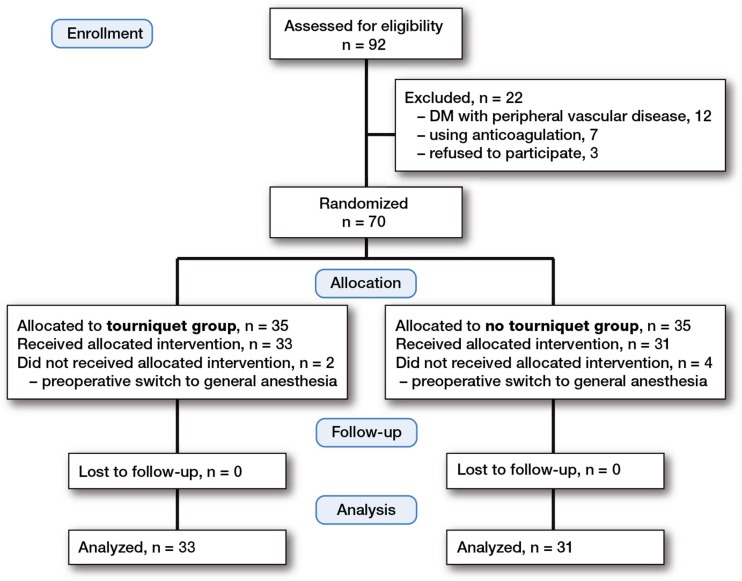
70 patients who underwent TKA were randomized into a tourniquet group (n = 35) and a non-tourniquet group (n = 35). All operations were performed by the same surgeon and follow-up was for 1 year. Primary outcomes were functional and clinical outcomes, as evaluated by KOOS and knee ROM. Secondary outcomes were intraoperative blood loss, surgical time and visibility, postoperative pain, analgesic consumption, and transfusion requirements.
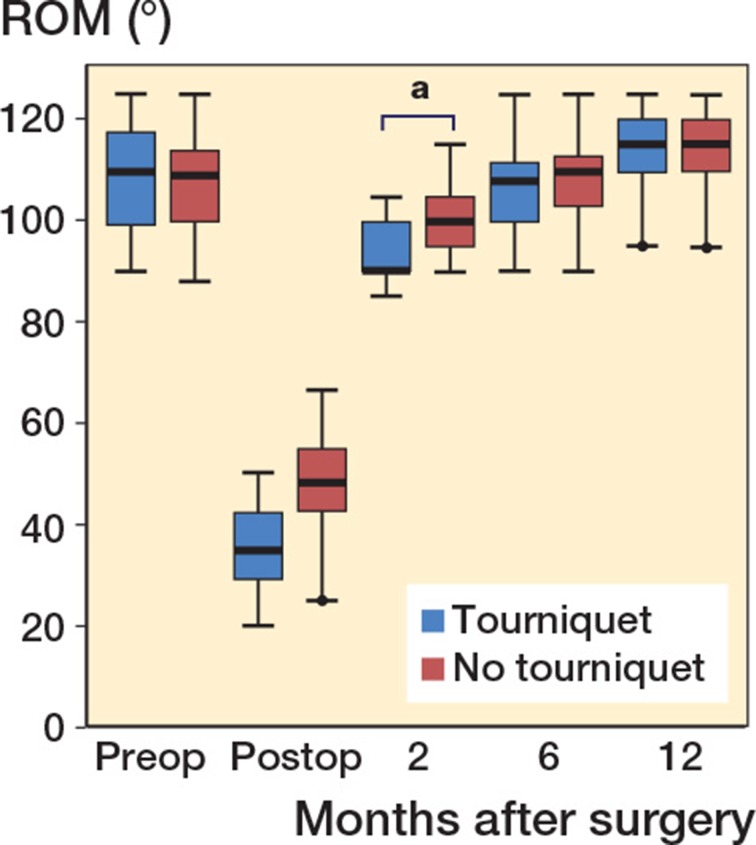
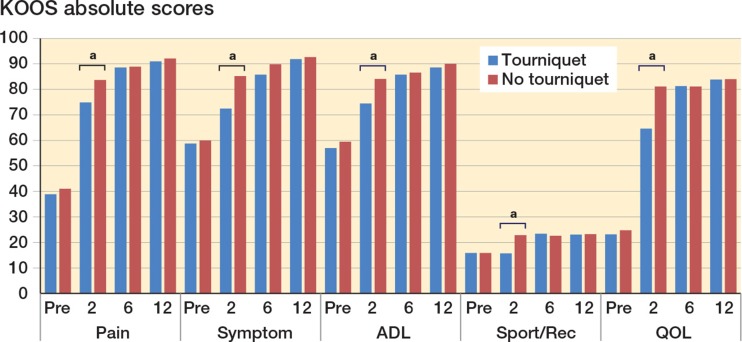
Patients in the non-tourniquet group showed a better outcome in all KOOS subscores and better early knee ROM from surgery to week 8. No difference was detected at the 6- and 12-month follow-ups. Postoperative pain and analgesic consumption were less when a tourniquet was not used. Surgical time and visibility were similar between groups. Intraoperative blood loss was greater when not using a tourniquet, but no postoperative transfusions were required.
This study shows that TKA without the use of a tourniquet results in faster recovery in terms of better functional outcome and improved knee ROM. Furthermore, reduced pain and analgesic use were registered and no intraoperative difficulties were encountered.
尽管止血带的应用会带来一些不良反应,但在全膝关节置换术(TKA)中仍是一种常见的操作。我们评估了使用止血带对功能和临床结局以及膝关节活动范围(ROM)的影响。
70例行TKA的患者被随机分为止血带组(n = 35)和非止血带组(n = 35)。所有手术均由同一位外科医生进行,随访时间为1年。主要结局指标为功能和临床结局,通过膝关节损伤和骨关节炎疗效评分(KOOS)及膝关节ROM进行评估。次要结局指标为术中失血量、手术时间和视野、术后疼痛、镇痛药物用量及输血需求。
非止血带组患者在所有KOOS子评分中均显示出更好的结局,且从手术到第8周膝关节ROM的早期恢复情况更好。在6个月和12个月的随访中未发现差异。不使用止血带时术后疼痛和镇痛药物用量更少。两组之间手术时间和视野相似。不使用止血带时术中失血量更大,但术后无需输血。
本研究表明,不使用止血带的TKA在功能结局更好和膝关节ROM改善方面恢复更快。此外,疼痛减轻且镇痛药物使用减少,术中未遇到困难。