Bassères Daniela S, Ebbs Aaron, Cogswell Patricia C, Baldwin Albert S
Department of Biochemistry, Chemistry Institute, University of São Paulo, São Paulo, SP, Brazil;
Lineberger Comprehensive Cancer Center, University of North Carolina, Chapel Hill, NC;
Genes Cancer. 2014 Apr;5(1-2):41-55. doi: 10.18632/genesandcancer.5.
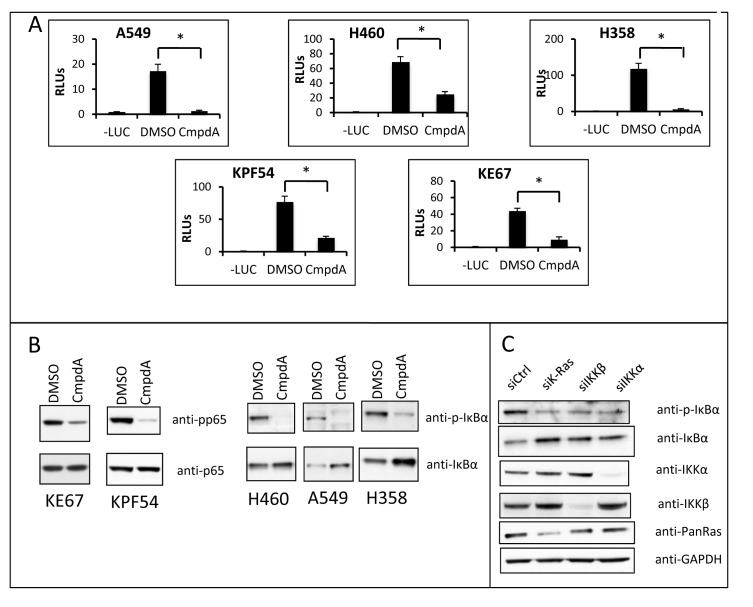
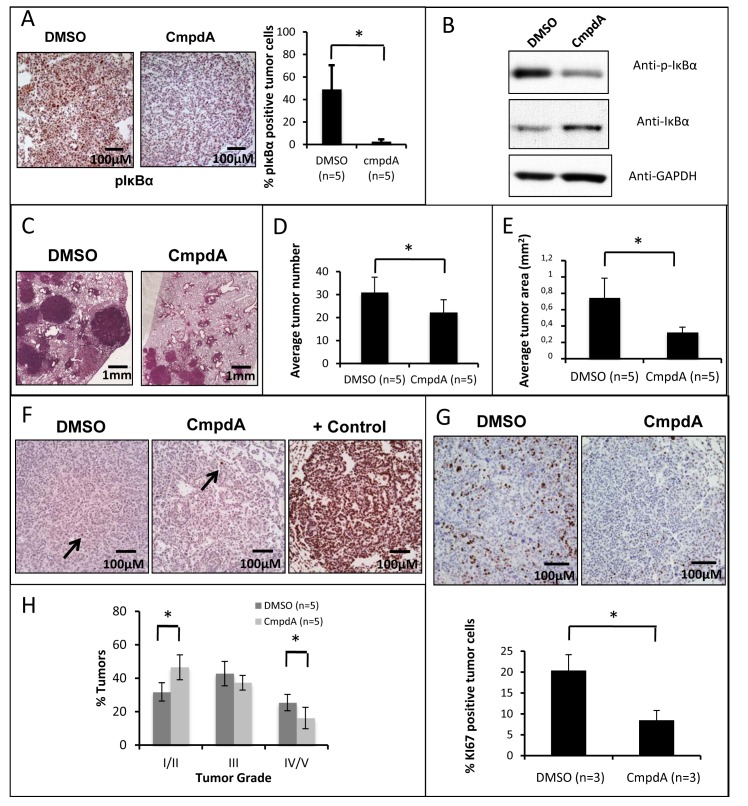
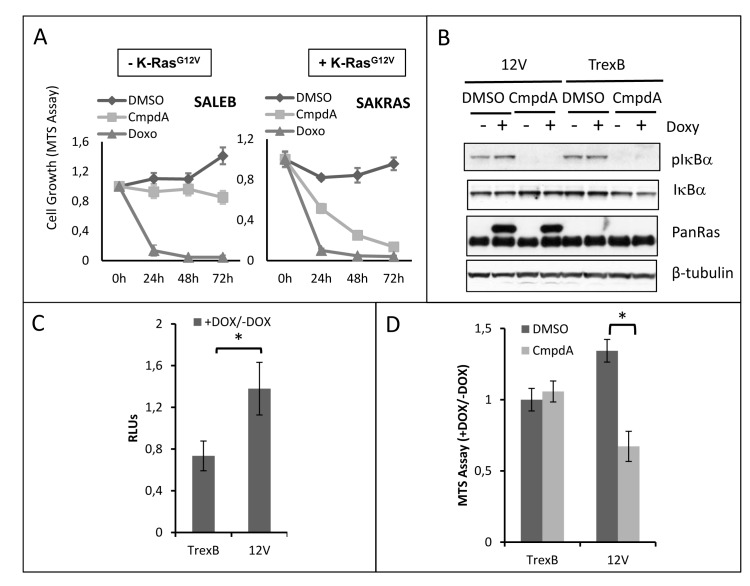
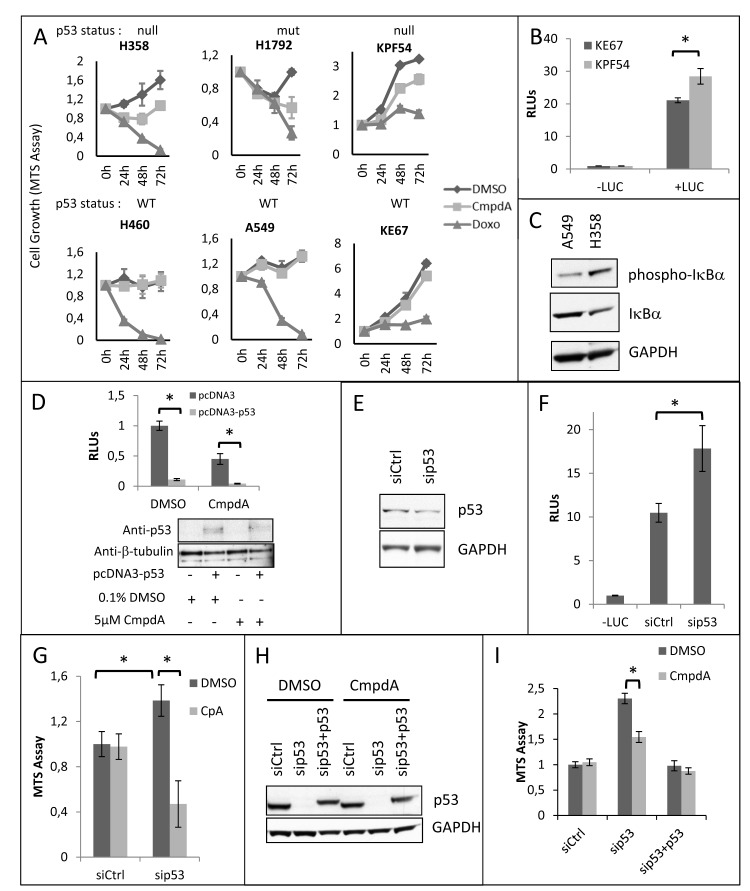
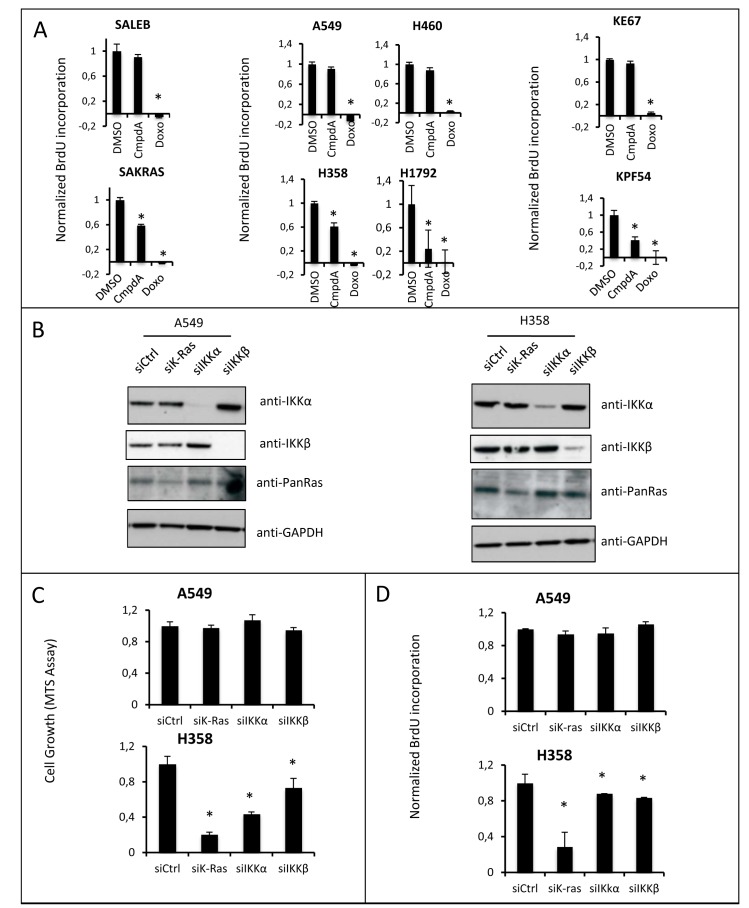
Activating mutations in KRAS are prevalent in cancer, but therapies targeted to oncogenic RAS have been ineffective to date. These results argue that targeting downstream effectors of RAS will be an alternative route for blocking RAS-driven oncogenic pathways. We and others have shown that oncogenic RAS activates the NF-κB transcription factor pathway and that KRAS-induced lung tumorigenesis is suppressed by expression of a degradation-resistant form of the IκBα inhibitor or by genetic deletion of IKKβ or the RELA/p65 subunit of NF-κB. Here, genetic and pharmacological approaches were utilized to inactivate IKK in human primary lung epithelial cells transformed by KRAS, as well as KRAS mutant lung cancer cell lines. Administration of the highly specific IKKβ inhibitor Compound A (CmpdA) led to NF-κB inhibition in different KRAS mutant lung cells and siRNA-mediated knockdown of IKKα or IKKβ reduced activity of the NF-κB canonical pathway. Next, we determined that both IKKα and IKKβ contribute to oncogenic properties of KRAS mutant lung cells, particularly when p53 activity is disrupted. Based on these results, CmpdA was tested for potential therapeutic intervention in the Kras-induced lung cancer mouse model (LSL-Kras (G12D)) combined with loss of p53 (LSL-Kras (G12D)/p53 (fl/fl)). CmpdA treatment was well tolerated and mice treated with this IKKβ inhibitor presented smaller and lower grade tumors than mice treated with placebo. Additionally, IKKβ inhibition reduced inflammation and angiogenesis. These results support the concept of targeting IKK as a therapeutic approach for oncogenic RAS-driven tumors with altered p53 activity.
KRAS中的激活突变在癌症中很普遍,但迄今为止,针对致癌性RAS的疗法一直无效。这些结果表明,靶向RAS的下游效应器将是阻断RAS驱动的致癌途径的另一条途径。我们和其他人已经表明,致癌性RAS激活NF-κB转录因子途径,并且通过表达IκBα抑制剂的抗降解形式或通过IKKβ或NF-κB的RELA/p65亚基的基因缺失来抑制KRAS诱导的肺肿瘤发生。在这里,利用基因和药理学方法使KRAS转化的人原代肺上皮细胞以及KRAS突变肺癌细胞系中的IKK失活。给予高度特异性的IKKβ抑制剂化合物A(CmpdA)导致不同KRAS突变肺细胞中的NF-κB受到抑制,并且siRNA介导的IKKα或IKKβ敲低降低了NF-κB经典途径的活性。接下来,我们确定IKKα和IKKβ都有助于KRAS突变肺细胞的致癌特性,特别是当p53活性被破坏时。基于这些结果,在Kras诱导的肺癌小鼠模型(LSL-Kras(G12D))与p53缺失(LSL-Kras(G12D)/p53(fl/fl))相结合的情况下测试了CmpdA的潜在治疗干预作用。CmpdA治疗耐受性良好,用这种IKKβ抑制剂治疗的小鼠比用安慰剂治疗的小鼠出现更小、分级更低的肿瘤。此外,IKKβ抑制减少了炎症和血管生成。这些结果支持将靶向IKK作为治疗p53活性改变的致癌性RAS驱动肿瘤的治疗方法的概念。