Hahnel Steffen, Quack Thomas, Parker-Manuel Sophia J, Lu Zhigang, Vanderstraete Mathieu, Morel Marion, Dissous Colette, Cailliau Katia, Grevelding Christoph G
Biologisch-Medizinisches Forschungszentrum Seltersberg, Institute of Parasitology, Justus-Liebig-University Giessen, Germany.
CIIL - Center of Infection and Immunity of Lille, CNRS-UMR 8204, INSERM U1019, Institut Pasteur de Lille, Université Lille Nord de France Lille Cedex, France.
Front Genet. 2014 Jun 10;5:170. doi: 10.3389/fgene.2014.00170. eCollection 2014.
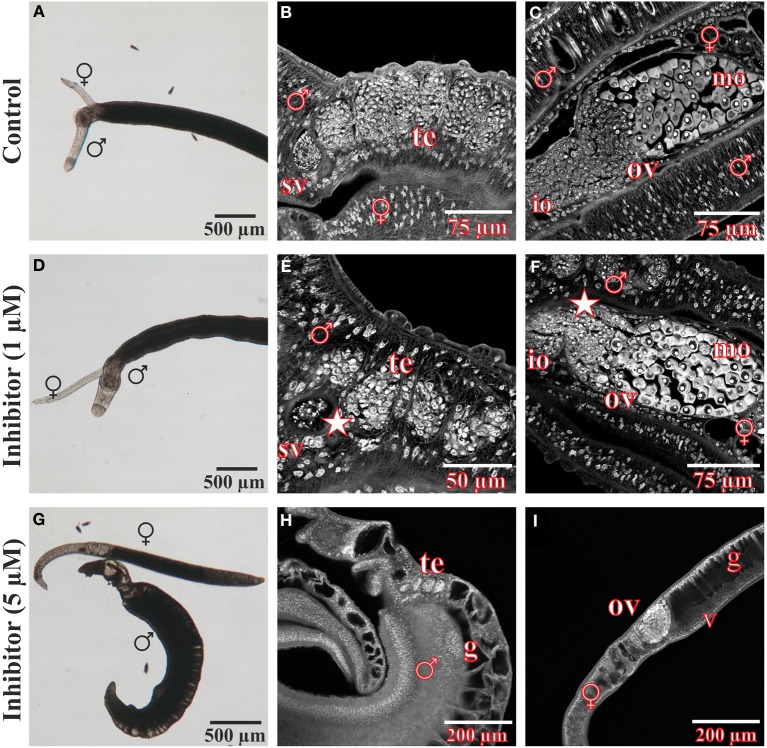
In the search for new strategies to fight schistosomiasis, the unique reproductive biology of Schistosoma mansoni has come into the focus of research. The development of the gonads and the ability of egg production are fundamental not only for continuing the life cycle but also for pathogenicity. Previous studies of schistosome biology demonstrated an influence of pairing on gonad development of the female and on gene expression profiles in both genders. Due to the limited access to specific tissues, however, most of these studies were done at the level of whole worms neglecting individual tissues that may be targets of pairing-dependent processes. Recently, we established a protocol allowing the isolation of testes and ovaries from adult S. mansoni. Here, we describe tissue-specific qRT-PCR analyses comparing transcript levels of selected genes on the basis of RNA from gonads and whole worms. Gene expression in ovary and testes was in some cases found to be significantly influenced by pairing, which was not traceable in whole worms. Among the candidate genes identified as regulated by pairing in gonads were the frizzled homolog SmFz1 and the two fibroblast growth factor receptor homologs SmFGFR-A and SmFGFR-B. First functional characterizations were done, including comparative qRT-PCR analyses, in situ-localization experiments, heterologous expression in Xenopus oocytes (SmFGFR-A/B), and inhibitor studies using the Fz/Dvl-pathway inhibitor 3289-8625, or BIBF1120 blocking FGFR-signaling. Besides confirming gonad localization and receptor functions, inhibitor-induced phenotypes were observed in vitro such as decreased egg production as well as drastic effects on gonad differentiation, morphology, embryogenesis, and survival of adult worms. In summary, these results emphasise the usefulness of tissue-specific qRT-PCRs for selection of candidate genes with important roles in reproduction, allowing subsequent studies to determine their suitability as drug targets.
在寻找对抗血吸虫病的新策略过程中,曼氏血吸虫独特的生殖生物学已成为研究焦点。性腺的发育以及产卵能力不仅对延续生命周期至关重要,而且对致病性也很关键。先前关于血吸虫生物学的研究表明配对对雌性性腺发育以及两性的基因表达谱均有影响。然而,由于获取特定组织的机会有限,这些研究大多是在整条虫的层面进行,而忽略了可能是配对依赖过程靶点的单个组织。最近,我们建立了一种从成年曼氏血吸虫中分离睾丸和卵巢的方法。在此,我们描述了组织特异性定量逆转录聚合酶链反应(qRT-PCR)分析,该分析基于性腺和整条虫的RNA比较所选基因的转录水平。在某些情况下,发现卵巢和睾丸中的基因表达受配对显著影响,而在整条虫中却无法追踪到这种影响。在性腺中被确定受配对调控的候选基因包括卷曲同源物SmFz1以及两个成纤维细胞生长因子受体同源物SmFGFR-A和SmFGFR-B。进行了首次功能表征,包括比较qRT-PCR分析、原位定位实验、非洲爪蟾卵母细胞中的异源表达(SmFGFR-A/B)以及使用Fz/Dvl通路抑制剂3289-8625或阻断FGFR信号的BIBF1120进行的抑制剂研究。除了确认性腺定位和受体功能外,在体外还观察到抑制剂诱导的表型,如产卵减少以及对性腺分化、形态、胚胎发生和成虫存活的剧烈影响。总之,这些结果强调了组织特异性qRT-PCR在选择对生殖具有重要作用的候选基因方面的有用性,从而使后续研究能够确定它们作为药物靶点的适用性。