The Guy Harvey Research Institute, Nova Southeastern University Oceanographic Center Dania Beach, Florida.
The Guy Harvey Research Institute, Nova Southeastern University Oceanographic Center Dania Beach, Florida ; Department of Biological Sciences, University of Rhode Island Kingston, Rhode Island.
Ecol Evol. 2014 May;4(10):1768-86. doi: 10.1002/ece3.1053. Epub 2014 Apr 12.
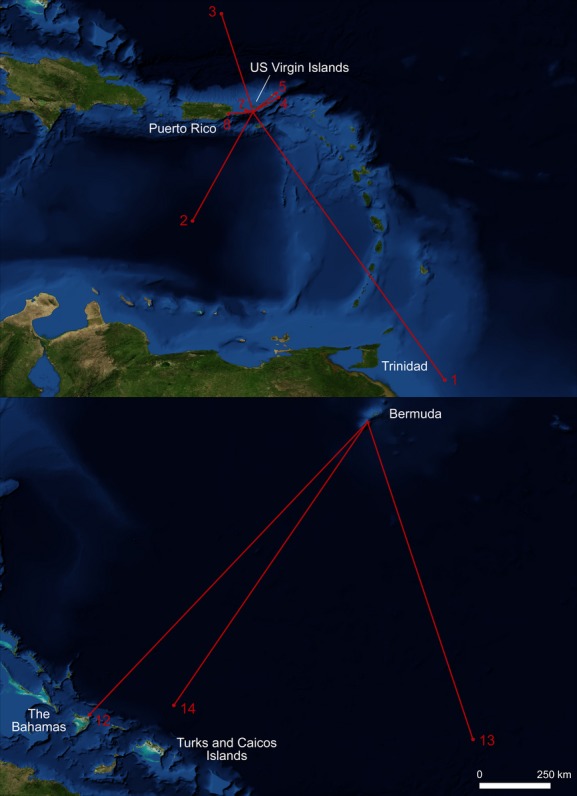
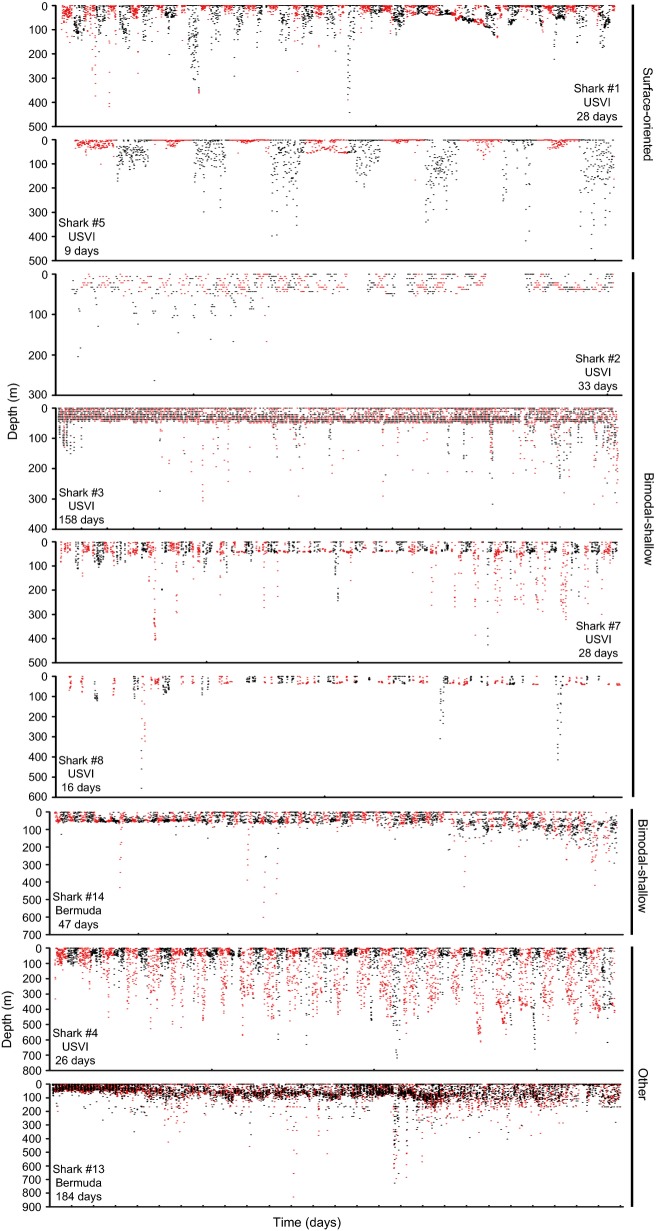
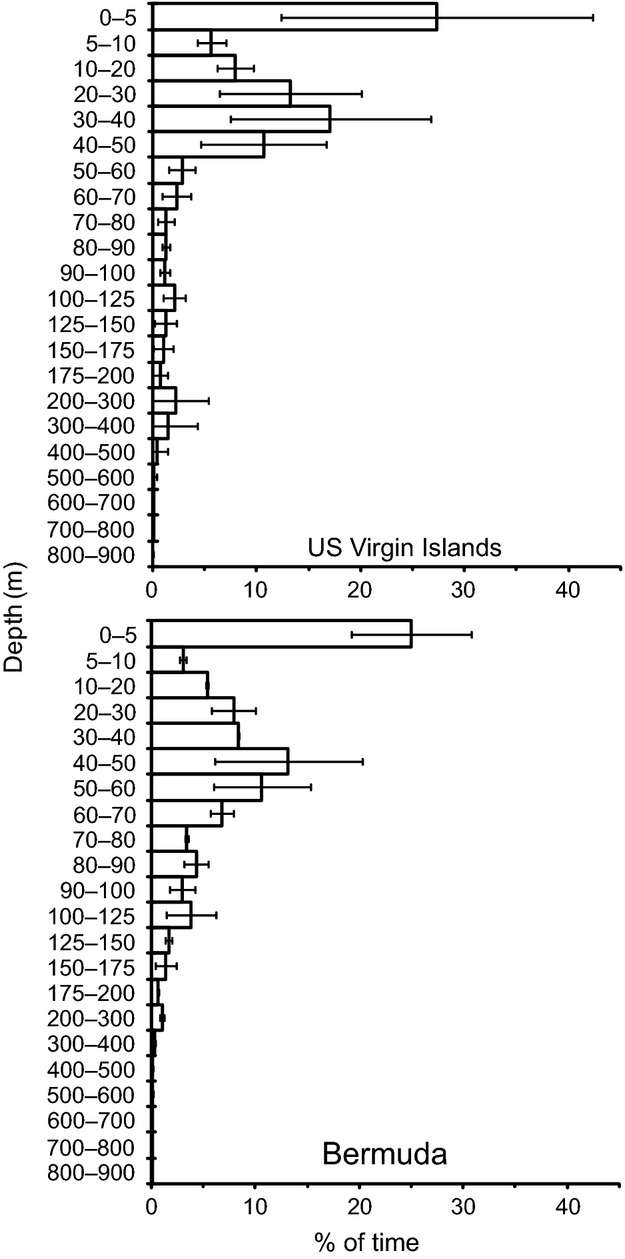
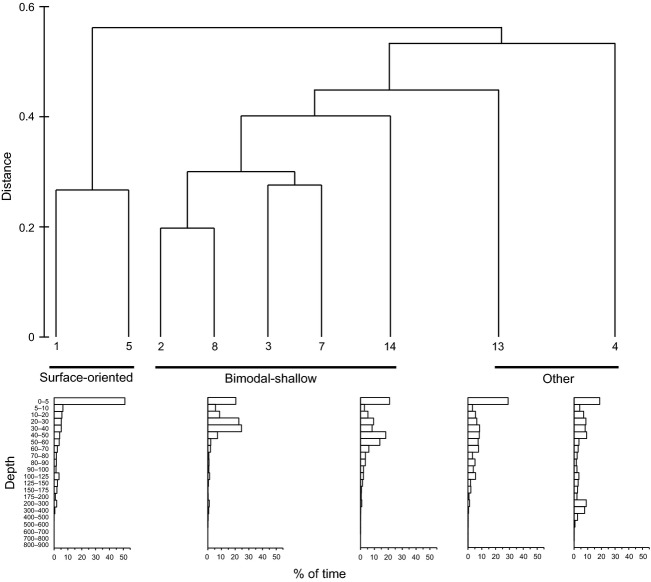
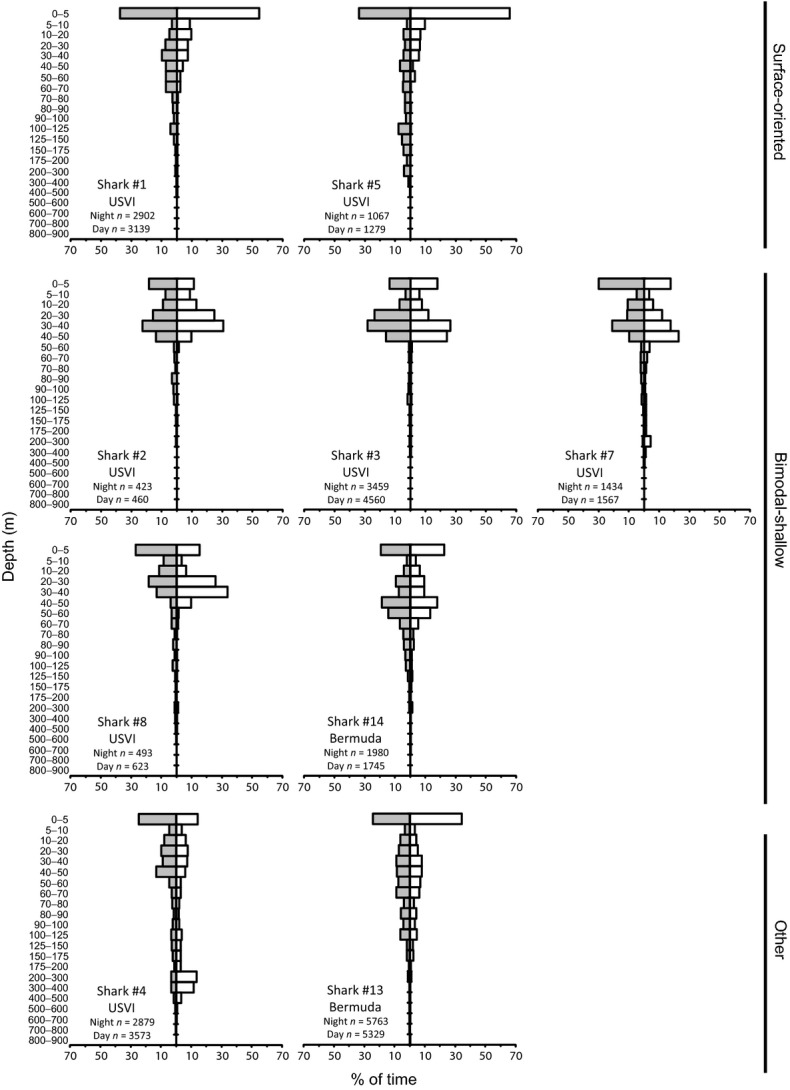
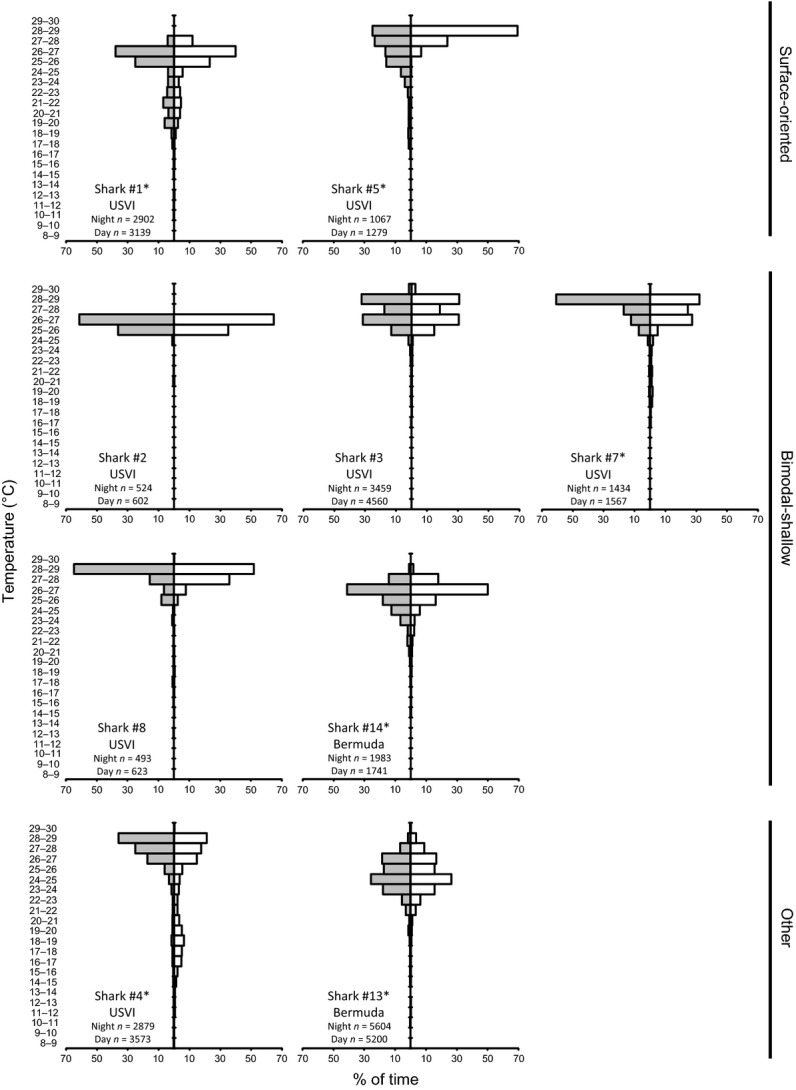
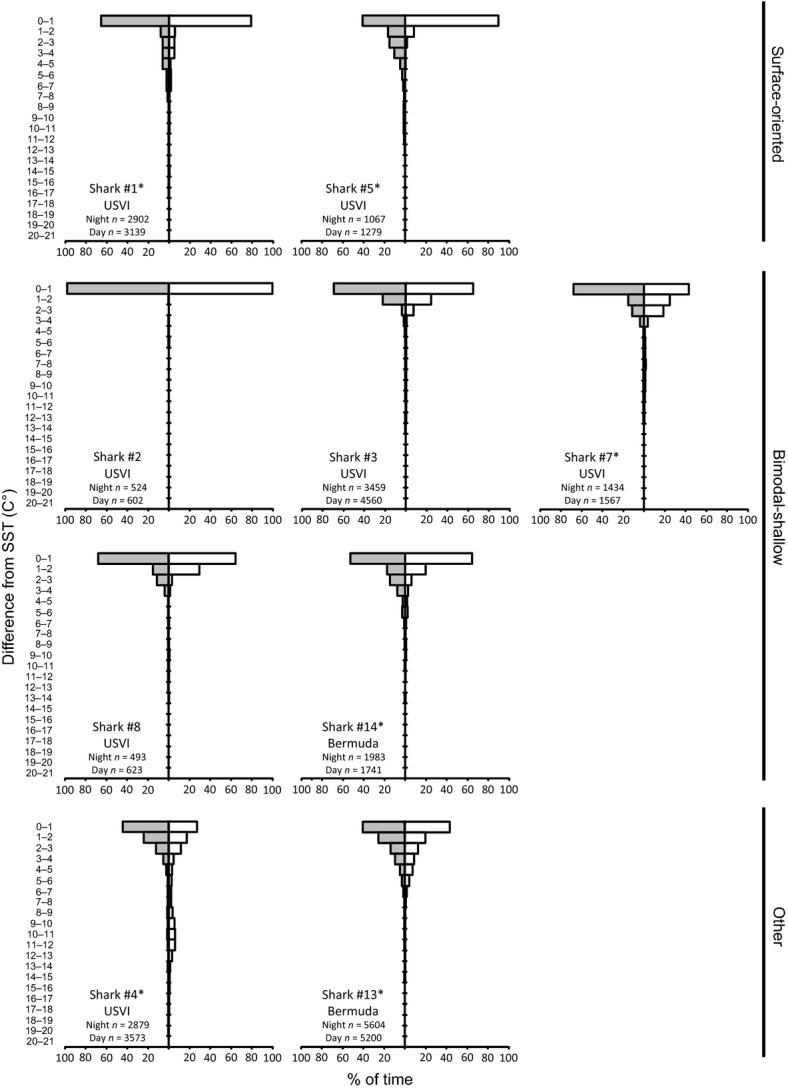
Tiger sharks (Galeocerdo cuvier) are a wide ranging, potentially keystone predator species that display a variety of horizontal movement patterns, making use of coastal and pelagic waters. Far less, however, is known about their vertical movements and use of the water column. We used pop-up satellite archival tags with two data sampling rates (high rate and standard rate tags) to investigate the vertical habitat use and diving behavior of tiger sharks tagged on the Puerto Rico-Virgin Islands platform and off Bermuda between 2008 and 2009. Useable data were received from nine of 14 sharks tagged, tracked over a total of 529 days. Sharks spent the majority of their time making yo-yo dives within the upper 50 m of the water column and considerable time within the upper 5 m of the water column. As a result, sharks typically occupied a narrow daily temperature range (∼2°C). Dives to greater than 200 m were common, and all sharks made dives to at least 250 m, with one shark reaching a depth of 828 m. Despite some similarities among individuals, a great deal of intraspecific variability in vertical habit use was observed. Four distinct depth distributions that were not related to tagging location, horizontal movements, sex, or size were detected. In addition, similar depth distributions did not necessitate similar dive patterns among sharks. Recognition of intraspecific variability in habitat use of top predators can be crucial for effective management of these species and for understanding their influence on ecosystem dynamics.
虎鲨(Galeocerdo cuvier)是一种分布广泛、具有潜在关键捕食者地位的物种,它们表现出多种水平移动模式,利用沿海和远洋水域。然而,人们对它们的垂直运动和水柱利用情况知之甚少。我们使用两种数据采样率(高速率和标准速率标签)的弹出式卫星档案标签来研究 2008 年至 2009 年间在波多黎各-维尔京群岛平台和百慕大附近标记的虎鲨的垂直栖息地利用和潜水行为。在标记的 14 条鲨鱼中,有 9 条收到了可用数据,共跟踪了 529 天。鲨鱼在水柱的上层 50 米内进行大部分的“溜溜球”潜水,并且在水柱的上层 5 米内花费了相当多的时间。因此,鲨鱼通常占据一个狭窄的每日温度范围(约 2°C)。常见的潜水深度超过 200 米,所有鲨鱼的潜水深度都至少达到 250 米,其中一条鲨鱼潜至 828 米深处。尽管个体之间存在一些相似之处,但观察到垂直栖息习性存在很大的种内变异性。检测到四个不同的深度分布,这些分布与标记位置、水平运动、性别或体型无关。此外,相似的深度分布并不一定意味着鲨鱼之间有相似的潜水模式。认识到顶级捕食者的栖息地利用存在种内变异性对于这些物种的有效管理以及理解它们对生态系统动态的影响至关重要。