McCulloch P F, DiNovo K M, Westerhaus D J, Vizinas T A, Peevey J F, Lach M A, Czarnocki P
Department of Physiology, Chicago College of Osteopathic Medicine, Midwestern University, 555 31st Street, Downers Grove, IL 60515, USA.
ISRN Neurosci. 2013 Dec 8;2013:152567. doi: 10.1155/2013/152567. eCollection 2013.
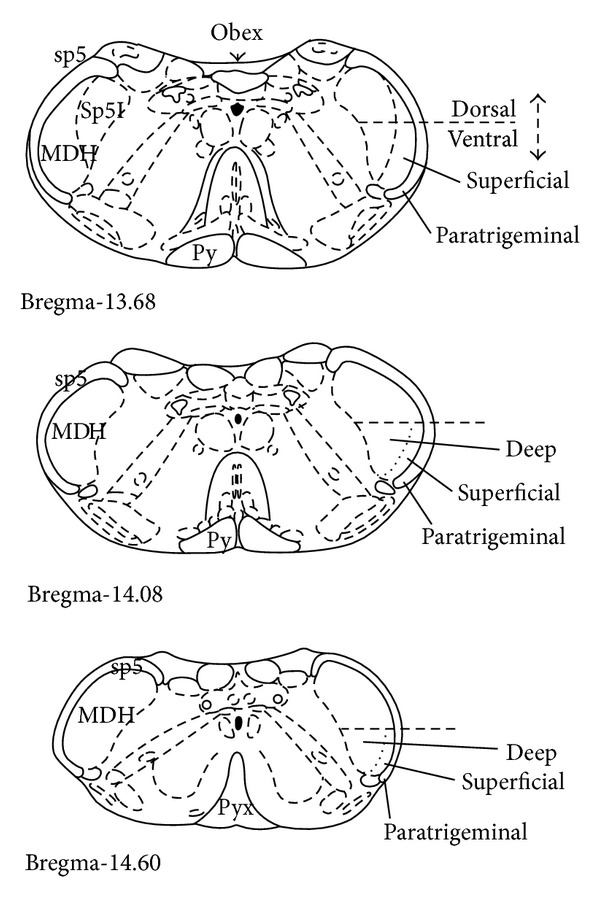
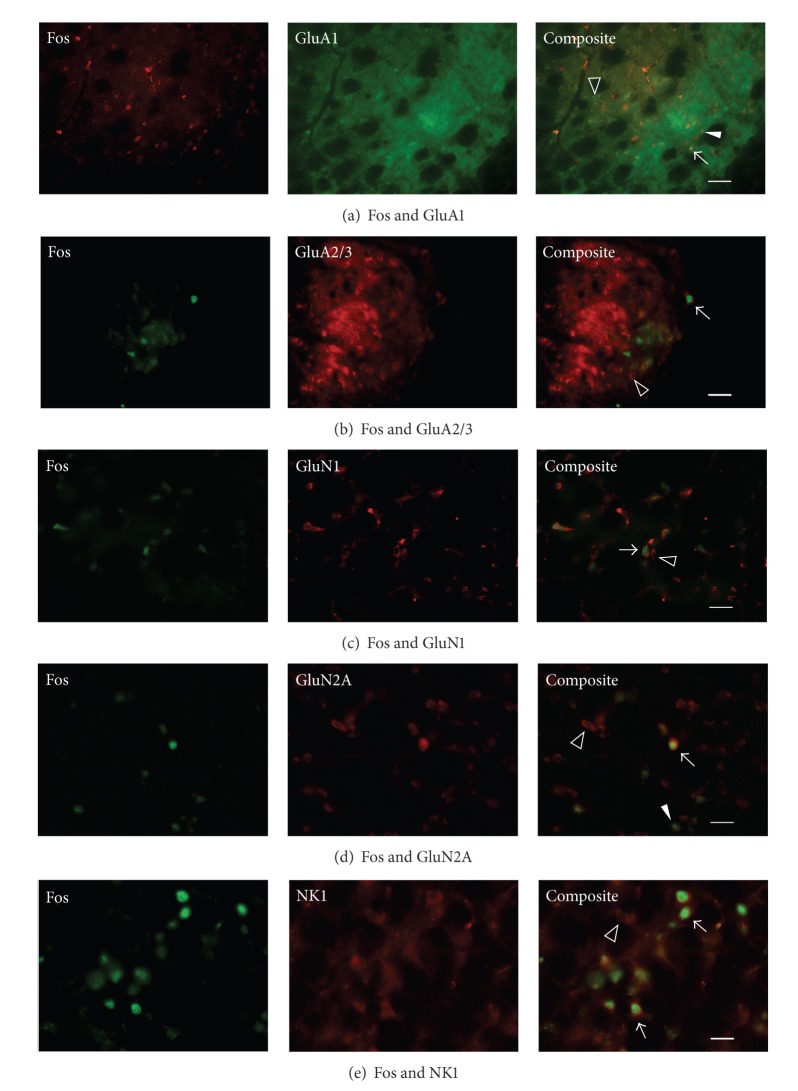
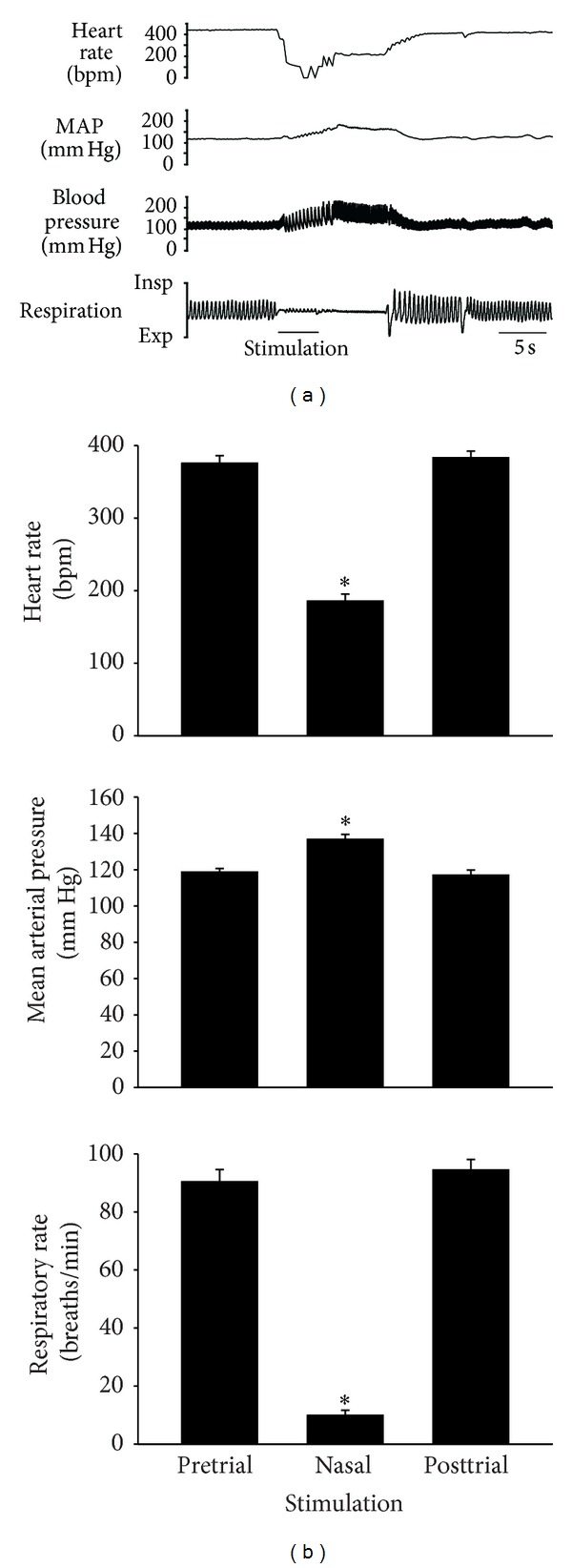
Afferent information initiating the cardiorespiratory responses during nasal stimulation projects from the nasal passages to neurons within the trigeminal medullary dorsal horn (MDH) via the anterior ethmoidal nerve (AEN). Central AEN terminals are thought to release glutamate to activate the MDH neurons. This study was designed to determine which neurotransmitter receptors (AMPA, kainate, or NMDA glutamate receptor subtypes or the Substance P receptor NK1) are expressed by these activated MDH neurons. Fos was used as a neuronal marker of activated neurons, and immunohistochemistry combined with epifluorescent microscopy was used to determine which neurotransmitter receptor subunits were coexpressed by activated MDH neurons. Results indicate that, during nasal stimulation with ammonia vapors in urethane-anesthetized Sprague-Dawley rats, activated neurons within the superficial MDH coexpress the AMPA glutamate receptor subunits GluA1 (95.8%) and GluA2/3 (88.2%), the NMDA glutamate receptor subunits GluN1 (89.1%) and GluN2A (41.4%), and NK1 receptors (64.0%). It is therefore likely that during nasal stimulation the central terminals of the AEN release glutamate and substance P that then produces activation of these MDH neurons. The involvement of AMPA and NMDA receptors may mediate fast and slow neurotransmission, respectively, while NK1 receptor involvement may indicate activation of a nociceptive pathway.
在鼻腔刺激过程中引发心肺反应的传入信息,通过筛前神经(AEN)从鼻腔投射至三叉神经延髓背角(MDH)内的神经元。中枢AEN终末被认为释放谷氨酸以激活MDH神经元。本研究旨在确定这些被激活的MDH神经元表达哪些神经递质受体(AMPA、海人酸或NMDA谷氨酸受体亚型或P物质受体NK1)。Fos被用作激活神经元的神经元标记物,免疫组织化学结合落射荧光显微镜用于确定哪些神经递质受体亚基由被激活的MDH神经元共表达。结果表明,在用氨蒸汽对乌拉坦麻醉的Sprague-Dawley大鼠进行鼻腔刺激期间,浅部MDH内的激活神经元共表达AMPA谷氨酸受体亚基GluA1(95.8%)和GluA2/3(88.2%)、NMDA谷氨酸受体亚基GluN1(89.1%)和GluN2A(41.4%)以及NK1受体(64.0%)。因此,在鼻腔刺激期间,AEN的中枢终末可能释放谷氨酸和P物质,进而激活这些MDH神经元。AMPA和NMDA受体的参与可能分别介导快速和慢速神经传递,而NK1受体的参与可能表明伤害感受性通路的激活。