Takahashi Makoto, Niwa Koichiro, Ishiyama Shun, Sugimoto Kiichi, Komiyama Hiromitsu, Yaginuma Yukihiro, Kojima Yutaka, Goto Michitoshi, Okuzawa Atsushi, Tomiki Yuichi, Sakamoto Kazuhiro
Department of Coloproctological Surgery, Juntendo University Faculty of Medicine, 3-1-3 Hongo, Bunkyo-ku, Tokyo 113-8431, Japan.
J Med Case Rep. 2014 Jun 26;8:234. doi: 10.1186/1752-1947-8-234.
Therapy comprising 5-fluorouracil, levofolinate, and oxaliplatin is currently the most common chemotherapy for colorectal cancer. We experienced a successful case of advanced colon cancer and recurrent breast cancer with 5-fluorouracil, levofolinate, and oxaliplatin therapy.
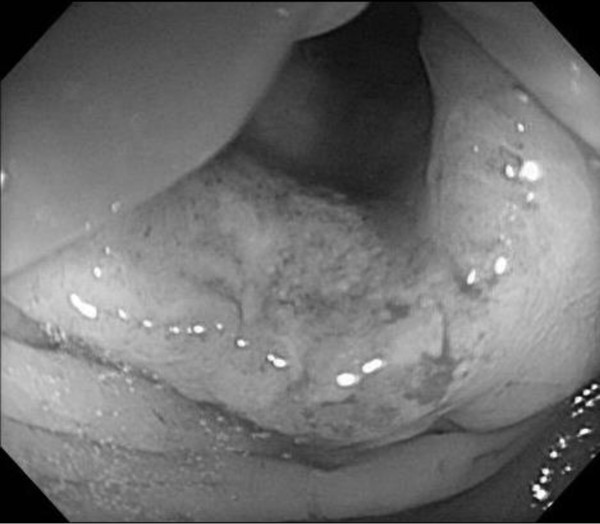
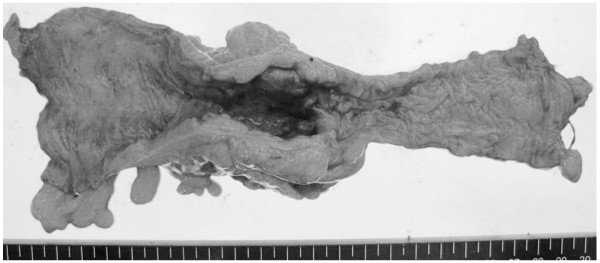
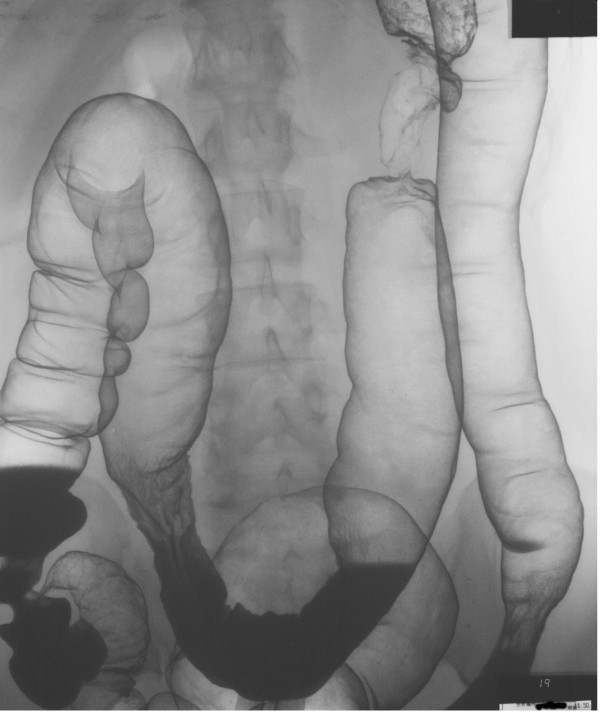
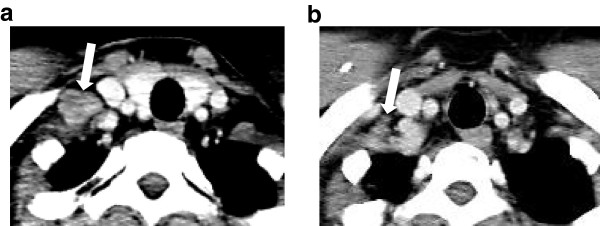
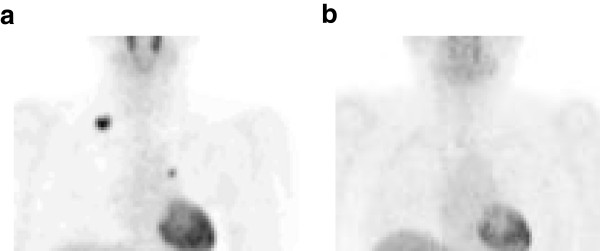
A 43-year-old Japanese woman who had already undergone surgery three times for bilateral breast cancer was admitted to our hospital for the treatment of advanced transverse colon cancer. Preoperative computed tomography demonstrated a swollen lymph node at her right upper clavicle, and fine-needle aspiration biopsy of the lymph node showed that it was a metastasis from the breast cancer. A laparoscopic-assisted colectomy was performed and the pathology demonstrated that the final stage was IIIC (T4aN2aM0, Union for International Cancer Control, 7th edition). The pathological findings and immunohistochemistry showed that the transverse colon tumor was not a metastatic lesion from the breast cancer, but was a de novo colon cancer. Chemotherapy was necessary for both the recurrent breast cancer and the Stage IIIC colon cancer. Therapy of 5-fluorouracil, levofolinate, and oxaliplatin was administered; the therapy included 5-fluorouracil, which is considered to be effective for both colon and breast cancer. After two courses of 5-fluorouracil, levofolinate, and oxaliplatin, the lymph node began to shrink and almost completely disappeared after eight courses of 5-fluorouracil, levofolinate, and oxaliplatin.
We surmise that 5-fluorouracil, levofolinate, and oxaliplatin have the potential to provide a good response for tumors that are sensitive to fluorinated pyrimidine and platinum-containing anticancer drugs such as breast cancer.
包含5-氟尿嘧啶、亚叶酸钙和奥沙利铂的治疗方案目前是结直肠癌最常用的化疗方法。我们经历了一例晚期结肠癌和复发性乳腺癌采用5-氟尿嘧啶、亚叶酸钙和奥沙利铂治疗获得成功的病例。
一名43岁的日本女性,因双侧乳腺癌已接受过三次手术,此次因晚期横结肠癌入院治疗。术前计算机断层扫描显示其右锁骨上淋巴结肿大,淋巴结细针穿刺活检显示为乳腺癌转移。行腹腔镜辅助结肠切除术,病理显示最终分期为IIIC期(T4aN2aM0,国际癌症控制联盟第7版)。病理检查结果和免疫组化显示,横结肠肿瘤并非乳腺癌转移灶,而是原发性结肠癌。复发性乳腺癌和IIIC期结肠癌均需要化疗。给予5-氟尿嘧啶、亚叶酸钙和奥沙利铂治疗;该治疗方案包含被认为对结肠癌和乳腺癌均有效的5-氟尿嘧啶。经过两个疗程的5-氟尿嘧啶、亚叶酸钙和奥沙利铂治疗后,淋巴结开始缩小,在经过八个疗程的5-氟尿嘧啶、亚叶酸钙和奥沙利铂治疗后几乎完全消失。
我们推测,5-氟尿嘧啶、亚叶酸钙和奥沙利铂对于对含氟嘧啶和铂类抗癌药物敏感的肿瘤(如乳腺癌)可能有较好的疗效。