Don Anthony S, Lim Xin Y, Couttas Timothy A
Prince of Wales Clinical School, Faculty of Medicine, University of New South Wales, Sydney, NSW 2052, Australia.
Biomolecules. 2014 Mar 14;4(1):315-53. doi: 10.3390/biom4010315.
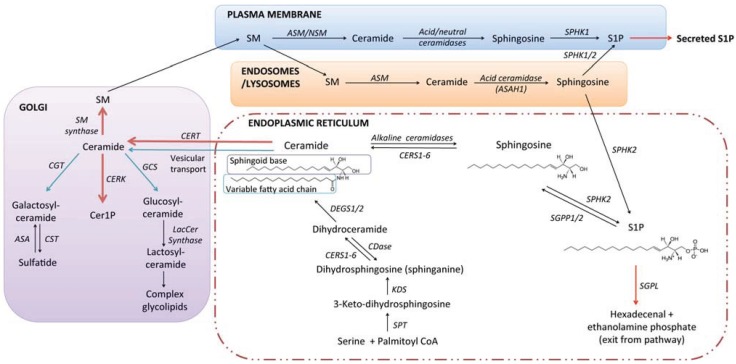
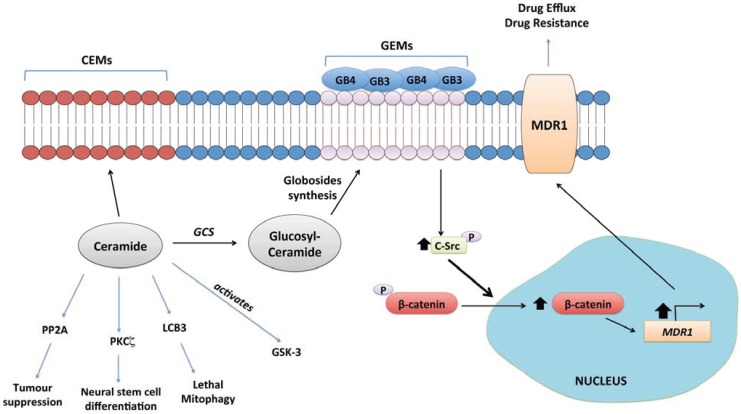
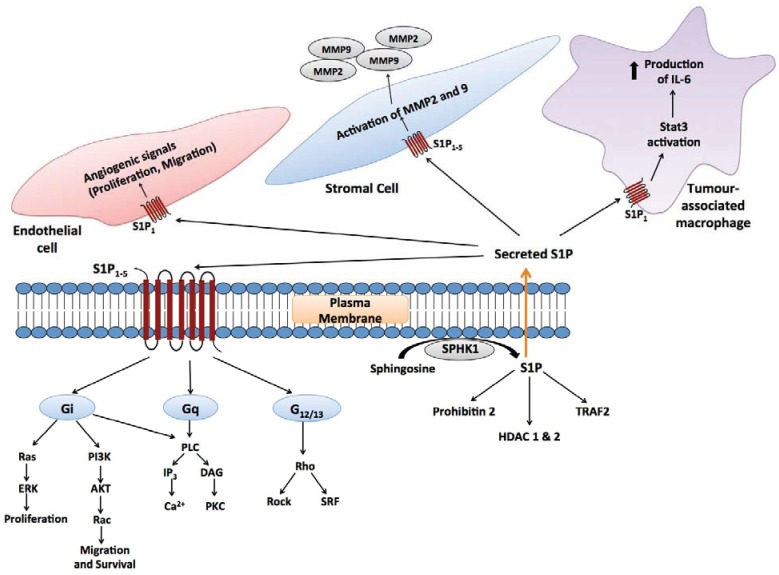
The sphingolipids are one of the major lipid families in eukaryotes, incorporating a diverse array of structural variants that exert a powerful influence over cell fate and physiology. Increased expression of sphingosine kinase 1 (SPHK1), which catalyses the synthesis of the pro-survival, pro-angiogenic metabolite sphingosine 1-phosphate (S1P), is well established as a hallmark of multiple cancers. Metabolic alterations that reduce levels of the pro-apoptotic lipid ceramide, particularly its glucosylation by glucosylceramide synthase (GCS), have frequently been associated with cancer drug resistance. However, the simple notion that the balance between ceramide and S1P, often referred to as the sphingolipid rheostat, dictates cell survival contrasts with recent studies showing that highly potent and selective SPHK1 inhibitors do not affect cancer cell proliferation or survival, and studies demonstrating higher ceramide levels in some metastatic cancers. Recent reports have implicated other sphingolipid metabolic enzymes such as acid sphingomyelinase (ASM) more strongly in cancer pathogenesis, and highlight lysosomal sphingolipid metabolism as a possible weak point for therapeutic targeting in cancer. This review describes the evidence implicating different sphingolipid metabolic enzymes and their products in cancer pathogenesis, and suggests how newer systems-level approaches may improve our overall understanding of how oncogenic transformation reconfigures sphingolipid metabolism.
鞘脂是真核生物中的主要脂质家族之一,包含多种结构变体,这些变体对细胞命运和生理功能有着强大的影响。鞘氨醇激酶1(SPHK1)催化生成具有促生存、促血管生成作用的代谢产物鞘氨醇-1-磷酸(S1P),其表达增加已被确认为多种癌症的一个标志。代谢改变导致促凋亡脂质神经酰胺水平降低,尤其是神经酰胺经葡萄糖神经酰胺合酶(GCS)糖基化,这常常与癌症耐药性相关。然而,神经酰胺和S1P之间的平衡(常被称为鞘脂变阻器)决定细胞存活这一简单概念,与近期研究结果相矛盾,这些研究表明,高效且选择性的SPHK1抑制剂并不影响癌细胞的增殖或存活,而且研究还表明某些转移性癌症中的神经酰胺水平更高。最近的报告更有力地表明,其他鞘脂代谢酶,如酸性鞘磷脂酶(ASM),在癌症发病机制中发挥着更重要的作用,并强调溶酶体鞘脂代谢可能是癌症治疗靶向的一个薄弱环节。这篇综述描述了不同鞘脂代谢酶及其产物与癌症发病机制相关的证据,并提出更新的系统水平方法可能如何提高我们对致癌转化如何重新配置鞘脂代谢的整体理解。