Lin Ran, Angelin Alessia, Da Settimo Federico, Martini Claudia, Taliani Sabrina, Zhu Shigong, Wallace Douglas C
Aging Cell. 2014 Jun;13(3):507-18. doi: 10.1111/acel.12200.
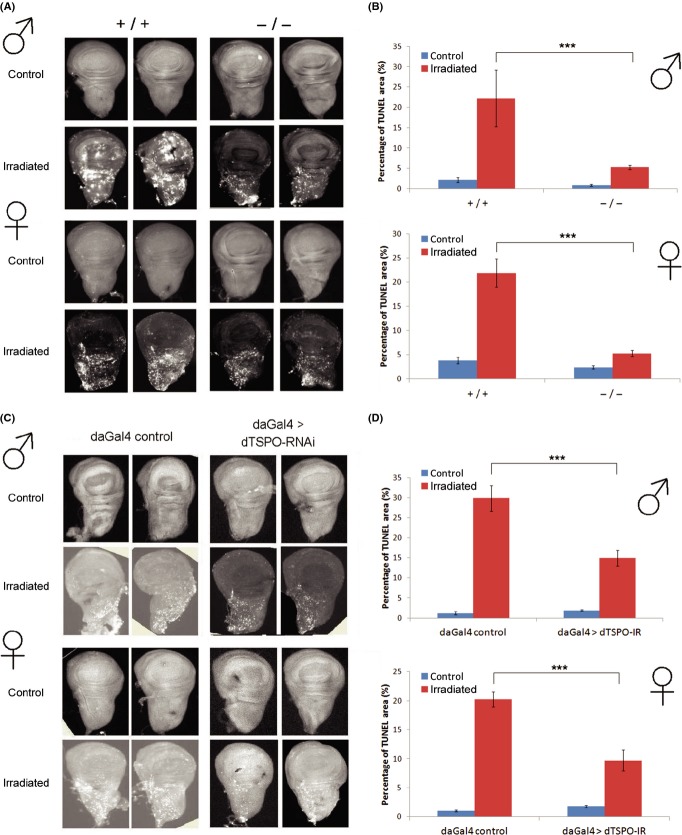
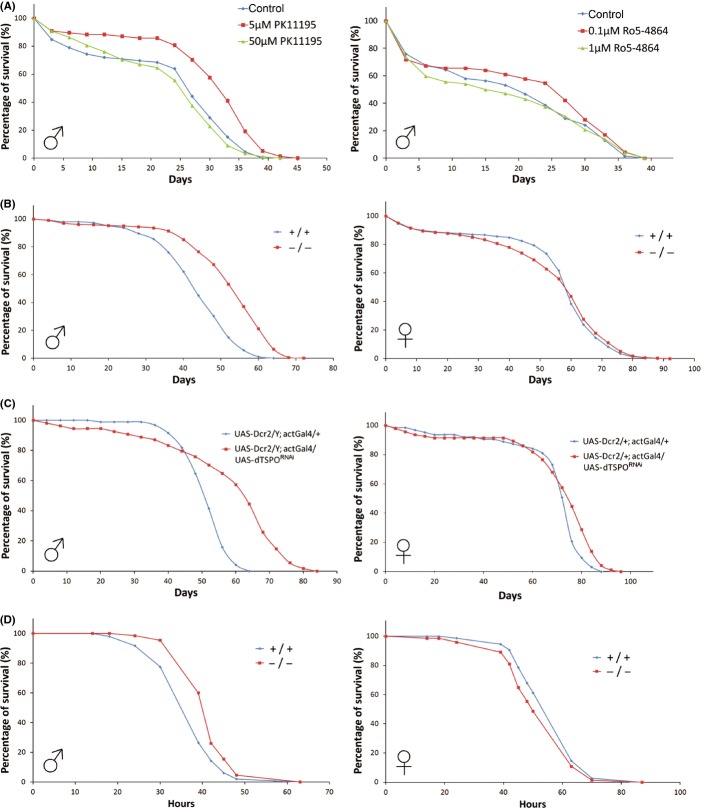
The outer mitochondrial membrane (OMM) protein, the translocator protein 18 kDa (TSPO), formerly named the peripheral benzodiazepine receptor (PBR), has been proposed to participate in the pathogenesis of neurodegenerative diseases. To clarify the TSPO function, we identified the Drosophila homolog, CG2789/dTSPO, and studied the effects of its inactivation by P-element insertion, RNAi knockdown, and inhibition by ligands (PK11195, Ro5-4864). Inhibition of dTSPO inhibited wing disk apoptosis in response to γ-irradiation or H2O2 exposure, as well as extended male fly lifespan and inhibited Aβ42-induced neurodegeneration in association with decreased caspase activation. Therefore, dTSPO is an essential mediator of apoptosis in Drosophila and plays a central role in controlling longevity and neurodegenerative disease, making it a promising drug target.
线粒体外膜(OMM)蛋白,即18 kDa转位蛋白(TSPO),以前称为外周苯二氮䓬受体(PBR),有人提出它参与神经退行性疾病的发病机制。为了阐明TSPO的功能,我们鉴定了果蝇同源物CG2789/dTSPO,并研究了通过P元件插入、RNAi敲低以及配体(PK11195、Ro5-4864)抑制对其失活的影响。抑制dTSPO可抑制γ射线照射或H2O2暴露诱导的翅盘凋亡,还可延长雄蝇寿命,并抑制Aβ42诱导的神经退行性变,同时降低半胱天冬酶激活。因此,dTSPO是果蝇凋亡的重要介质,在控制寿命和神经退行性疾病中起核心作用,使其成为一个有前景的药物靶点。