Hernández-Bautista René J, Alarcón-Aguilar Francisco J, Del C Escobar-Villanueva María, Almanza-Pérez Julio C, Merino-Aguilar Héctor, Fainstein Mina Konigsberg, López-Diazguerrero Norma E
Post-Grade in Experimental Biology, Division of Health and Biological Sciences, Metropolitan Autonomous University, A.P. 55-535, D.F. Mexico, Mexico.
Laboratory of Pharmacology, Department of Health Sciences, Division of Health and Biological Sciences, Metropolitan Autonomous University, A.P. 55-535, D.F. Mexico, Mexico.
Int J Mol Sci. 2014 Jun 27;15(7):11473-94. doi: 10.3390/ijms150711473.
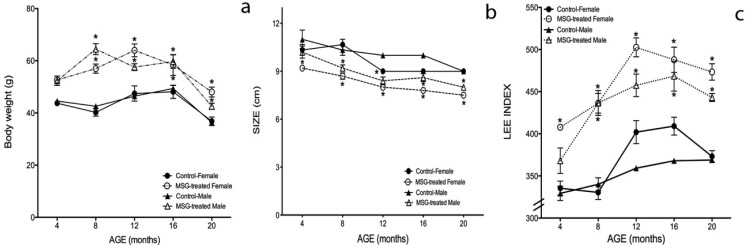
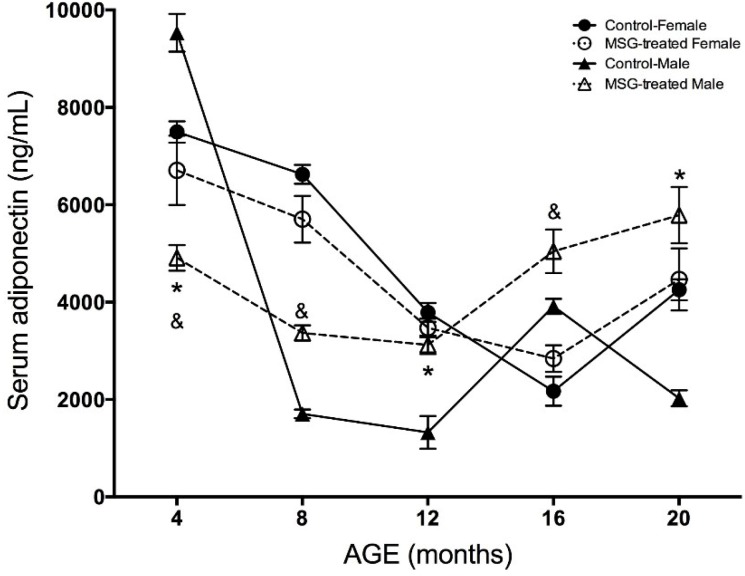
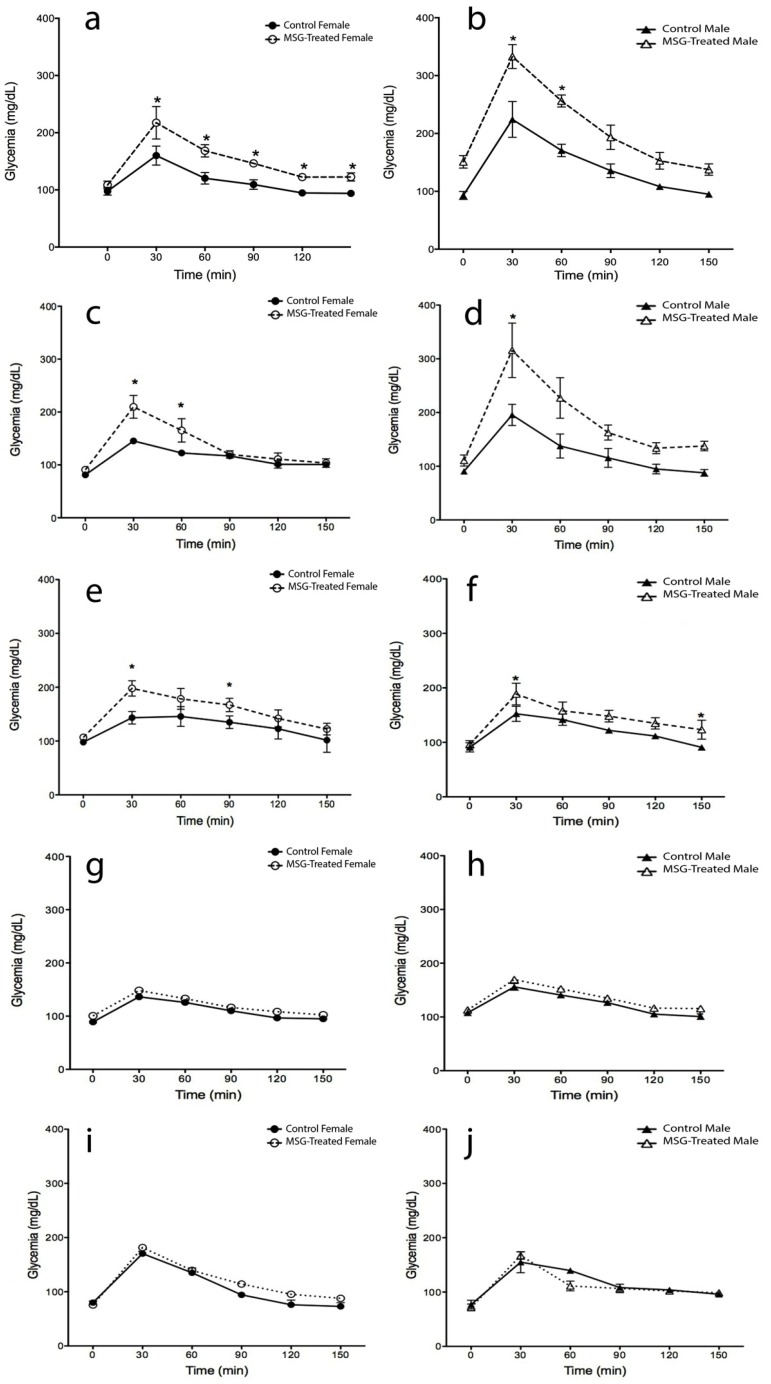
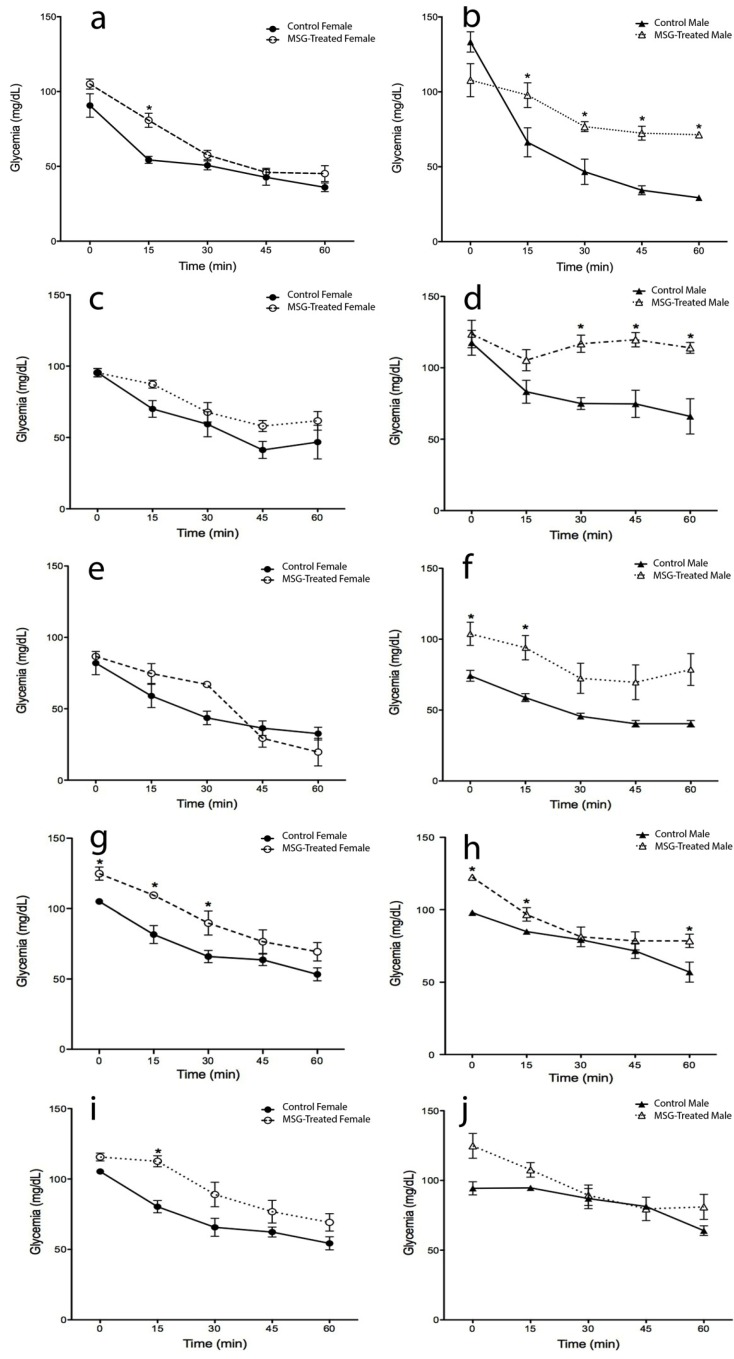
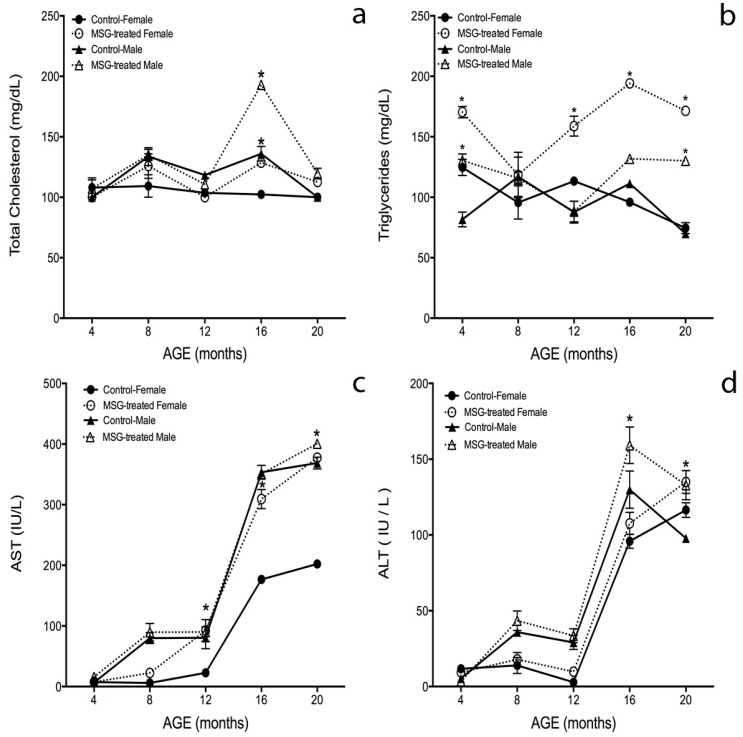
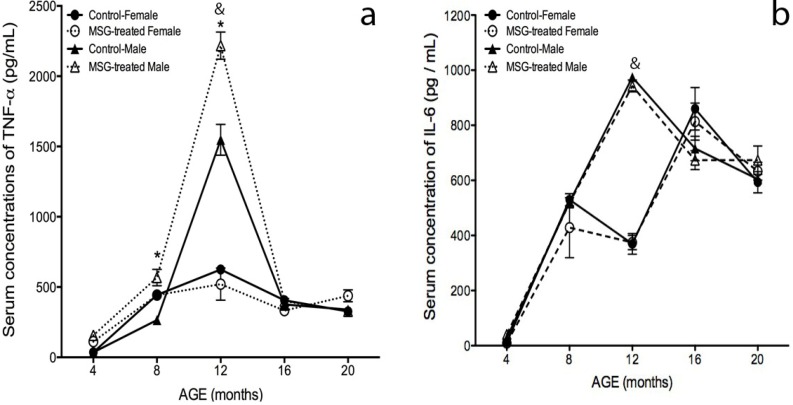
Obesity, from children to the elderly, has increased in the world at an alarming rate over the past three decades, implying long-term detrimental consequences for individual's health. Obesity and aging are known to be risk factors for metabolic disorder development, insulin resistance and inflammation, but their relationship is not fully understood. Prevention and appropriate therapies for metabolic disorders and physical disabilities in older adults have become a major public health challenge. Hence, the aim of this study was to evaluate inflammation markers, biochemical parameters and glucose homeostasis during the obese-aging process, to understand the relationship between obesity and health span during the lifetime. In order to do this, the monosodium glutamate (MSG) obesity mice model was used, and data were evaluated at 4, 8, 12, 16 and 20 months in both female and male mice. Our results showed that obesity was a major factor contributing to premature alterations in MSG-treated mice metabolism; however, at older ages, obesity effects were attenuated and MSG-mice became more similar to normal mice. At a younger age (four months old), the Lee index, triglycerides, total cholesterol, TNF-α and transaminases levels increased; while adiponectin decreased and glucose tolerance and insulin sensitivity levels were remarkably altered. However, from 16 months old-on, the Lee index and TNF-α levels diminished significantly, while adiponectin increased, and glucose and insulin homeostasis was recovered. In summary, MSG-treated obese mice showed metabolic changes and differential susceptibility by gender throughout life and during the aging process. Understanding metabolic differences between genders during the lifespan will allow the discovery of specific preventive treatment strategies for chronic diseases and functional decline.
在过去三十年中,从儿童到老年人,肥胖在全球范围内以惊人的速度增长,这意味着对个人健康会产生长期的有害影响。肥胖和衰老被认为是代谢紊乱、胰岛素抵抗和炎症发展的风险因素,但其关系尚未完全明确。预防和治疗老年人的代谢紊乱及身体残疾已成为一项重大的公共卫生挑战。因此,本研究的目的是评估肥胖 - 衰老过程中的炎症标志物、生化参数和葡萄糖稳态,以了解肥胖与一生健康寿命之间的关系。为了实现这一目标,使用了味精(MSG)诱导的肥胖小鼠模型,并在雌性和雄性小鼠的4、8、12、16和20个月时对数据进行评估。我们的结果表明,肥胖是导致MSG处理小鼠代谢过早改变的主要因素;然而,在老年时,肥胖的影响减弱,MSG小鼠变得更类似于正常小鼠。在较年轻的年龄(四个月大)时,李氏指数、甘油三酯、总胆固醇、TNF-α和转氨酶水平升高;而脂联素降低,葡萄糖耐量和胰岛素敏感性水平显著改变。然而,从16个月龄开始,李氏指数和TNF-α水平显著下降,而脂联素增加,葡萄糖和胰岛素稳态得以恢复。总之,MSG处理的肥胖小鼠在整个生命过程和衰老过程中表现出代谢变化以及性别差异敏感性。了解生命周期中不同性别之间的代谢差异将有助于发现针对慢性疾病和功能衰退的特定预防治疗策略。