Penzkofer Daniela, Bonauer Angelika, Fischer Ariane, Tups Alexander, Brandes Ralf P, Zeiher Andreas M, Dimmeler Stefanie
Institute for Cardiovascular Regeneration, Centre of Molecular Medicine, J. W. Goethe University Frankfurt, Frankfurt am Main, Germany.
Department of Animal Physiology, Faculty of Biology, Philipps University Marburg, Marburg, Germany.
PLoS One. 2014 Jun 30;9(6):e101153. doi: 10.1371/journal.pone.0101153. eCollection 2014.
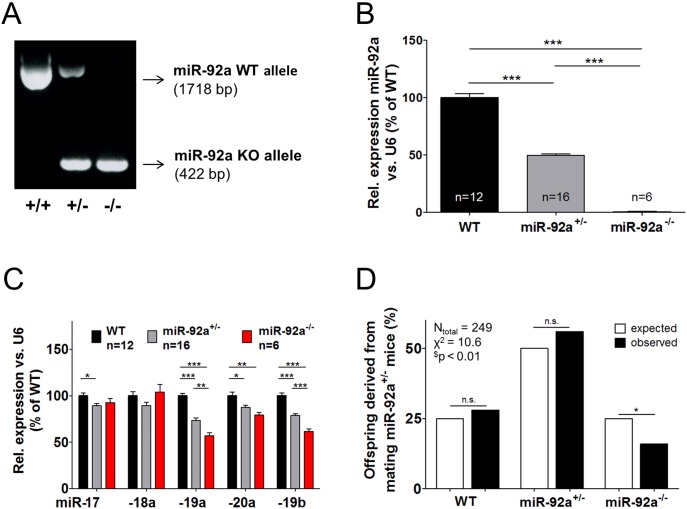
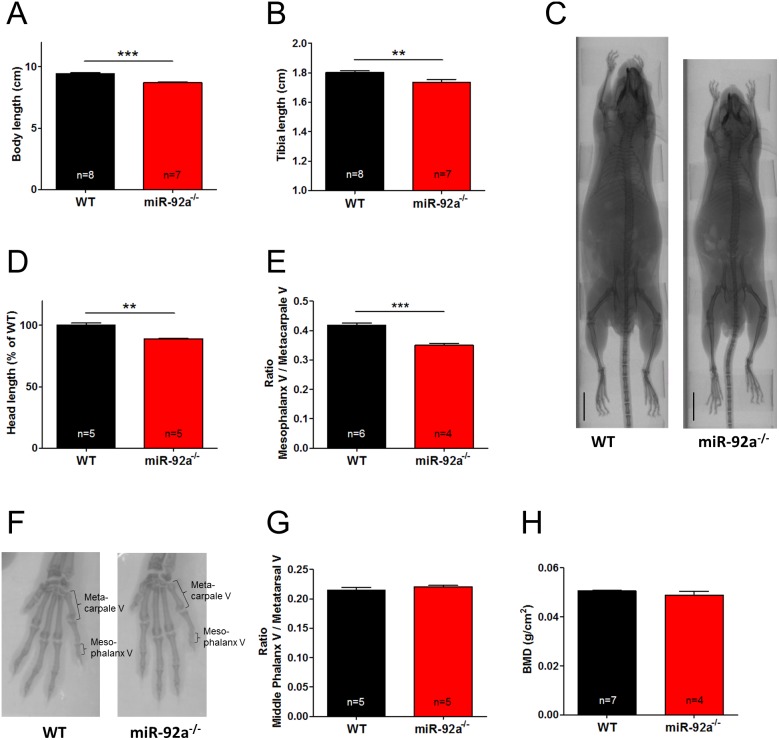
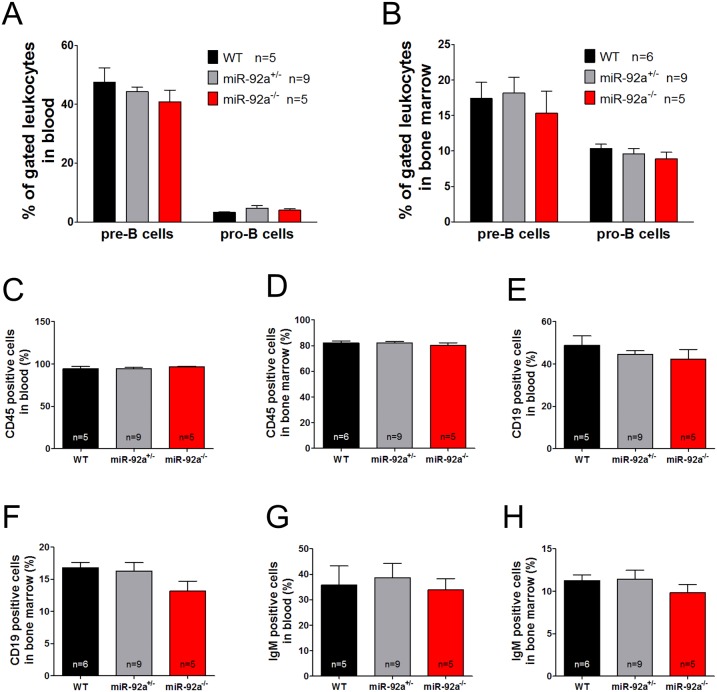
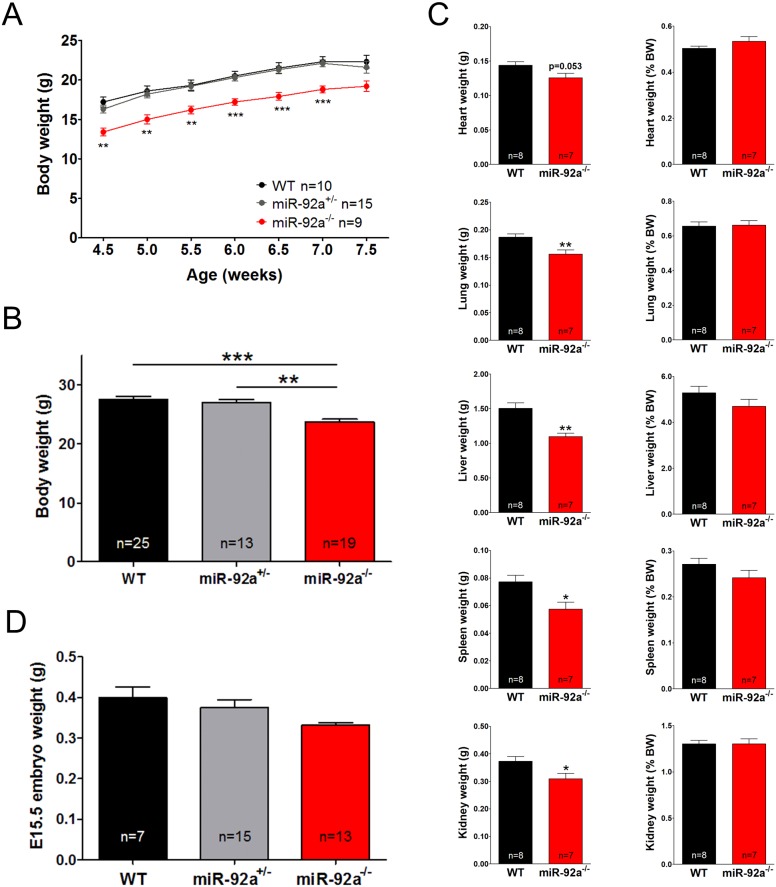
MicroRNAs (miRNAs, miRs) emerged as key regulators of gene expression. Germline hemizygous deletion of the gene that encodes the miR-17∼92 miRNA cluster was associated with microcephaly, short stature and digital abnormalities in humans. Mice deficient for the miR-17∼92 cluster phenocopy several features such as growth and skeletal development defects and exhibit impaired B cell development. However, the individual contribution of miR-17∼92 cluster members to this phenotype is unknown. Here we show that germline deletion of miR-92a in mice is not affecting heart development and does not reduce circulating or bone marrow-derived hematopoietic cells, but induces skeletal defects. MiR-92a-/- mice are born at a reduced Mendelian ratio, but surviving mice are viable and fertile. However, body weight of miR-92a-/- mice was reduced during embryonic and postnatal development and adulthood. A significantly reduced body and skull length was observed in miR-92a-/- mice compared to wild type littermates. µCT analysis revealed that the length of the 5th mesophalanx to 5th metacarpal bone of the forelimbs was significantly reduced, but bones of the hindlimbs were not altered. Bone density was not affected. These findings demonstrate that deletion of miR-92a is sufficient to induce a developmental skeletal defect.
微小RNA(miRNA,miR)是基因表达的关键调节因子。编码miR-17∼92 miRNA簇的基因的种系半合子缺失与人类小头畸形、身材矮小和手指异常有关。miR-17∼92簇缺陷的小鼠表现出多种特征,如生长和骨骼发育缺陷,并表现出B细胞发育受损。然而,miR-17∼92簇成员对该表型的个体贡献尚不清楚。在这里,我们表明,小鼠中miR-92a的种系缺失不影响心脏发育,也不会减少循环或骨髓来源的造血细胞,但会诱导骨骼缺陷。miR-92a基因敲除小鼠的出生比例低于孟德尔比例,但存活的小鼠是有活力且可育的。然而,miR-92a基因敲除小鼠在胚胎期、出生后发育阶段和成年期的体重均有所降低。与野生型同窝小鼠相比,miR-92a基因敲除小鼠的身体和头骨长度明显缩短。µCT分析显示,前肢第5掌骨至第5指骨的长度显著缩短,但后肢骨骼未发生改变。骨密度未受影响。这些发现表明,miR-92a的缺失足以诱导发育性骨骼缺陷。