Ghantous Akram, Saffery Richard, Cros Marie-Pierre, Ponsonby Anne-Louise, Hirschfeld Steven, Kasten Carol, Dwyer Terence, Herceg Zdenko, Hernandez-Vargas Hector
Epigenetics Group, International Agency for Research on Cancer (IARC), 150 rue Albert-Thomas, 69008 Lyon, France.
BMC Biotechnol. 2014 Jul 1;14:60. doi: 10.1186/1472-6750-14-60.
Neonatal dried blood spots (DBS) represent an inexpensive method for long-term biobanking worldwide and are considered gold mines for research for several human diseases, including those of metabolic, infectious, genetic and epigenetic origin. However, the utility of DBS is restricted by the limited amount and quality of extractable biomolecules (including DNA), especially for genome wide profiling. Degradation of DNA in DBS often occurs during storage and extraction. Moreover, amplifying small quantities of DNA often leads to a bias in subsequent data, particularly in methylome profiles. Thus it is important to develop methodologies that maximize both the yield and quality of DNA from DBS for downstream analyses.
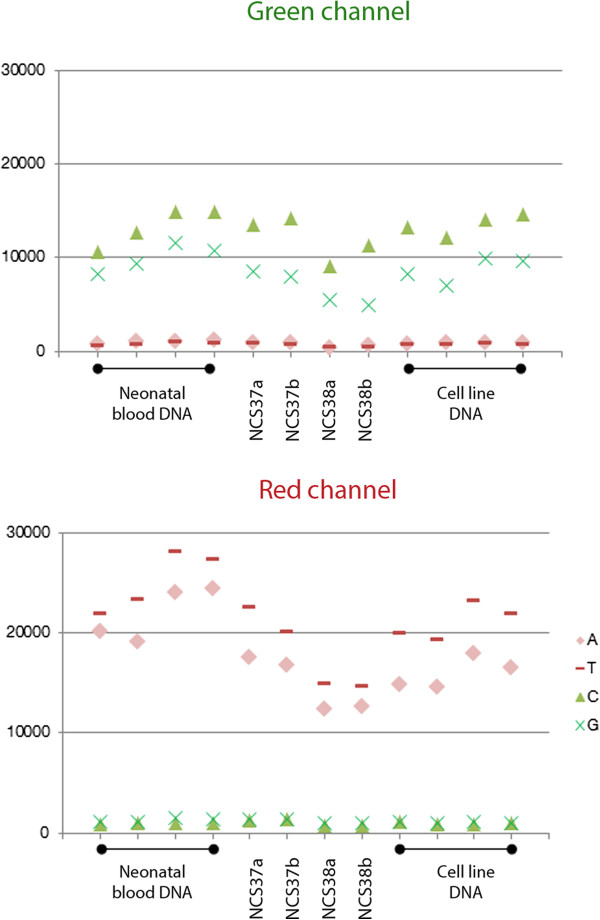
Using combinations of in-house-derived and modified commercial extraction kits, we developed a robust and efficient protocol, compatible with methylome studies, many of which require stringent bisulfite conversion steps. Several parameters were tested in a step-wise manner, including blood extraction, cell lysis, protein digestion, and DNA precipitation, purification and elution. DNA quality was assessed based on spectrophotometric measurements, DNA detectability by PCR, and DNA integrity by gel electrophoresis and bioanalyzer analyses. Genome scale Infinium HumanMethylation450 and locus-specific pyrosequencing data generated using the refined DBS extraction protocol were of high quality, reproducible and consistent.
This study may prove useful to meet the increased demand for research on prenatal, particularly epigenetic, origins of human diseases and for newborn screening programs, all of which are often based on DNA extracted from DBS.
新生儿干血斑(DBS)是一种在全球范围内用于长期生物样本库储存的低成本方法,被视为研究多种人类疾病的宝库,这些疾病包括代谢性、感染性、遗传性和表观遗传性疾病。然而,DBS的实用性受到可提取生物分子(包括DNA)数量和质量的限制,尤其是在进行全基因组分析时。DBS中的DNA在储存和提取过程中常常发生降解。此外,扩增少量DNA往往会导致后续数据出现偏差,特别是在甲基化组分析中。因此,开发能够最大化从DBS中提取的DNA产量和质量以用于下游分析的方法非常重要。
通过将自制的和改良的商业提取试剂盒相结合,我们开发了一种稳健且高效的方案,该方案与甲基化组研究兼容,其中许多研究需要严格的亚硫酸氢盐转化步骤。我们逐步测试了几个参数,包括血液提取、细胞裂解、蛋白质消化以及DNA沉淀、纯化和洗脱。基于分光光度法测量、PCR检测DNA的能力以及凝胶电泳和生物分析仪分析评估DNA完整性来评估DNA质量。使用优化后的DBS提取方案生成的全基因组规模Infinium HumanMethylation450和位点特异性焦磷酸测序数据质量高、可重复且一致。
这项研究可能有助于满足对人类疾病产前起源,特别是表观遗传起源研究以及新生儿筛查项目不断增长的需求,所有这些研究和项目通常都基于从DBS中提取DNA进行。