Özalp Faruk, Bhagra Sai, Bhagra Catriona, Butt Tanveer, Ramesh Bandigowdanapalya, Robinson-Smith Nicola, Wrightson Neil, Parry Gareth, Griselli Massimo, Hasan Asif, Schueler Stephan, MacGowan Guy A
Departments of Cardiothoracic Surgery and Cardiopulmonary Transplantation, Freeman Hospital, Newcastle upon Tyne Hospitals NHS Foundation Trust, Newcastle upon Tyne, UK.
Department of Cardiology, Freeman Hospital, Newcastle upon Tyne, UK.
Eur J Cardiothorac Surg. 2014 Sep;46(3):e35-40. doi: 10.1093/ejcts/ezu258. Epub 2014 Jun 30.
Third-generation ventricular assist devices (VADs) are associated with improved outcomes, though in recent clinical trials bridge-to-transplant (BTT) rates are ∼30% at 6 months, so that transplantation can be used as a 'bail out' for serious complications. In the UK, there was a significant reduction in heart transplantation rates over the last decade, so that transplantation from VADs is much less frequent. The objective of this study was to determine outcomes and their predictors in this situation of low BTT rates, and as patients were exposed to long-term support, the incidence and outcomes of VAD thrombosis.
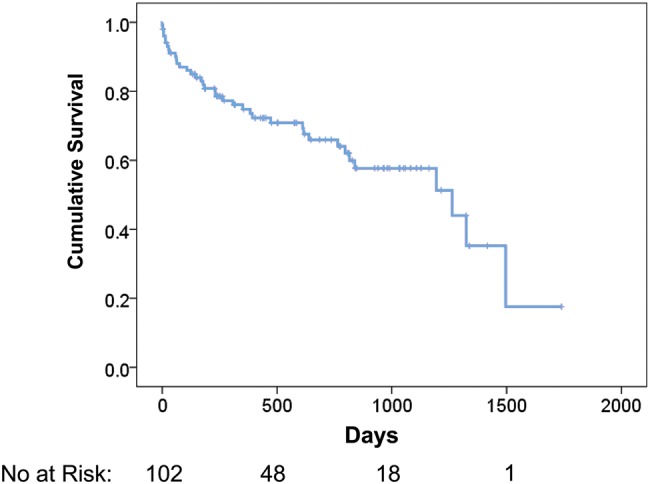
We analysed outcomes for 102 consecutive patients between 2009 and 2013 (mean age 47 ± 13; VentrAssist n = 6 and HeartWare n = 96). The median duration of support was 462 ± 426 days.
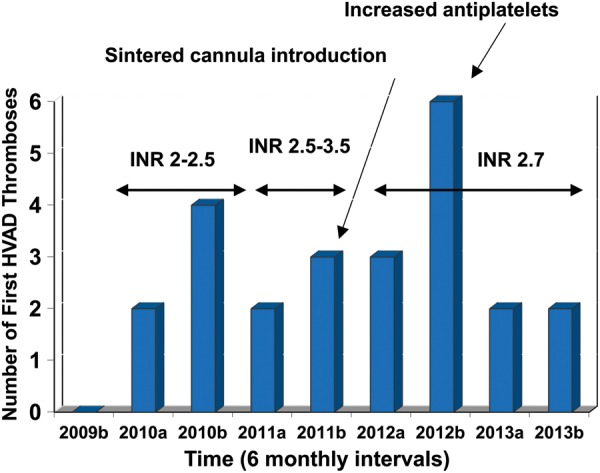
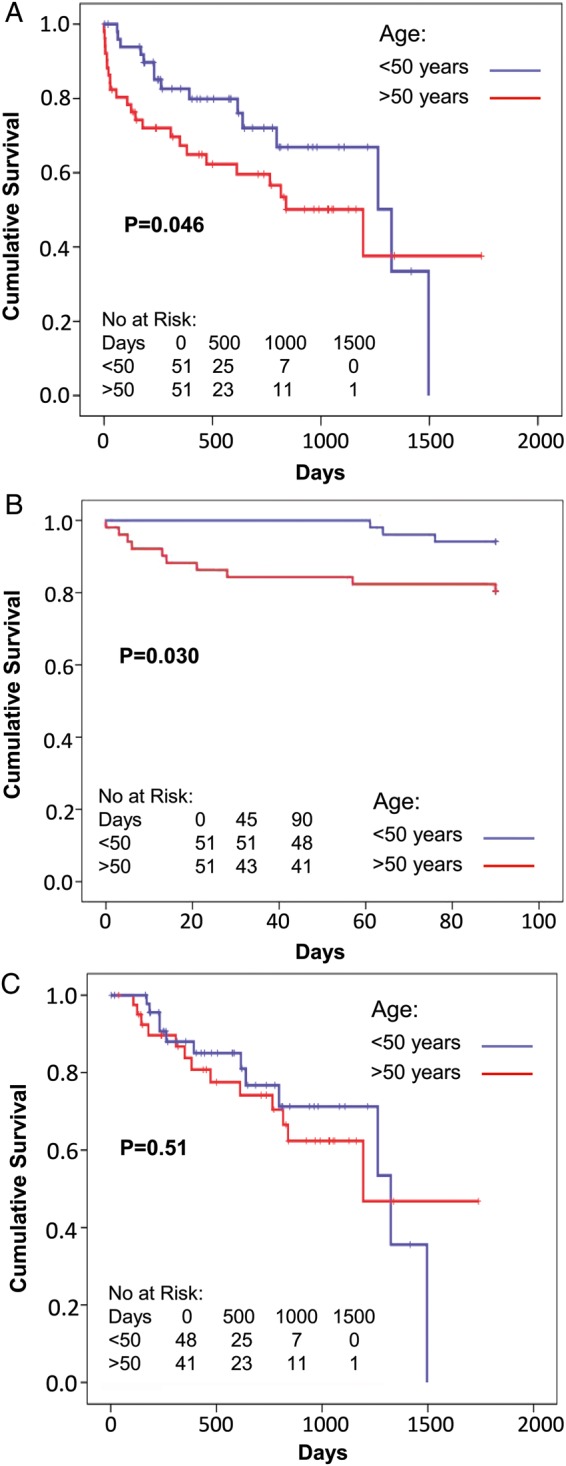
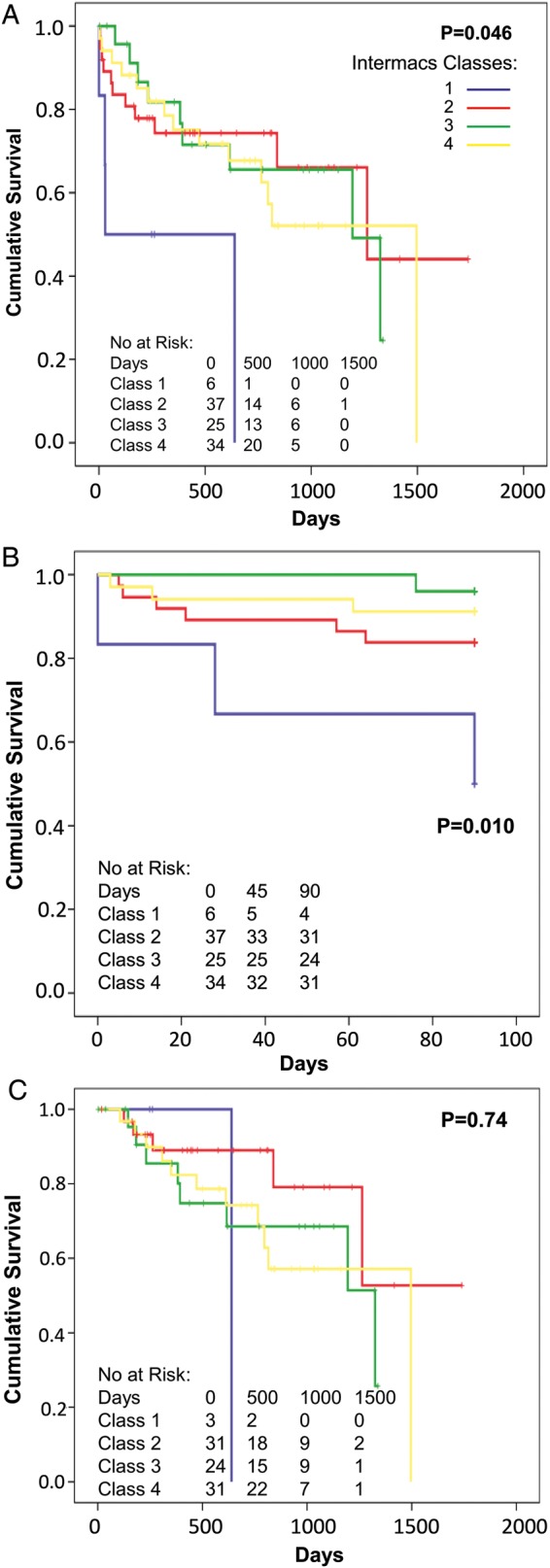
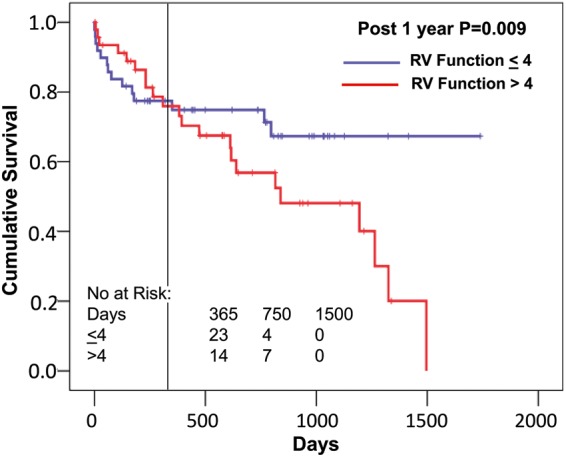
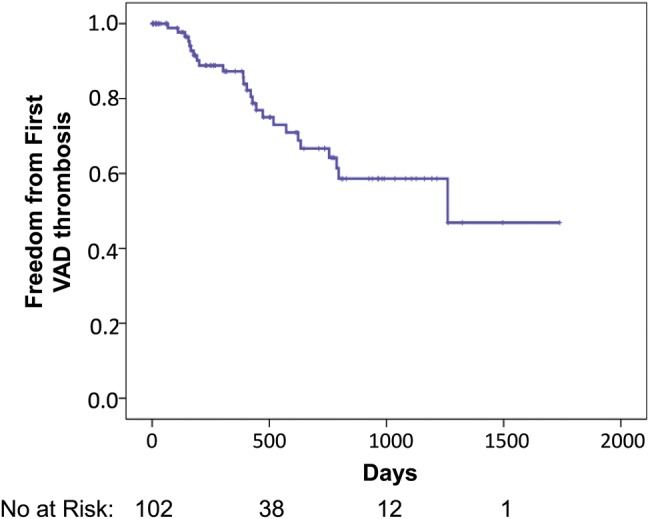
Survival rates on the device were 75 and 66% at 1 and 2 years, respectively. Older age and more acute INTERMACS groups were significantly related to reduced survival within the first 90 days (P = 0.030 and 0.010, respectively). Poor preoperative right ventricular (RV) function had a negative effect on survival after 1 year (P = 0.009), though not earlier. VAD thrombosis (n = 24 HeartWare and n = 1 VentrAssist) occurred at 0.18 events per patient-year for HeartWare and 0.07 for VentrAssist devices at a median time of onset at 404 ± 281 days. There was no significant effect of VAD thrombosis on survival. Only 14 of 102 patients were transplanted at a median of 334 ± 347 days, and only 3 were transplanted within the first 6 months.
Third-generation left ventricular assist device implants with a low rate of transplantation have similar survival to destination therapy, and are susceptible to long-term complications of VAD thrombosis and right heart failure.
第三代心室辅助装置(VAD)与改善预后相关,尽管在最近的临床试验中,6个月时桥接至移植(BTT)率约为30%,因此移植可作为严重并发症的“补救措施”。在英国,过去十年心脏移植率显著下降,因此通过VAD进行移植的情况要少得多。本研究的目的是确定在BTT率较低的情况下的预后及其预测因素,并且由于患者接受长期支持,还要确定VAD血栓形成的发生率和预后。
我们分析了2009年至2013年间102例连续患者的预后(平均年龄47±13岁;VentrAssist型6例,HeartWare型96例)。支持的中位持续时间为462±426天。
装置植入后的1年和2年生存率分别为75%和66%。年龄较大和急性INTERMACS分组较高与最初90天内生存率降低显著相关(分别为P = 0.030和0.010)。术前右心室(RV)功能差对1年后的生存有负面影响(P = 0.009),但早期没有。HeartWare型VAD血栓形成发生率为每名患者每年0.18次事件(24例),VentrAssist型为0.07次事件(1例),中位发病时间为404±281天。VAD血栓形成对生存无显著影响。102例患者中只有14例在中位时间334±347天接受了移植,只有3例在最初6个月内接受了移植。
移植率低的第三代左心室辅助装置植入后的生存率与目标治疗相似,并且易发生VAD血栓形成和右心衰竭等长期并发症。