Wang De-Shen, Patel Atish, Shukla Suneet, Zhang Yun-Kai, Wang Yi-Jun, Kathawala Rishil J, Robey Robert W, Zhang Li, Yang Dong-Hua, Talele Tanaji T, Bates Susan E, Ambudkar Suresh V, Xu Rui-Hua, Chen Zhe-Sheng
Department of Medical Oncology, Sun Yat-sen University Cancer Center, State Key Laboratory of Oncology in South China, Collaborative Innovation Center for Cancer Medicine, China. Department of Pharmaceutical Sciences, College of Pharmacy and Health Sciences, St. John's University, Queens, New York, USA. These Authors contributed equally to this work.
Department of Pharmaceutical Sciences, College of Pharmacy and Health Sciences, St. John's University, Queens, New York, USA. These Authors contributed equally to this work.
Oncotarget. 2014 Jun 30;5(12):4529-42. doi: 10.18632/oncotarget.2102.
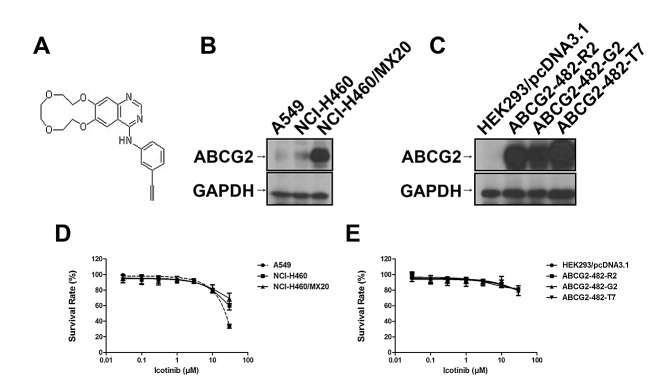
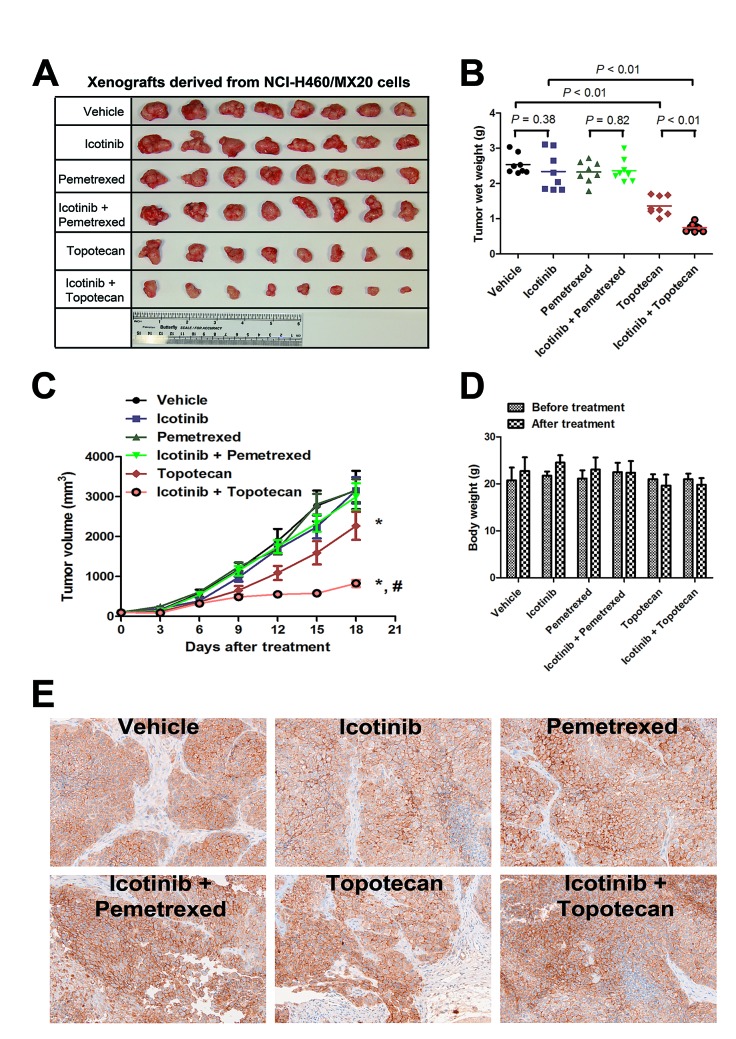
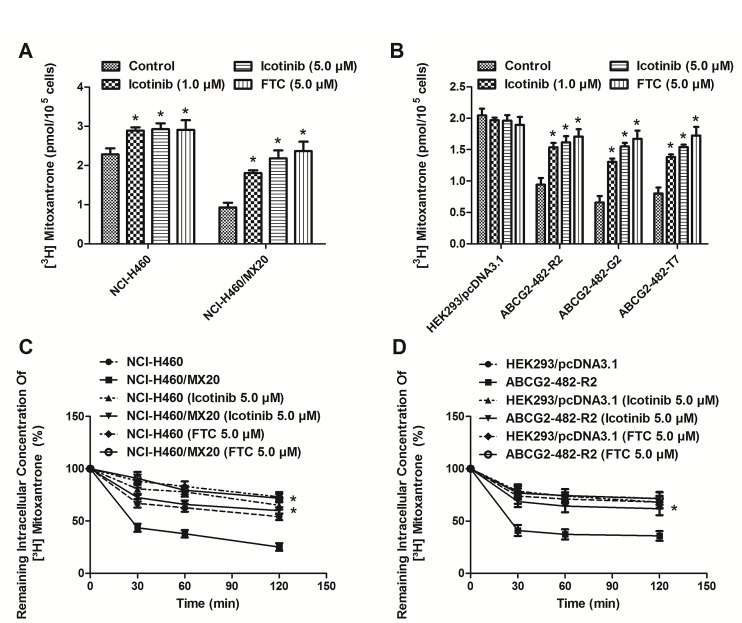
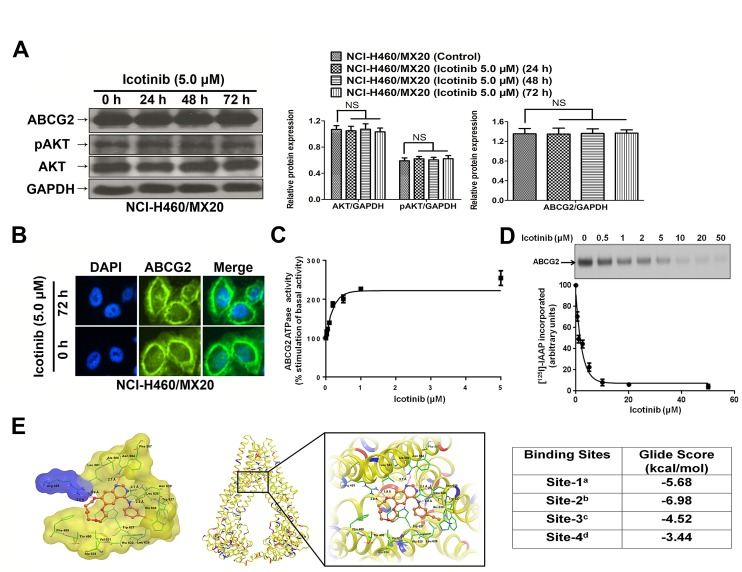
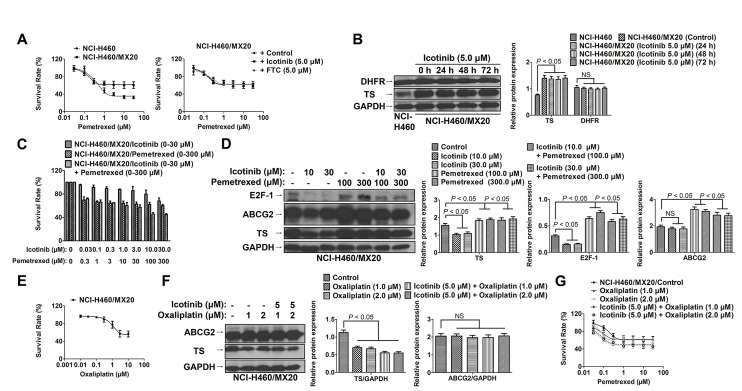
ABCG2 is a potential biomarker causing multidrug resistance (MDR) in Non-Small Cell Lung Cancer (NSCLC). We conducted this study to investigate whether Icotinib, a small-molecule inhibitor of EGFR tyrosine kinase, could interact with ABCG2 transporter in NSCLC. Our results showed that Icotinib reversed ABCG2-mediated MDR by antagonizing the drug efflux function of ABCG2. Icotinib stimulated the ATPase activity in a concentration-dependent manner and inhibited the photolabeling of ABCG2 with [125I]-Iodoarylazidoprazosin, demonstrating that it interacts at the drug-binding pocket. Homology modeling predicted the binding conformation of Icotinib at Asn629 centroid-based grid of ABCG2. However, Icotinib at reversal concentration did not affect the expression levels of AKT and ABCG2. Furthermore, a combination of Icotinib and topotecan exhibited significant synergistic anticancer activity against NCI-H460/MX20 tumor xenografts. However, the inhibition of transport activity of ABCG2 was insufficient to overcome pemetrexed resistance in NCI-H460/MX20 cells, which was due to the co-upregulated thymidylate synthase (TS) and ABCG2 expression. This is the first report to show that the up-regulation of TS in ABCG2-overexpressing cell line NCI-H460/MX20 may play a role of resistance to pemetrexate. Our findings suggested different possible strategies of overcoming the resistance of topotecan and pemetrexed in the NSCLC patients.
ABCG2是导致非小细胞肺癌(NSCLC)多药耐药(MDR)的一种潜在生物标志物。我们开展本研究以调查表皮生长因子受体(EGFR)酪氨酸激酶的小分子抑制剂埃克替尼是否能与NSCLC中的ABCG2转运蛋白相互作用。我们的结果表明,埃克替尼通过拮抗ABCG2的药物外排功能逆转了ABCG2介导的MDR。埃克替尼以浓度依赖性方式刺激ATP酶活性,并抑制[125I] - 碘芳基叠氮基哌唑嗪对ABCG2的光标记,表明它在药物结合口袋处相互作用。同源建模预测了埃克替尼在基于ABCG2的Asn629质心网格处的结合构象。然而,逆转浓度的埃克替尼并不影响AKT和ABCG2的表达水平。此外,埃克替尼与拓扑替康联合使用对NCI - H460/MX20肿瘤异种移植瘤表现出显著的协同抗癌活性。然而,抑制ABCG2的转运活性不足以克服NCI - H460/MX20细胞中的培美曲塞耐药性,这是由于胸苷酸合成酶(TS)和ABCG2表达共同上调所致。这是首次报道显示在ABCG2过表达细胞系NCI - H460/MX20中TS的上调可能在对培美曲塞的耐药中起作用。我们的研究结果提示了克服NSCLC患者中拓扑替康和培美曲塞耐药的不同可能策略。