Clinical Biochemistry and Pharmacology Laboratory, National Institute for Infectious Diseases "L, Spallanzani", Via Portuense 292, Rome, 00149, Italy.
BMC Med Genet. 2014 Jul 2;15:76. doi: 10.1186/1471-2350-15-76.
Drug metabolism via the cytochrome P450 (CYP450) system has emerged as an important determinant in the occurrence of several drug interactions (adverse drug reactions, reduced pharmacological effect, drug toxicities). In particular, CYP3A4 and CYP3A5 (interacting with more than 60% of licensed drugs) exhibit the most individual variations of gene expression, mostly caused by single nucleotide polymorphisms (SNPs) within the regulatory region of the CYP3A4 and CYP3A5 genes which might affect the level of enzyme production.In this study, we sought to improve the performance of sensitive screening for CYP3A polymorphism detection in twenty HIV-1 infected patients undergoing lopinavir/ritonavir (LPV/r) monotherapy.
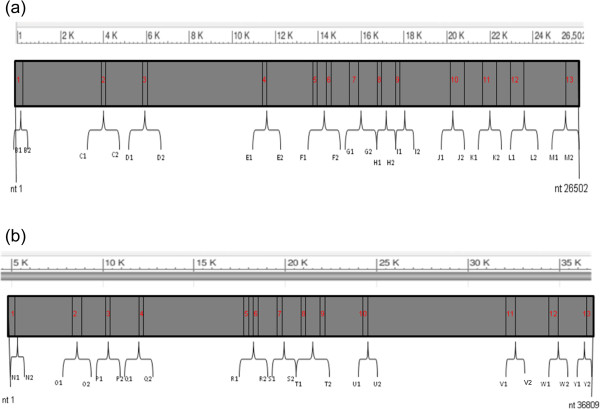
The study was performed by an effective, easy and inexpensive home-made Polymerase Chain Reaction Direct Sequencing approach for analyzing CYP3A4 and CYP3A5 genes which can detect both reported and unreported genetic variants potentially associated with altered or decreased functions of CYP3A4 and CYP3A5 proteins. Proportions and tests of association were used.
Among the genetic variants considered, CYP3A41B (expression of altered function) was only found in 3 patients (15%) and CYP3A53 (expression of splicing defect) in 3 other patients (15%). CYP3A53 did not appear to be associated with decreased efficacy of LPV/r in any patient, since none of the patients carrying this variant showed virological rebound during LPV/r treatment or low levels of TDM. In contrast, low-level virological rebound was observed in one patient and a low TDM level was found in another; both were carrying CYP3A41B.
Our method exhibited an overall efficiency of 100% (DNA amplification and sequencing in our group of patients). This may contribute to producing innovative results for better understanding the inter-genotypic variability in gene coding for CYP3A, and investigating SNPs as biological markers of individual response to drugs requiring metabolism via the cytochrome P450 system.
细胞色素 P450(CYP450)系统的药物代谢已成为发生多种药物相互作用(不良反应、药理作用降低、药物毒性)的重要决定因素。特别是 CYP3A4 和 CYP3A5(与 60%以上的已批准药物相互作用)表现出基因表达的最大个体差异,主要是由 CYP3A4 和 CYP3A5 基因的调节区域内的单核苷酸多态性(SNP)引起的,这些 SNP 可能影响酶的产生水平。在这项研究中,我们试图提高对 20 名接受洛匹那韦/利托那韦(LPV/r)单药治疗的 HIV-1 感染患者中 CYP3A 多态性检测的敏感筛查性能。
通过一种有效、简便和廉价的家用聚合酶链反应直接测序方法进行研究,该方法可用于分析 CYP3A4 和 CYP3A5 基因,可检测与 CYP3A4 和 CYP3A5 蛋白功能改变或降低相关的潜在报道和未报道的遗传变异。使用比例和关联检验。
在所考虑的遗传变异中,仅在 3 名患者(15%)中发现 CYP3A41B(功能改变表达),在另外 3 名患者(15%)中发现 CYP3A53(剪接缺陷表达)。CYP3A53 似乎与 LPV/r 疗效降低无关,因为在接受 LPV/r 治疗期间,携带这种变异的患者均未出现病毒学反弹或 TDM 水平低。相反,在一名患者中观察到低水平的病毒学反弹,另一名患者中发现 TDM 水平低;两者均携带 CYP3A41B。
我们的方法显示出 100%的总体效率(在我们的患者组中进行 DNA 扩增和测序)。这可能有助于更好地了解 CYP3A 基因编码的基因间基因型变异性,并研究 SNP 作为需要细胞色素 P450 系统代谢的药物个体反应的生物标志物,产生创新结果。