
苯甲醛氮芥-2-吡啶羧酸腙的细胞毒性与拓扑异构酶IIα抑制作用有关。
The cytotoxicity of benzaldehyde nitrogen mustard-2-pyridine carboxylic acid hydrazone being involved in topoisomerase IIα inhibition.
作者信息
Fu Yun, Zhou Sufeng, Liu Youxun, Yang Yingli, Sun Xingzhi, Li Changzheng
机构信息
Department of Molecular Biology & Biochemistry, Xinxiang Medical University, 601 Jinsui Road, Xinxiang, Henan 453003, China.
Clinical Skill Training Center, Xinxiang Medical University, Xinxiang, Henan 453003, China.
出版信息
Biomed Res Int. 2014;2014:527042. doi: 10.1155/2014/527042. Epub 2014 Jun 5.
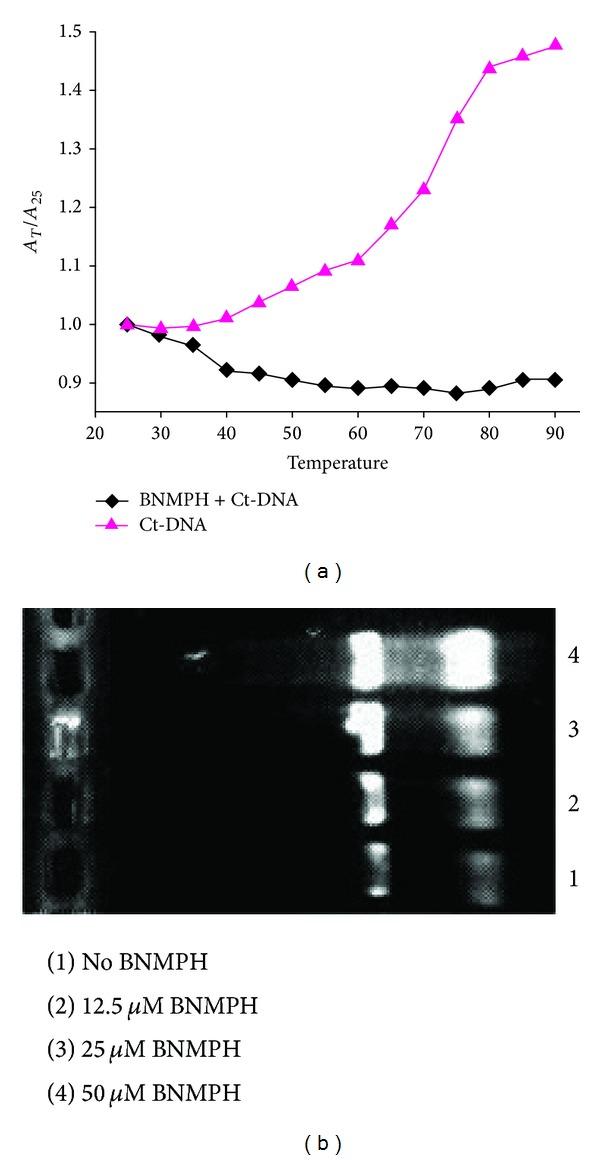
The antitumor property of iron chelators and aromatic nitrogen mustard derivatives has been well documented. Combination of the two pharmacophores in one molecule in drug designation is worth to be explored. We reported previously the syntheses and preliminary cytotoxicity evaluation of benzaldehyde nitrogen mustard pyridine carboxyl acid hydrazones (BNMPH) as extended study, more tumor cell lines (IC50 for HepG2: 26.1 ± 3.5 μM, HCT-116: 57.5 ± 5.3 μM, K562: 48.2 ± 4.0 μM, and PC-12: 19.4 ± 2.2 μM) were used to investigate its cytotoxicity and potential mechanism. In vitro experimental data showed that the BNMPH chelating Fe(2+) caused a large number of ROS formations which led to DNA cleavage, and this was further supported by comet assay, implying that ROS might be involved in the cytotoxicity of BNMPH. The ROS induced changes of apoptosis related genes, but the TFR1 and NDRG1 metastatic genes were not obviously regulated, prompting that BNMPH might not be able to deprive Fe(2+) of ribonucleotide reductase. The BNMPH induced S phase arrest was different from that of iron chelators (G1) and alkylating agents (G2). BNMPH also exhibited its inhibition of human topoisomerase IIα. Those revealed that the cytotoxic mechanism of the BNMPH could stem from both the topoisomerase II inhibition, ROS generation and DNA alkylation.
铁螯合剂和芳香氮芥衍生物的抗肿瘤特性已有充分记载。在药物设计中将这两种药效基团结合在一个分子中值得探索。我们之前报道了苯甲醛氮芥吡啶羧酸腙(BNMPH)的合成及初步细胞毒性评估,作为进一步研究,使用了更多肿瘤细胞系(HepG2的IC50为26.1±3.5μM,HCT - 116为57.5±5.3μM,K562为48.2±4.0μM,PC - 12为19.4±2.2μM)来研究其细胞毒性及潜在机制。体外实验数据表明,BNMPH螯合Fe(2+)导致大量活性氧(ROS)形成,进而导致DNA裂解,彗星试验进一步支持了这一点,这意味着ROS可能参与了BNMPH的细胞毒性。ROS诱导凋亡相关基因发生变化,但转铁蛋白受体1(TFR1)和N - 甲基-D-天冬氨酸受体结合蛋白1(NDRG1)转移基因未受到明显调控,这表明BNMPH可能无法剥夺核糖核苷酸还原酶的Fe(2+)。BNMPH诱导的S期阻滞与铁螯合剂(G1期)和烷基化剂(G2期)不同。BNMPH还表现出对人拓扑异构酶IIα的抑制作用。这些结果表明,BNMPH的细胞毒性机制可能源于拓扑异构酶II抑制、ROS生成和DNA烷基化。



 Zotero 插件