Sengstake Sarah, Bablishvili Nino, Schuitema Anja, Bzekalava Nino, Abadia Edgar, de Beer Jessica, Tadumadze Nona, Akhalaia Maka, Tuin Kiki, Tukvadze Nestani, Aspindzelashvili Rusudan, Bachiyska Elizabeta, Panaiotov Stefan, Sola Christophe, van Soolingen Dick, Klatser Paul, Anthony Richard, Bergval Indra
KIT Biomedical Research, Royal Tropical Institute, Meibergdreef 39, 1105 AZ Amsterdam, The Netherlands.
BMC Genomics. 2014 Jul 7;15(1):572. doi: 10.1186/1471-2164-15-572.
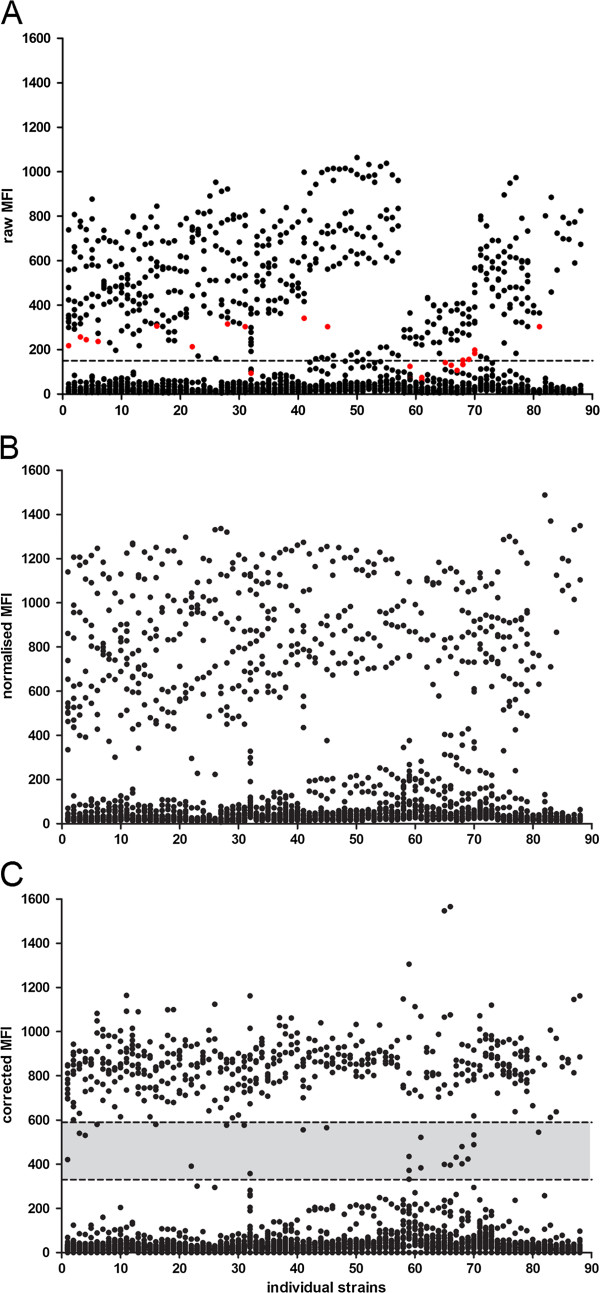
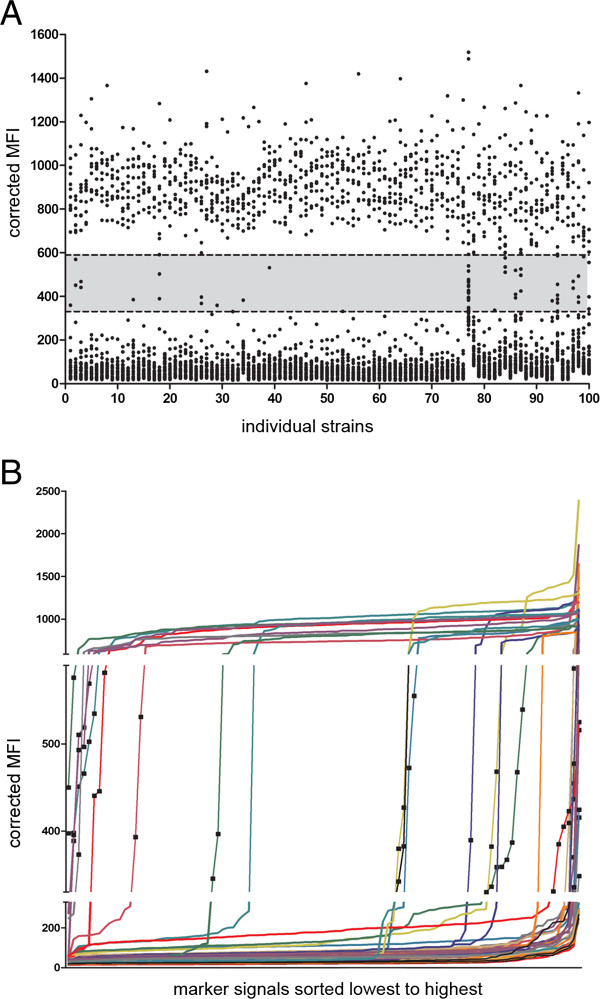
Multiplex ligation-dependent probe amplification (MLPA) is a powerful tool to identify genomic polymorphisms. We have previously developed a single nucleotide polymorphism (SNP) and large sequence polymorphisms (LSP)-based MLPA assay using a read out on a liquid bead array to screen for 47 genetic markers in the Mycobacterium tuberculosis genome. In our assay we obtain information regarding the Mycobacterium tuberculosis lineage and drug resistance simultaneously. Previously we called the presence or absence of a genotypic marker based on a threshold signal level. Here we present a more elaborate data analysis method to standardize and streamline the interpretation of data generated by MLPA. The new data analysis method also identifies intermediate signals in addition to classification of signals as positive and negative. Intermediate calls can be informative with respect to identifying the simultaneous presence of sensitive and resistant alleles or infection with multiple different Mycobacterium tuberculosis strains.
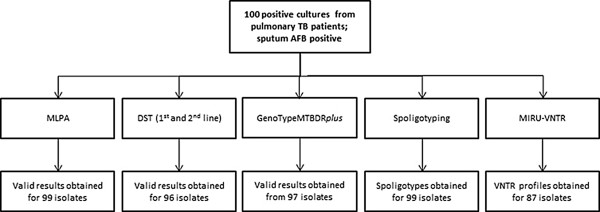
To validate our analysis method 100 DNA isolates of Mycobacterium tuberculosis extracted from cultured patient material collected at the National TB Reference Laboratory of the National Center for Tuberculosis and Lung Diseases in Tbilisi, Republic of Georgia were tested by MLPA. The data generated were interpreted blindly and then compared to results obtained by reference methods. MLPA profiles containing intermediate calls are flagged for expert review whereas the majority of profiles, not containing intermediate calls, were called automatically. No intermediate signals were identified in 74/100 isolates and in the remaining 26 isolates at least one genetic marker produced an intermediate signal.
Based on excellent agreement with the reference methods we conclude that the new data analysis method performed well. The streamlined data processing and standardized data interpretation allows the comparison of the Mycobacterium tuberculosis MLPA results between different experiments. All together this will facilitate the implementation of the MLPA assay in different settings.
多重连接依赖探针扩增技术(MLPA)是一种用于识别基因组多态性的强大工具。我们之前开发了一种基于单核苷酸多态性(SNP)和大序列多态性(LSP)的MLPA检测方法,该方法利用液滴微珠阵列进行读数,以筛选结核分枝杆菌基因组中的47个遗传标记。在我们的检测中,我们可以同时获得关于结核分枝杆菌谱系和耐药性的信息。之前我们根据阈值信号水平来判定基因型标记的存在与否。在此,我们提出一种更精细的数据分析方法,以规范和简化对MLPA产生的数据的解读。新的数据分析方法除了将信号分类为阳性和阴性外,还能识别中间信号。中间信号对于识别敏感和耐药等位基因的同时存在或感染多种不同结核分枝杆菌菌株可能具有参考价值。
为验证我们的分析方法,我们对从格鲁吉亚共和国第比利斯市国家结核病和肺部疾病中心国家结核病参考实验室收集的培养患者材料中提取的100株结核分枝杆菌DNA分离株进行了MLPA检测。对产生的数据进行盲法解读,然后与参考方法获得的结果进行比较。包含中间信号的MLPA图谱会标记出来以供专家审核,而大多数不包含中间信号的图谱则自动判读。在100株分离株中,74株未识别到中间信号,其余26株中至少有一个遗传标记产生了中间信号。
基于与参考方法的高度一致性,我们得出新的数据分析方法表现良好的结论。简化的数据处理和标准化的数据解读使得不同实验之间的结核分枝杆菌MLPA结果能够进行比较。总体而言,这将有助于在不同环境中实施MLPA检测。