Pan Ying, Xie Yong H, Deng Zheng M, Tang Yue, Pan Dong D
1] Key Laboratory of Agro-ecological Processes in Subtropical Region, the Chinese Academy of Sciences, Hunan 410125, China [2] Dongting Lake Station for Wetland Ecosystem Research, Institute of Subtropical Agriculture, The Chinese Academy of Sciences, Changsha 410125, China [3] Department of Biology, Nanjing University, Nanjing 210093, China.
1] Key Laboratory of Agro-ecological Processes in Subtropical Region, the Chinese Academy of Sciences, Hunan 410125, China [2] Dongting Lake Station for Wetland Ecosystem Research, Institute of Subtropical Agriculture, The Chinese Academy of Sciences, Changsha 410125, China.
Sci Rep. 2014 Jul 8;4:5612. doi: 10.1038/srep05612.
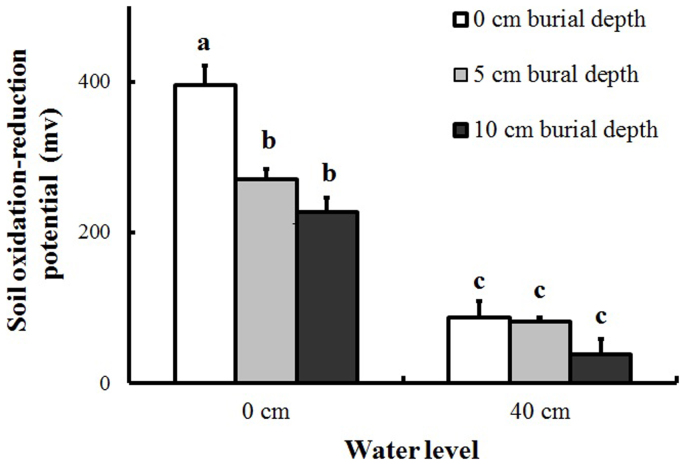
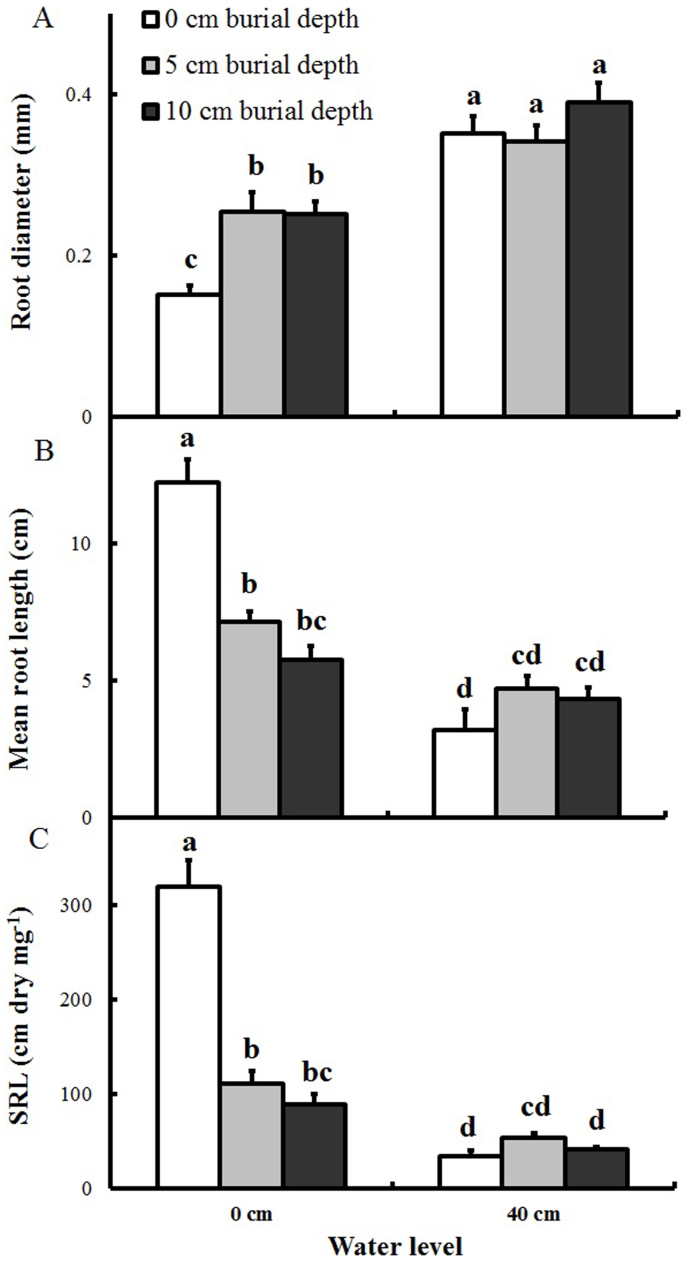
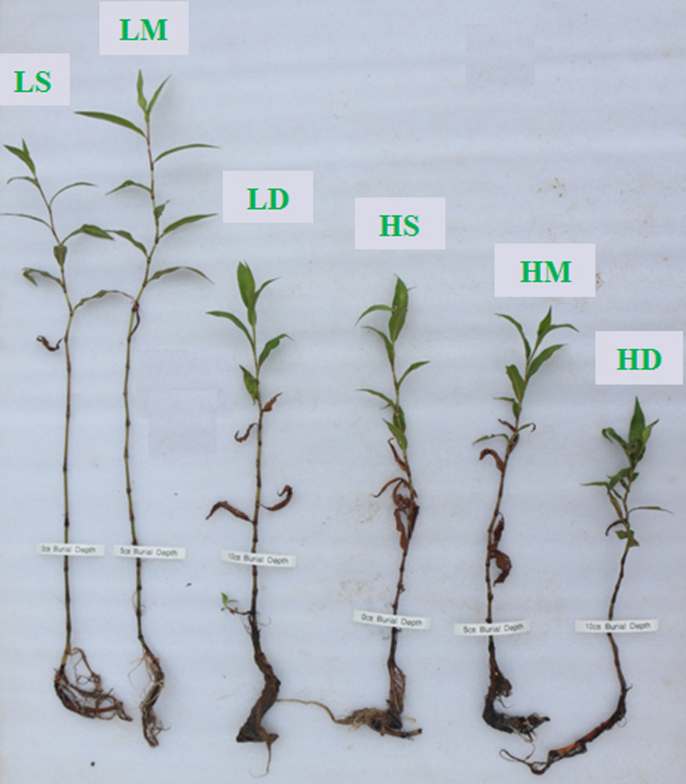
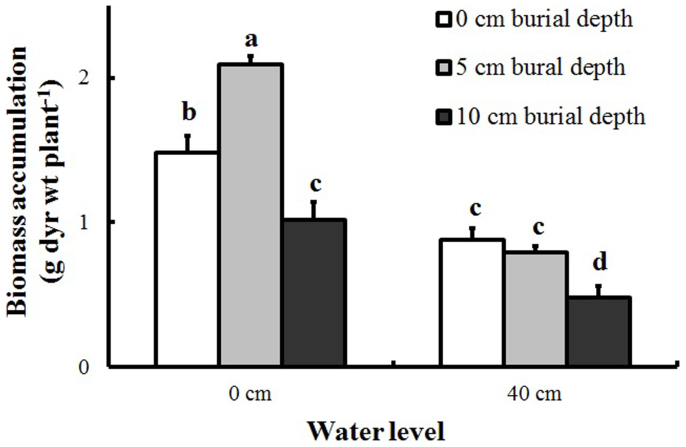
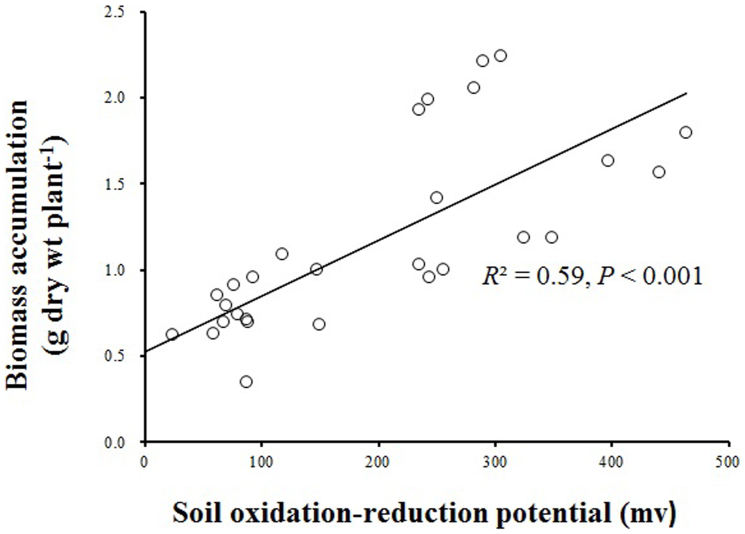
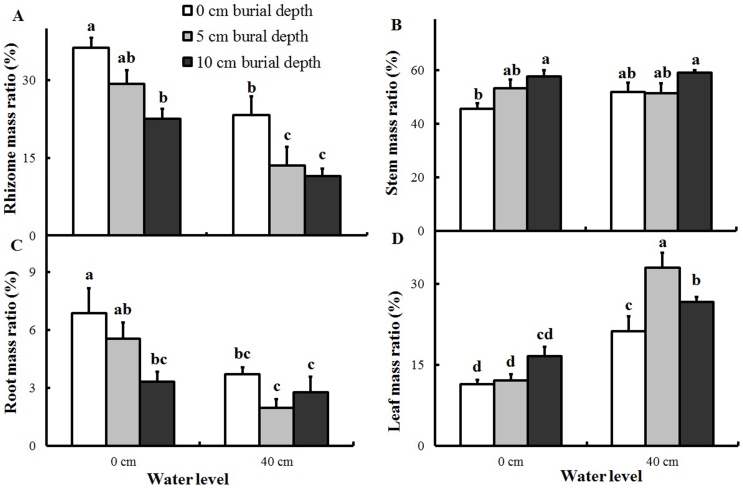
Many studies have investigated the individual effects of sedimentation or inundation on the performance of wetland plants, but few have examined the combined influence of these processes. Wetland plants might show greater morphological plasticity in response to inundation than to sedimentation when these processes occur simultaneously since inundation can negate the negative effects of burial on plant growth. Here, we evaluate this hypothesis by assessing growth of the emergent macrophyte Polygonum hydropiper under flooding (0 and 40 cm) and sedimentation (0, 5, and 10 cm), separately and in combination. Deep burial and high water level each led to low oxidation-reduction potential, biomass (except for 5-cm burial), and growth of thick, short roots. These characteristics were generally more significant under high water level than under deep burial conditions. More biomass was allocated to stems in the deep burial treatments, but more to leaves in the high water level treatments. Additionally, biomass accumulation was lower and leaf mass ratio was higher in the 40-cm water level + 10-cm burial depth treatment than both separate effects. Our data indicate that inundation plays a more important role than sedimentation in determining plant morphology, suggesting hierarchical effects of environmental stressors on plant growth.
许多研究调查了沉积或淹没对湿地植物性能的单独影响,但很少有研究考察这些过程的综合影响。当这些过程同时发生时,湿地植物对淹没的形态可塑性可能比对沉积的更大,因为淹没可以抵消掩埋对植物生长的负面影响。在这里,我们通过分别和组合评估挺水大型植物水蓼在淹水(0和40厘米)和沉积(0、5和10厘米)条件下的生长情况来验证这一假设。深埋和高水位各自导致低氧化还原电位、生物量(5厘米掩埋除外)以及粗短根的生长。这些特征在高水位条件下通常比在深埋条件下更显著。在深埋处理中,更多的生物量分配到茎中,但在高水位处理中更多地分配到叶中。此外,在40厘米水位 + 10厘米掩埋深度处理中,生物量积累较低,叶质量比高于单独处理的效果。我们的数据表明,在决定植物形态方面,淹没比沉积起更重要的作用,这表明环境压力源对植物生长具有层级效应。