AlObaidy Hanna
Tripoli University, Tripoli, Libya.
Qatar Med J. 2013 Dec 23;2013(2):57-65. doi: 10.5339/qmj.2013.18. eCollection 2013.
Inborn errors of metabolism (IEM) are mostly transmitted as autosomal recessive disorders and are therefore more frequent in countries with high consanguinity rates such as in the Arab world.
To study the socio-demographic characteristics and the clinical presentation of IEM in Libyan children and to shed light on our experience in dealing with these disorders.
This is a descriptive case series hospital-based study of 107 children attending the Metabolic Unit at El-Khadra Teaching Hospital (MUKH) in Tripoli, Libya. The study took place between January 2001 and December 2012. Information was collected from caregivers and from all available hospital records on the following variables: age, sex, birth order, place of residence, age at onset, presenting complaints and family history of the same illness.
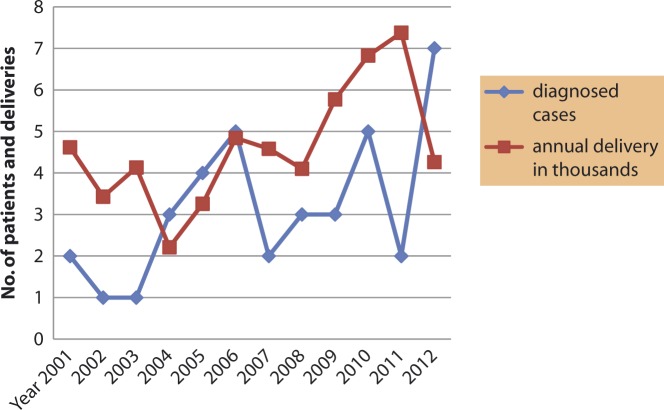
During the 12-year study period, there were 55,422 live births at El-Khadra Teaching Hospital and 107 children were diagnosed with 46 different metabolic disorders. A significantly high consanguinity rate was observed (86.9%) among parents of the affected children. Family history of previous affected children was noted in 63.5% of cases. Male to female ratio was 1.18:1. The most frequent IEM cases were amino acids disorders (25%), carbohydrate disorders (14.9%), lysosomal storage diseases (14%), organic aciduria and energy metabolic defects (9.3% each). The main clinical presentations were jaundice, hepatomegaly and seizures. Most children presented between one and six months of age (43.4%); whereas the median age at diagnosis was eight months. Thirty-eight children (35.5%) were born at El-Khadra Hospital with IEM giving a birth prevalence of 1:1458 live births, (1:6158 for aminoaciduria and 1:6927 for carbohydrate disorders).
IEM disorders are common in Libya. Efforts to enhance awareness among pediatricians and primary healthcare providers should be supported and encouraged as many diseases are still undiagnosed. It is very important to consider IEM among all children when they present any worrying or suspicious symptoms or signs which do not respond to conventional treatment. Although our findings are preliminary, and probably the first to be conducted in Libya, they suggest ideas for decision makers to plan services including newborn screening programs and country-wide research of IEM diseases.
先天性代谢缺陷(IEM)大多以常染色体隐性疾病的形式遗传,因此在近亲结婚率高的国家更为常见,比如阿拉伯世界的国家。
研究利比亚儿童先天性代谢缺陷的社会人口学特征和临床表现,并分享我们在处理这些疾病方面的经验。
这是一项基于医院的描述性病例系列研究,研究对象为的黎波里市哈德拉教学医院代谢科收治的107名儿童。研究时间为2001年1月至2012年12月。从照顾者和所有可用的医院记录中收集以下变量的信息:年龄、性别、出生顺序、居住地点、发病年龄、就诊主诉以及相同疾病的家族史。
在为期12年的研究期间,哈德拉教学医院共有55422例活产,其中107名儿童被诊断患有46种不同的代谢紊乱疾病。在患病儿童的父母中,近亲结婚率显著较高(86.9%)。63.5%的病例有之前患病儿童的家族史。男女比例为1.18:1。最常见的先天性代谢缺陷病例是氨基酸紊乱(25%)、碳水化合物紊乱(14.9%)、溶酶体贮积病(14%)、有机酸尿症和能量代谢缺陷(各占9.3%)。主要临床表现为黄疸、肝肿大和癫痫发作。大多数儿童在1至6个月大时发病(43.4%);而诊断时的中位年龄为8个月。38名儿童(35.5%)在哈德拉医院出生时即患有先天性代谢缺陷,活产患病率为1:1458(氨基酸尿症为1:6158,碳水化合物紊乱为1:6927)。
先天性代谢缺陷疾病在利比亚很常见。由于许多疾病仍未得到诊断,应支持并鼓励提高儿科医生和初级医疗保健人员的认识。当所有儿童出现任何令人担忧或可疑的症状或体征且对常规治疗无反应时,考虑先天性代谢缺陷疾病非常重要。尽管我们的研究结果是初步的,可能也是在利比亚开展的首例研究,但它们为决策者规划服务提供了思路,包括新生儿筛查项目和全国范围内的先天性代谢缺陷疾病研究。