Liu Wei-Lin, Gao Ming, Tzen Kai-Yuan, Tsai Chiao-Ling, Hsu Feng-Ming, Cheng Ann-Lii, Cheng Jason Chia-Hsien
Graduate Institute of Oncology, National Taiwan University College of Medicine, Taipei, Taiwan.
Graduate Institute of Oncology, National Taiwan University College of Medicine, Taipei, Taiwan; Graduate Institute of Clinical Medicine, National Taiwan University College of Medicine, Taipei, Taiwan; Cancer Research Center, National Taiwan University College of Medicine, Taipei, Taiwan; Department of Oncology, National Taiwan University Hospital, Taipei, Taiwan.
Oncotarget. 2014 Jun 15;5(11):3662-72. doi: 10.18632/oncotarget.1978.
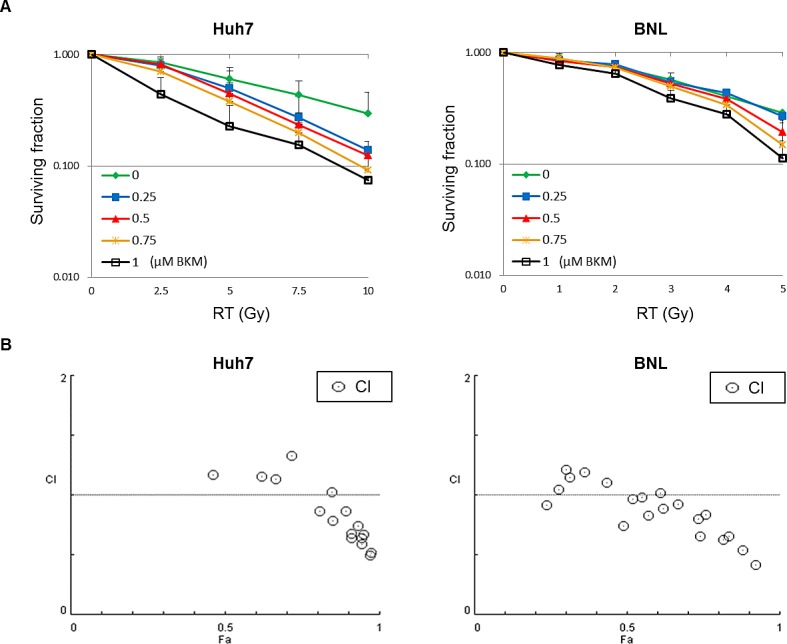
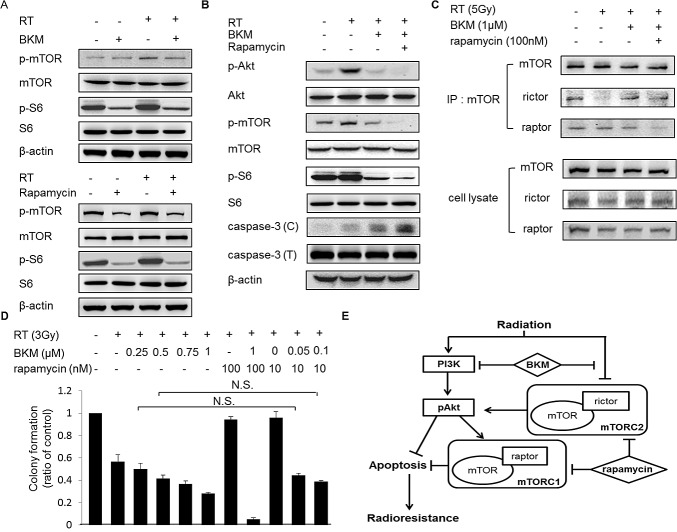
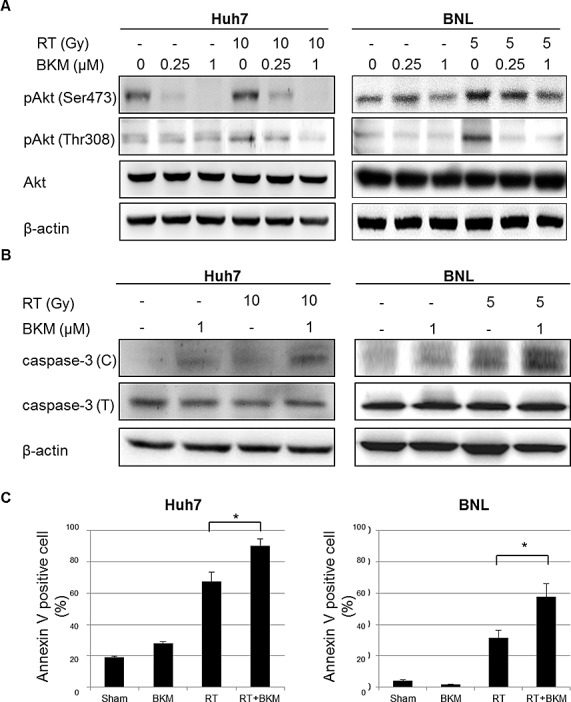
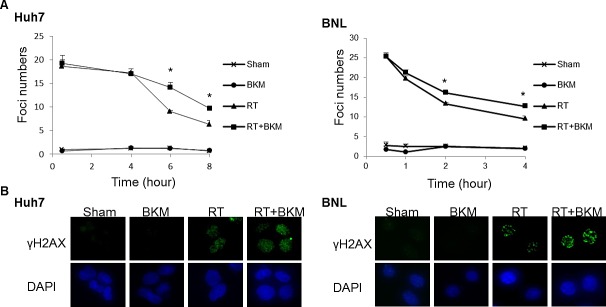
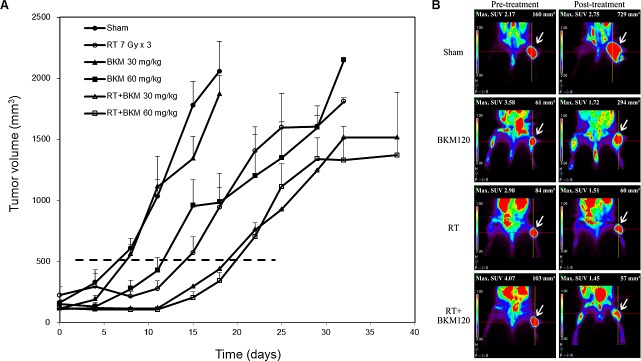
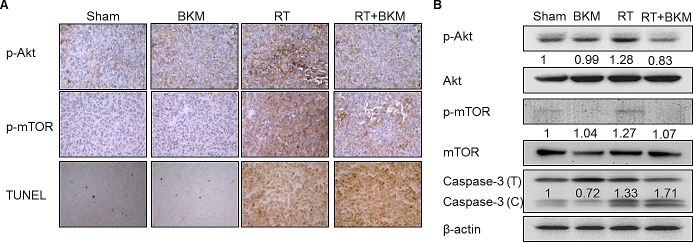
Tumor control of hepatocellular carcinoma by radiotherapy remains unsatisfactory. The phosphatidylinositol 3-kinase (PI3K)/Akt pathway plays a critical role in inhibiting cancer cell death. Elevated PI3K/Akt activity is associated with increased cellular resistance to irradiation. Our aim was to determine whether the inhibition of PI3K/Akt activity by a PI3K inhibitor, BKM120, contributes to the increased sensitivity of liver cancer cells to irradiation. The hepatocellular carcinoma cell lines (Huh7 and BNL) were used to evaluate the in vitro synergism between BKM120 and irradiation. Balb/c mice bearing ectopic BNL xenografts were treated with BKM120 and/or radiotherapy to assess the in vivo response. BKM120 increased cell killing by radiation, increased the expression of apoptotic markers, and suppressed the repair of radiation-induced DNA double-strand breaks. BKM120 pretreatment inhibited radiation-induced Akt phosphorylation and enhanced the tumor-suppressive effect and radiation-induced tumor cell apoptosis in ectopic xenografts. Inhibition of mTOR phosphorylation by rapamycin enhanced the radiosensitivity of BKM120-treated hepatocellular carcinoma cells. The synergism between BKM120 and irradiation likely inhibits the activation of Akt by radiation, leading to increased cell apoptosis and suppression of DNA-double-strand breaks repair in hepatocellular carcinoma cells. These data suggest that the BKM120/radiation combination may be a strategy worthy of clinical trials.
放射疗法对肝细胞癌的肿瘤控制效果仍不尽人意。磷脂酰肌醇3-激酶(PI3K)/Akt信号通路在抑制癌细胞死亡中起关键作用。PI3K/Akt活性升高与细胞对辐射的抗性增加有关。我们的目的是确定PI3K抑制剂BKM120对PI3K/Akt活性的抑制是否有助于提高肝癌细胞对辐射的敏感性。使用肝癌细胞系(Huh7和BNL)评估BKM120与辐射之间的体外协同作用。对携带异位BNL异种移植物的Balb/c小鼠进行BKM120和/或放射治疗,以评估体内反应。BKM120增加了辐射诱导的细胞杀伤,增加了凋亡标志物的表达,并抑制了辐射诱导的DNA双链断裂的修复。BKM120预处理抑制了辐射诱导的Akt磷酸化,并增强了异位异种移植物中的肿瘤抑制作用和辐射诱导的肿瘤细胞凋亡。雷帕霉素对mTOR磷酸化的抑制增强了BKM120处理的肝癌细胞的放射敏感性。BKM120与辐射之间的协同作用可能抑制了辐射对Akt的激活,导致肝癌细胞凋亡增加和DNA双链断裂修复受到抑制。这些数据表明,BKM120/放射联合治疗可能是一种值得进行临床试验的策略。