Lehner Burkhard, Kunz Pierre, Saehr Heiner, Fellenberg Joerg
Research Centre for Experimental Orthopedics, Department of Orthopedics, Trauma Surgery and Paraplegia, Orthopedic University Hospital Heidelberg, Schlierbacher Landstr 200a, Heidelberg 69118, Germany.
BMC Cancer. 2014 Jul 9;14:495. doi: 10.1186/1471-2407-14-495.
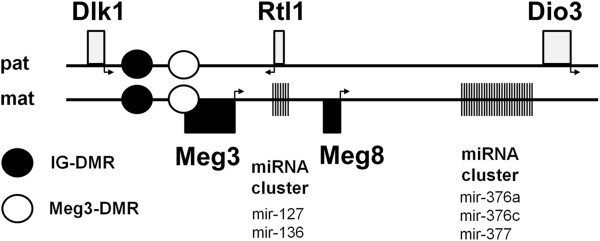
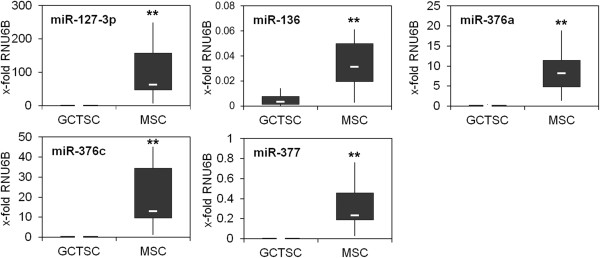
Growing evidence exists that the neoplastic stromal cell population (GCTSC) within giant cell tumors (GCT) originates from mesenchymal stem cells (MSC). In a previous study we identified a microRNA signature that differentiates between these cell types. Five differentially expressed microRNAs are located within the Dlk1-Dio3 region on chromosome 14. Aberrant regulation within this region is known to influence cell growth, differentiation and the development of cancer. The aim of this study was to elucidate the involvement of deregulations within the Dlk1-Dio3 region in GCT pathogenesis.
Quantitative gene and microRNA expression analyses were performed on GCTSCs and MSCs with or without treatment with epigenetic modifiers. Methylation analysis of differentially methylated regions was performed by bisulfite sequencing.
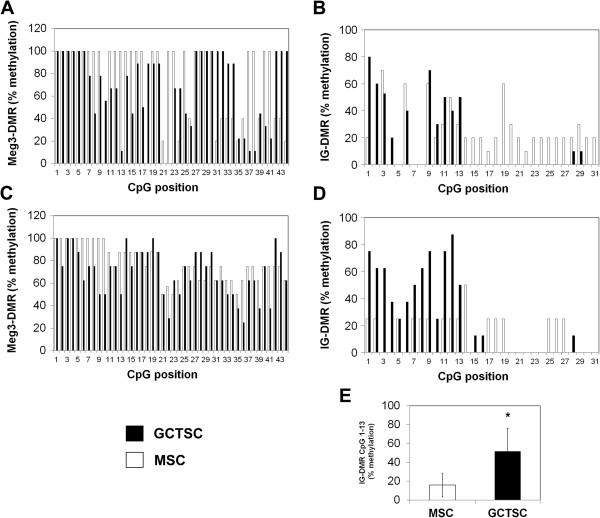
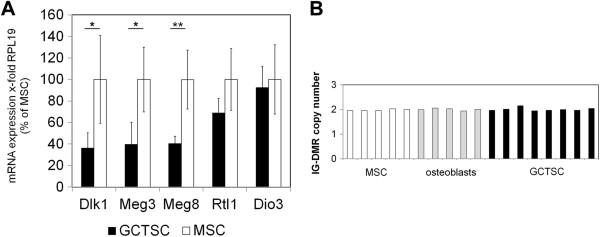
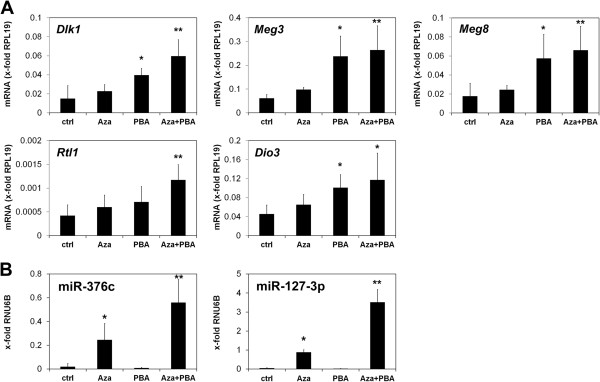
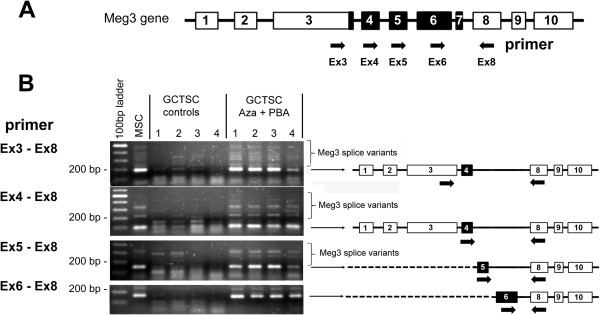
In addition to microRNA silencing we detected a significant downregulation of Dlk1, Meg3 and Meg8 in GCTSCs compared to MSCs. DNA methylation analyses of the Meg3-DMR and IG-DMR revealed a frequent hypermethylation within the IG-DMR in GCTs. Epigenetic modification could restore expression of some but not all analyzed genes and microRNAs suggesting further regulatory mechanisms.
Epigenetic silencing of genes and microRNAs within the Dlk1-Dio3 region is a common event in GCTSCs, in part mediated by hypermethylation within the IG-DMR. The identified genes, micro RNAs and microRNA target genes might be valuable targets for the development of improved strategies for GCT diagnosis and therapy.
越来越多的证据表明,骨巨细胞瘤(GCT)中的肿瘤性基质细胞群(GCTSC)起源于间充质干细胞(MSC)。在先前的一项研究中,我们鉴定出了一种可区分这些细胞类型的微小RNA特征。五个差异表达的微小RNA位于14号染色体上的Dlk1-Dio3区域内。已知该区域内的异常调控会影响细胞生长、分化和癌症的发展。本研究的目的是阐明Dlk1-Dio3区域内的失调在GCT发病机制中的作用。
对GCTSC和MSC进行定量基因和微小RNA表达分析,这些细胞有或没有接受表观遗传修饰剂的处理。通过亚硫酸氢盐测序对差异甲基化区域进行甲基化分析。
与MSC相比,除了微小RNA沉默外,我们还检测到GCTSC中Dlk1、Meg3和Meg8的显著下调。对Meg3-DMR和IG-DMR的DNA甲基化分析显示,GCT中IG-DMR内经常发生高甲基化。表观遗传修饰可以恢复部分但不是所有分析基因和微小RNA的表达,这表明存在进一步的调控机制。
Dlk1-Dio3区域内基因和微小RNA的表观遗传沉默在GCTSC中是常见事件,部分由IG-DMR内的高甲基化介导。所鉴定的基因、微小RNA和微小RNA靶基因可能是开发改进的GCT诊断和治疗策略的有价值靶点。