Department of Prosthodontics, School of Dentistry, University Medical Center Goettingen, Goettingen, Germany.
Department of Medical Statistics, University Medical Center Goettingen, Goettingen, Germany.
J Adv Prosthodont. 2014 Jun;6(3):233-40. doi: 10.4047/jap.2014.6.3.233. Epub 2014 Jun 24.
To evaluate the effects of different abutment geometries in combination with varying luting agents and the effectiveness of different cleaning methods (prior to re-cementation) regarding the retentiveness of zirconia copings on implants.
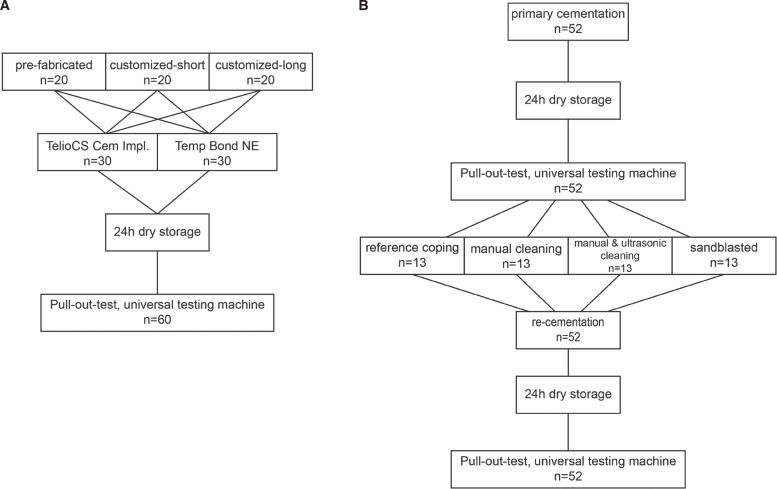
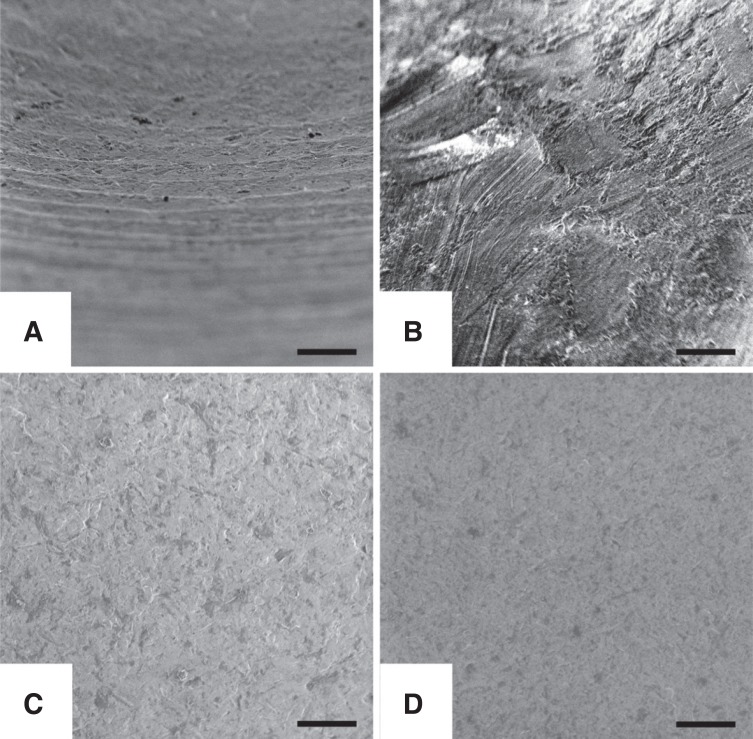
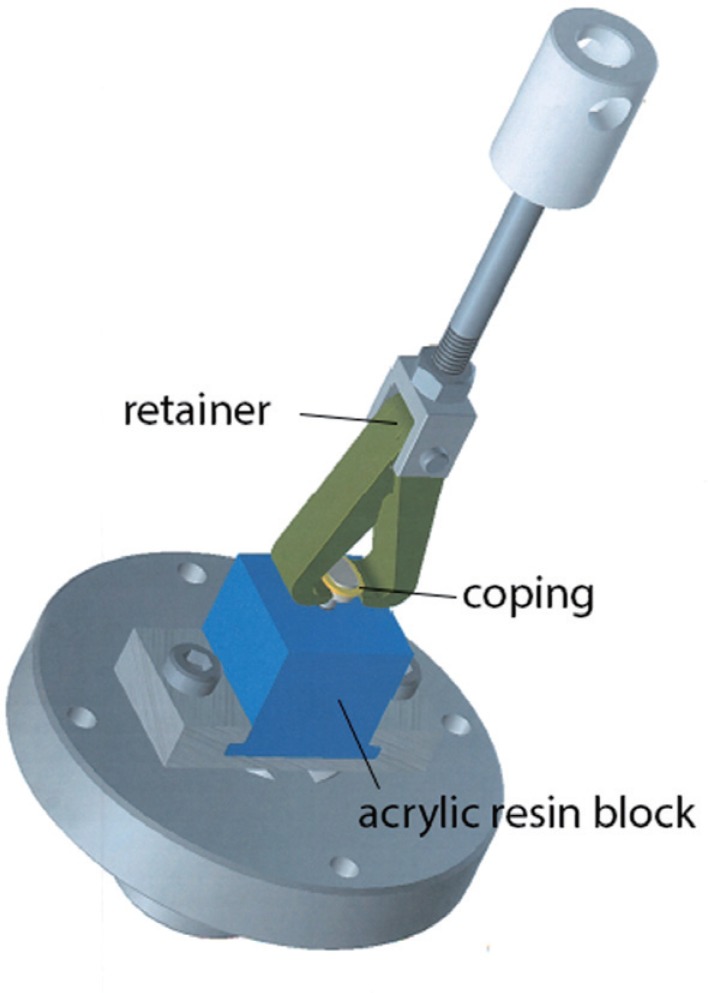
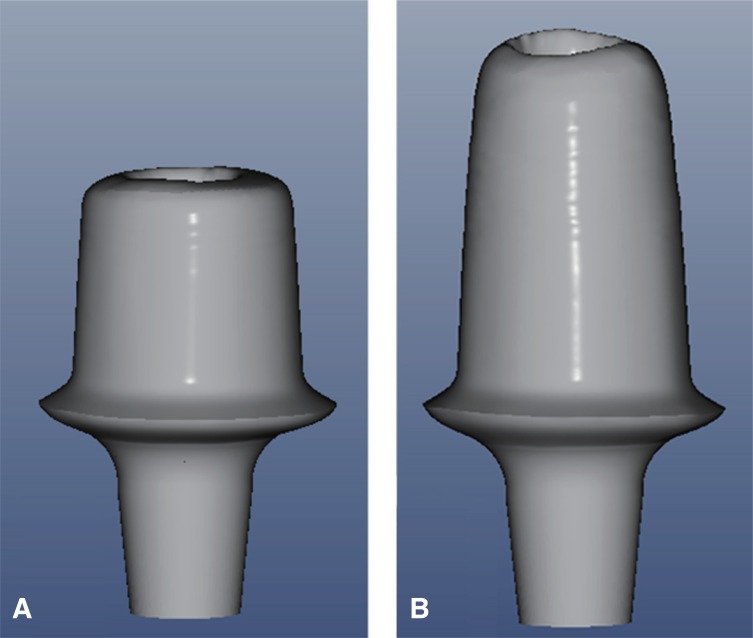
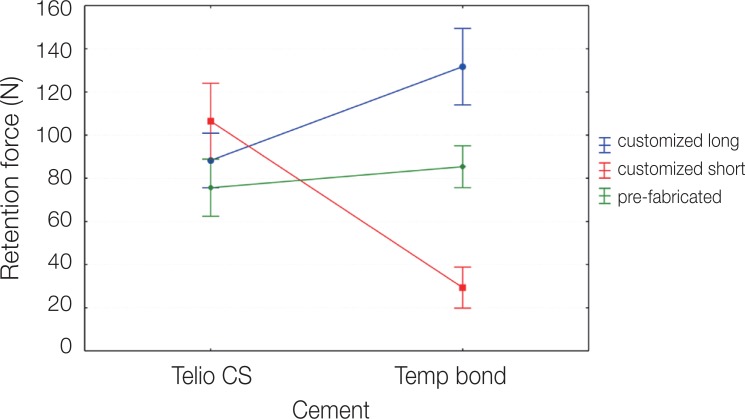
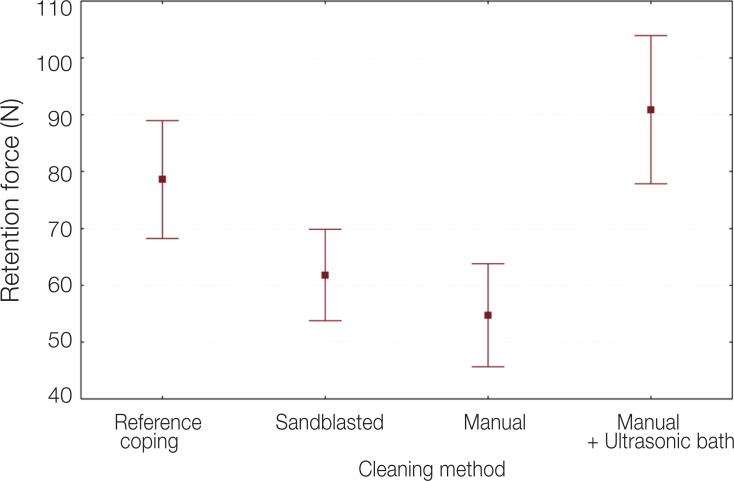
Implants were embedded in resin blocks. Three groups of titanium abutments (pre-fabricated, height: 7.5 mm, taper: 5.7°; customized-long, height: 6.79 mm, taper: 4.8°; customized-short, height: 4.31 mm, taper: 4.8°) were used for luting of CAD/CAM-fabricated zirconia copings with a semi-permanent (Telio CS) and a provisional cement (TempBond NE). Retention forces were evaluated using a universal testing machine. Furthermore, the influence of cleaning methods (manually, manually in combination with ultrasonic bath or sandblasting) prior to re-cementation with a provisional cement (TempBond NE) was investigated with the pre-fabricated titanium abutments (height: 7.5 mm, taper: 5.7°) and SEM-analysis of inner surfaces of the copings was performed. Significant differences were determined via two-way ANOVA.
Significant interactions between abutment geometry and luting agent were observed. TempBond NE showed the highest level of retentiveness on customized-long abutments, but was negatively affected by other abutment geometries. In contrast, luting with Telio CS demonstrated consistent results irrespective of the varying abutment geometries. Manual cleaning in combination with an ultrasonic bath was the only cleaning method tested prior to re-cementation that revealed retentiveness levels not inferior to primary cementation.
No superiority for one of the two cements could be demonstrated because their influences on retentive strength are also depending on abutment geometry. Only manual cleaning in combination with an ultrasonic bath offers retentiveness levels after re-cementation comparable to those of primary luting.
评估不同基台几何形状与不同粘固剂结合的效果,以及不同清洁方法(在重新粘固之前)对氧化锆全瓷覆盖体固位力的影响。
将种植体嵌入树脂块中。使用三种钛基台(预制,高度:7.5mm,锥度:5.7°;定制长,高度:6.79mm,锥度:4.8°;定制短,高度:4.31mm,锥度:4.8°)分别用半永久性(Telio CS)和临时粘固剂(TempBond NE)粘固 CAD/CAM 制作的氧化锆全瓷覆盖体。采用万能试验机评估固位力。此外,用临时粘固剂(TempBond NE)重新粘固前,研究了不同清洁方法(手动、手动联合超声浴或喷砂)对预制钛基台(高度:7.5mm,锥度:5.7°)的影响,并对全瓷覆盖体内部表面进行 SEM 分析。通过双因素方差分析确定显著差异。
基台几何形状和粘固剂之间存在显著的相互作用。TempBond NE 在定制长基台上具有最高的固位力,但其他基台几何形状会降低其固位力。相比之下,用 Telio CS 粘固时,无论基台几何形状如何,结果都一致。在重新粘固之前,只有测试的手动联合超声浴清洁方法可以恢复与初次粘固相当的固位力水平。
两种粘固剂都没有表现出优势,因为它们对固位力的影响也取决于基台的几何形状。只有手动联合超声浴清洁方法在重新粘固后提供的固位力水平与初次粘固相当。