Li Manyu, Wetzel-Strong Sarah E, Hua Xiaoyang, Tilley Stephen L, Oswald Erin, Krummel Matthew F, Caron Kathleen M
Departments of Cell Biology and Physiology, University of North Carolina at Chapel Hill, Chapel Hill, North Carolina, United States of America.
Department of Medicine, Division of Pulmonary and Critical Care Medicine, University of North Carolina at Chapel Hill, Chapel Hill, North Carolina, United States of America.
PLoS One. 2014 Jul 10;9(7):e102356. doi: 10.1371/journal.pone.0102356. eCollection 2014.
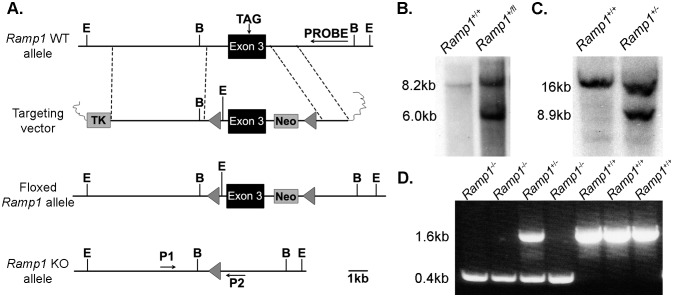
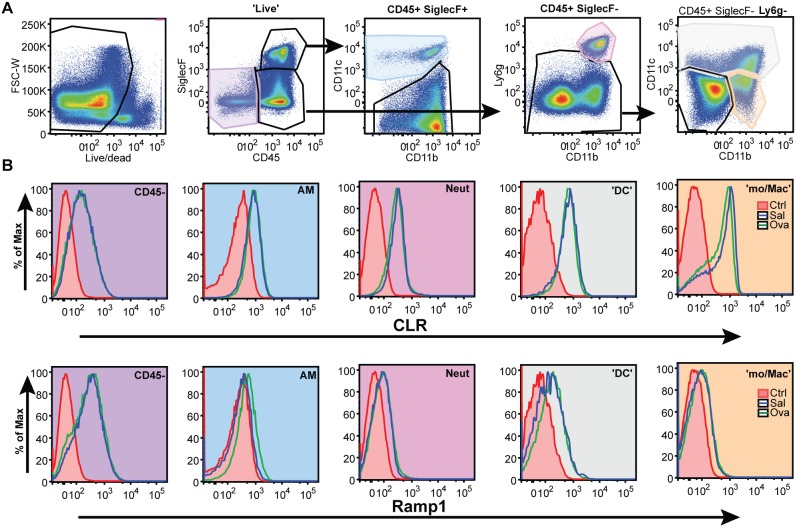
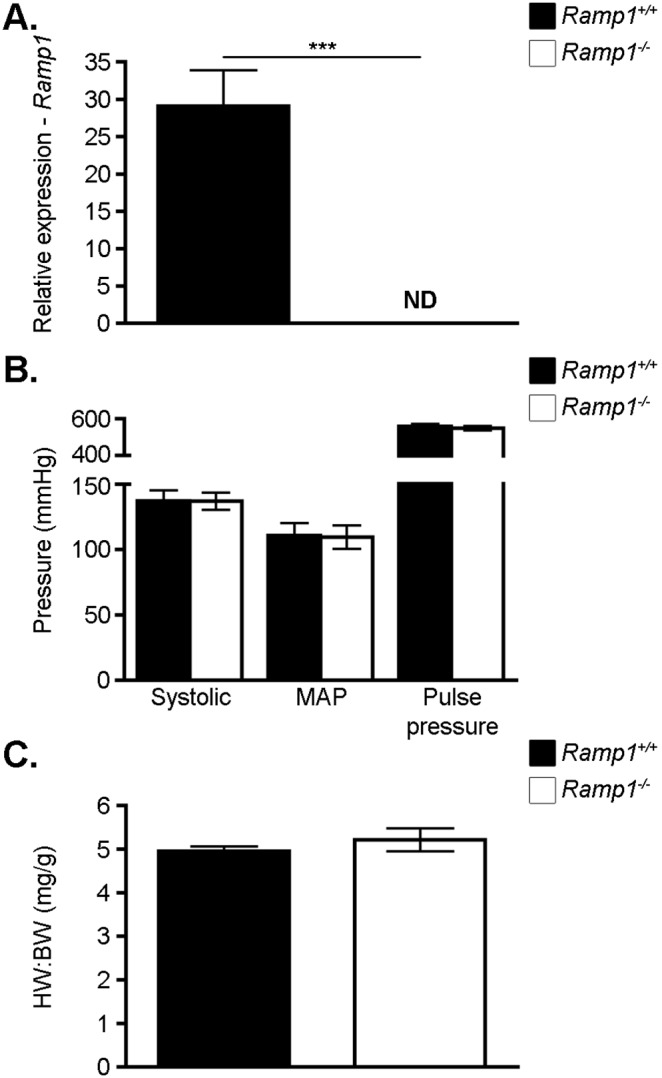
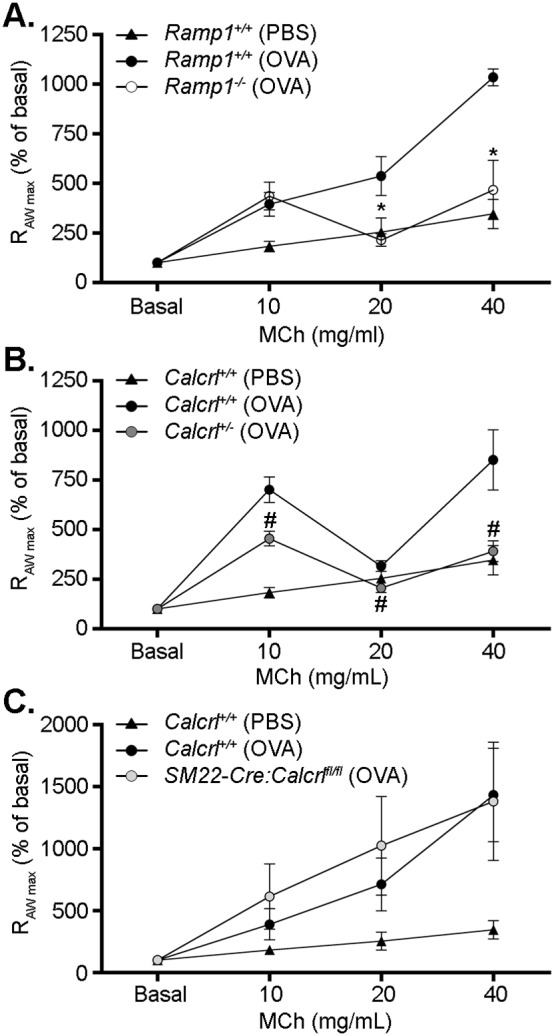
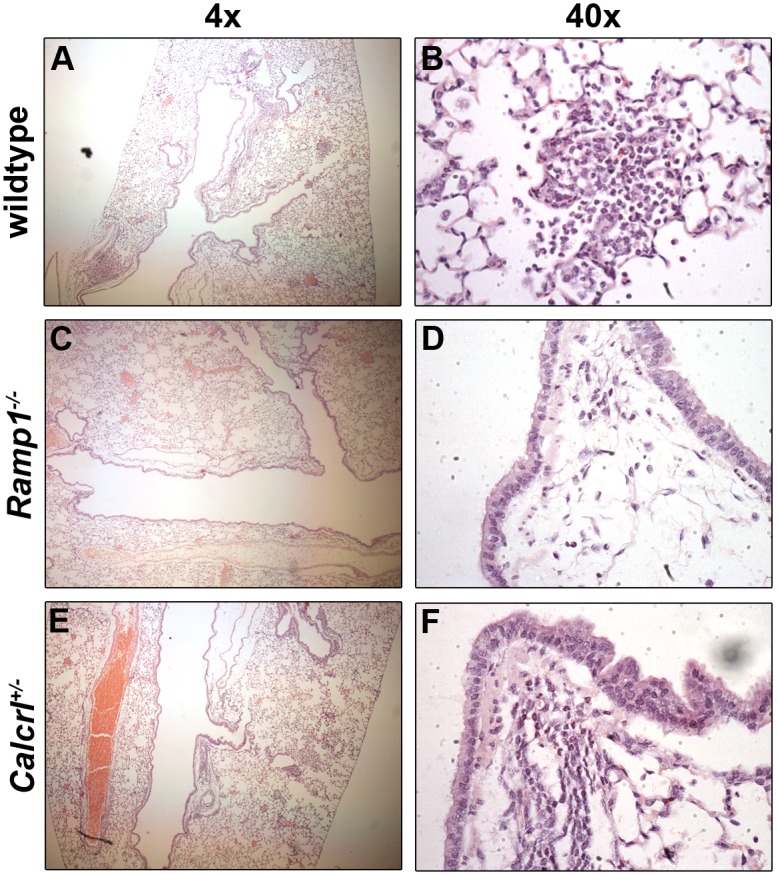
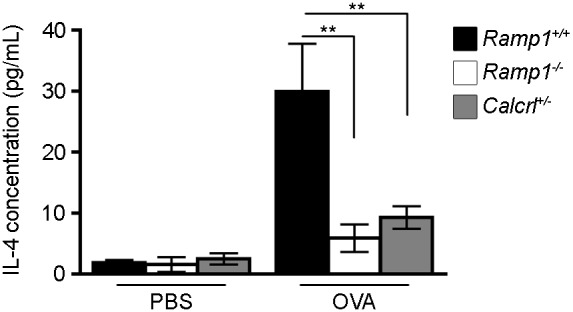
Asthma is a chronic inflammatory disease affecting the lung, characterized by breathing difficulty during an attack following exposure to an environmental trigger. Calcitonin gene-related peptide (CGRP) is a neuropeptide that may have a pathological role in asthma. The CGRP receptor is comprised of two components, which include the G-protein coupled receptor, calcitonin receptor-like receptor (CLR), and receptor activity-modifying protein 1 (RAMP1). RAMPs, including RAMP1, mediate ligand specificity in addition to aiding in the localization of receptors to the cell surface. Since there has been some controversy regarding the effect of CGRP on asthma, we sought to determine the effect of CGRP signaling ablation in an animal model of asthma. Using gene-targeting techniques, we generated mice deficient for RAMP1 by excising exon 3. After determining that these mice are viable and overtly normal, we sensitized the animals to ovalbumin prior to assessing airway resistance and inflammation after methacholine challenge. We found that mice lacking RAMP1 had reduced airway resistance and inflammation compared to wildtype animals. Additionally, we found that a 50% reduction of CLR, the G-protein receptor component of the CGRP receptor, also ameliorated airway resistance and inflammation in this model of allergic asthma. Interestingly, the loss of CLR from the smooth muscle cells did not alter the airway resistance, indicating that CGRP does not act directly on the smooth muscle cells to drive airway hyperresponsiveness. Together, these data indicate that signaling through RAMP1 and CLR plays a role in mediating asthma pathology. Since RAMP1 and CLR interact to form a receptor for CGRP, our data indicate that aberrant CGRP signaling, perhaps on lung endothelial and inflammatory cells, contributes to asthma pathophysiology. Finally, since RAMP-receptor interfaces are pharmacologically tractable, it may be possible to develop compounds targeting the RAMP1/CLR interface to assist in the treatment of asthma.
哮喘是一种影响肺部的慢性炎症性疾病,其特征是在接触环境触发因素后发作时出现呼吸困难。降钙素基因相关肽(CGRP)是一种神经肽,可能在哮喘中发挥病理作用。CGRP受体由两个成分组成,包括G蛋白偶联受体、降钙素受体样受体(CLR)和受体活性修饰蛋白1(RAMP1)。包括RAMP1在内的RAMPs除了有助于受体定位到细胞表面外,还介导配体特异性。由于关于CGRP对哮喘的影响存在一些争议,我们试图在哮喘动物模型中确定CGRP信号传导缺失的影响。我们使用基因靶向技术,通过切除外显子3生成了RAMP1缺陷小鼠。在确定这些小鼠能够存活且外观正常后,我们在评估乙酰甲胆碱激发后的气道阻力和炎症之前,先使动物对卵清蛋白致敏。我们发现,与野生型动物相比,缺乏RAMP1的小鼠气道阻力和炎症有所降低。此外,我们发现,CGRP受体的G蛋白受体成分CLR减少50%也能改善这种过敏性哮喘模型中的气道阻力和炎症。有趣的是,平滑肌细胞中CLR的缺失并未改变气道阻力,这表明CGRP不会直接作用于平滑肌细胞来驱动气道高反应性。总之,这些数据表明,通过RAMP1和CLR的信号传导在介导哮喘病理过程中发挥作用。由于RAMP1和CLR相互作用形成CGRP的受体,我们的数据表明,异常的CGRP信号传导,可能是在肺内皮细胞和炎症细胞上,促成了哮喘的病理生理过程。最后,由于RAMP-受体界面在药理学上是易于处理的,有可能开发针对RAMP1/CLR界面的化合物来辅助哮喘治疗。