Cogoi Susanna, Shchekotikhin Andrey E, Xodo Luigi E
Department of Medical and Biological Sciences, School of Medicine, P.le Kolbe 4, 33100 Udine, Italy.
Gause Institute of New Antibiotics, Russian Academy of Medical Sciences, B. Pirogovskaya, 11, Moscow 119021, Russia Mendeleyev University of Chemical Technology, 9 Miusskaya Square, Moscow 125190, Russia.
Nucleic Acids Res. 2014 Jul;42(13):8379-88. doi: 10.1093/nar/gku574. Epub 2014 Jul 10.
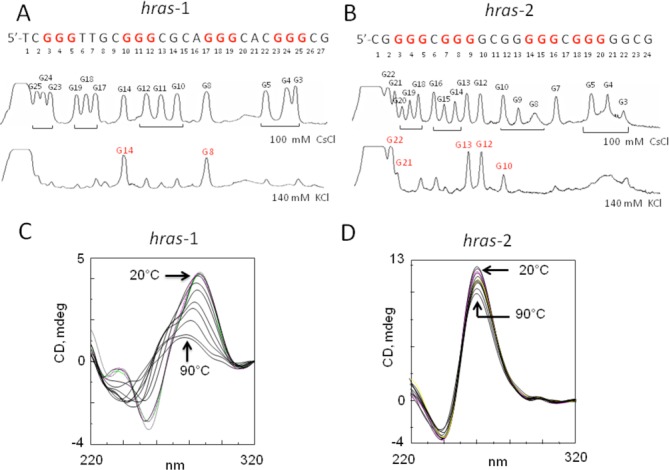
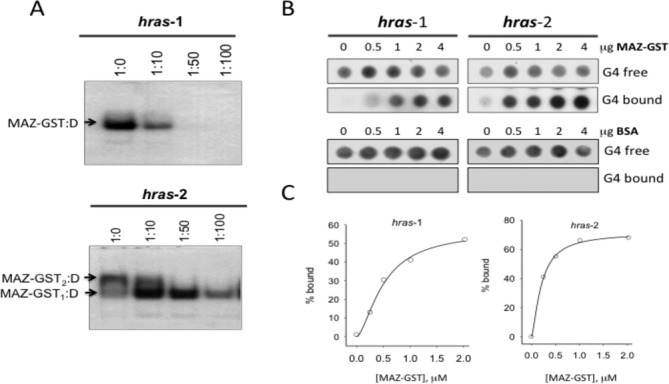
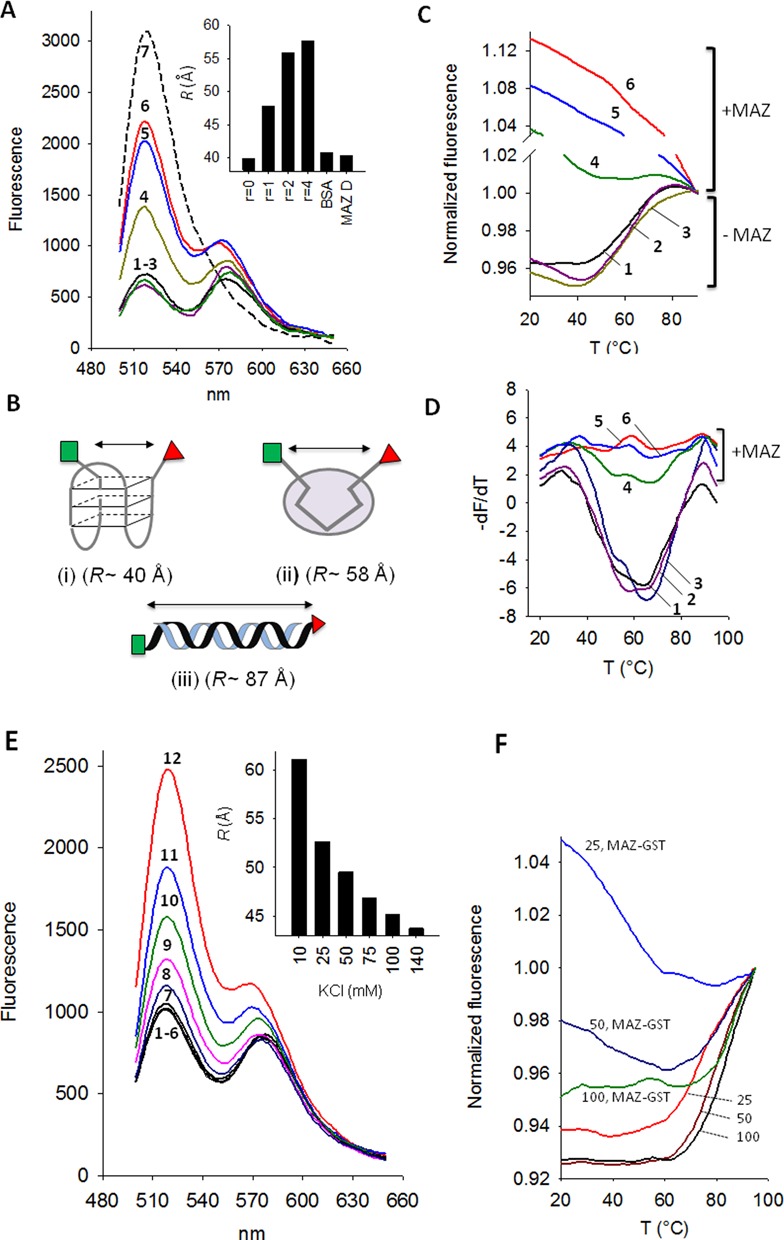
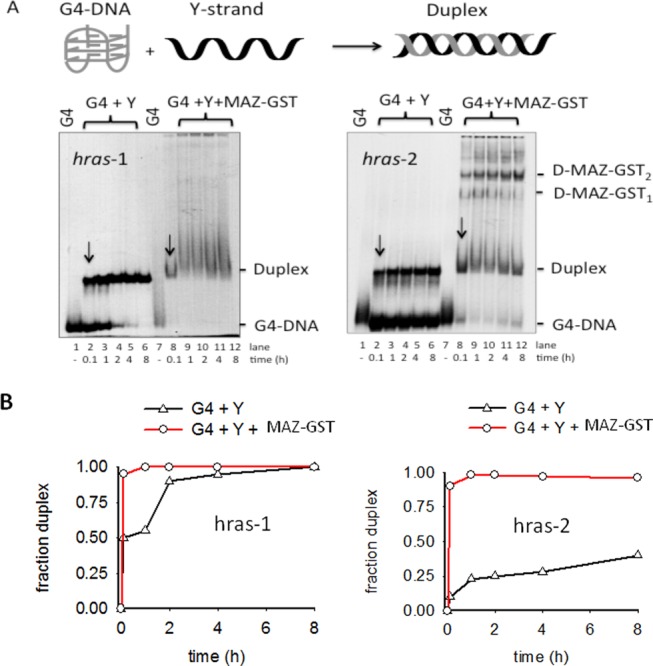
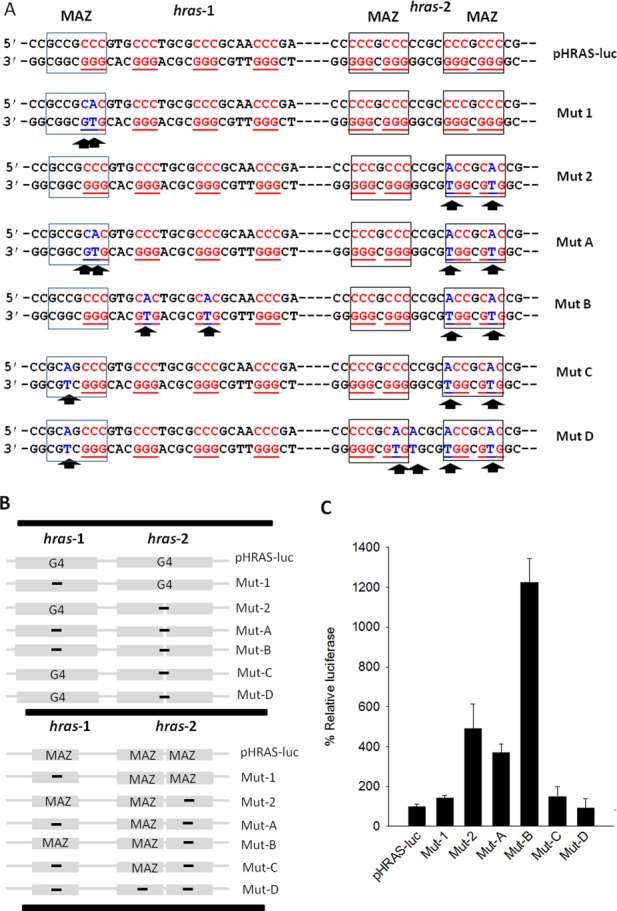
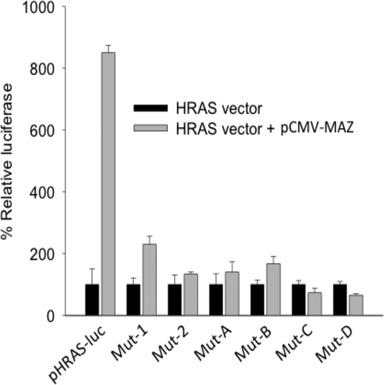
The HRAS promoter contains immediately upstream of the transcription start site two neighboring G-elements, each capable of folding into a G-quadruplex structure. We have previously found that these G-quadruplexes bind to the zinc-finger transcription factors MAZ and Sp1. In the present study we have examined the interaction between the HRAS promoter and MAZ, demonstrating for the first time that the protein unfolds the G-quadruplex structures. We also demonstrate that MAZ-GST, in the presence of the complementary strands, promotes a rapid transformation of the two HRAS quadruplexes into duplexes. By a mutational analysis of the HRAS G-elements, we dissected the MAZ-binding sites from the quadruplex-forming motifs, finding that the two neighboring G-quadruplexes bring about a dramatic repression of transcription, in a synergistic manner. We also discovered that the two G-quadruplexes are strong targets for small anticancer molecules. We found that a cell-penetrating anthratiophenedione (ATPD-1), which binds tightly to the G-quadruplexes (ΔT > 15°C), promotes the total extinction of HRAS transcription. In contrast, when one of the two G-quadruplexes was abrogated by point mutations, ATPD-1 repressed transcription by only 50%. Our study provides relevant information for the rationale design of targeted therapy drugs specific for the HRAS oncogene.
HRAS启动子在转录起始位点上游紧邻处含有两个相邻的G元件,每个元件都能够折叠成G-四链体结构。我们之前发现这些G-四链体与锌指转录因子MAZ和Sp1结合。在本研究中,我们检测了HRAS启动子与MAZ之间的相互作用,首次证明该蛋白能解开G-四链体结构。我们还证明,在互补链存在的情况下,MAZ-GST能促进两个HRAS四链体快速转化为双链体。通过对HRAS G元件的突变分析,我们从四链体形成基序中剖析出MAZ结合位点,发现两个相邻的G-四链体以协同方式对转录产生显著抑制作用。我们还发现这两个G-四链体是抗癌小分子的强效靶点。我们发现一种细胞穿透性蒽并菲二酮(ATPD-1),它与G-四链体紧密结合(ΔT > 15°C),能促使HRAS转录完全消失。相反,当两个G-四链体之一因点突变而被消除时,ATPD-1仅抑制50%的转录。我们的研究为合理设计针对HRAS癌基因的靶向治疗药物提供了相关信息。