Department of Molecular and Cell Biology, University of Connecticut Storrs, CT, USA.
Front Microbiol. 2014 Jun 26;5:299. doi: 10.3389/fmicb.2014.00299. eCollection 2014.
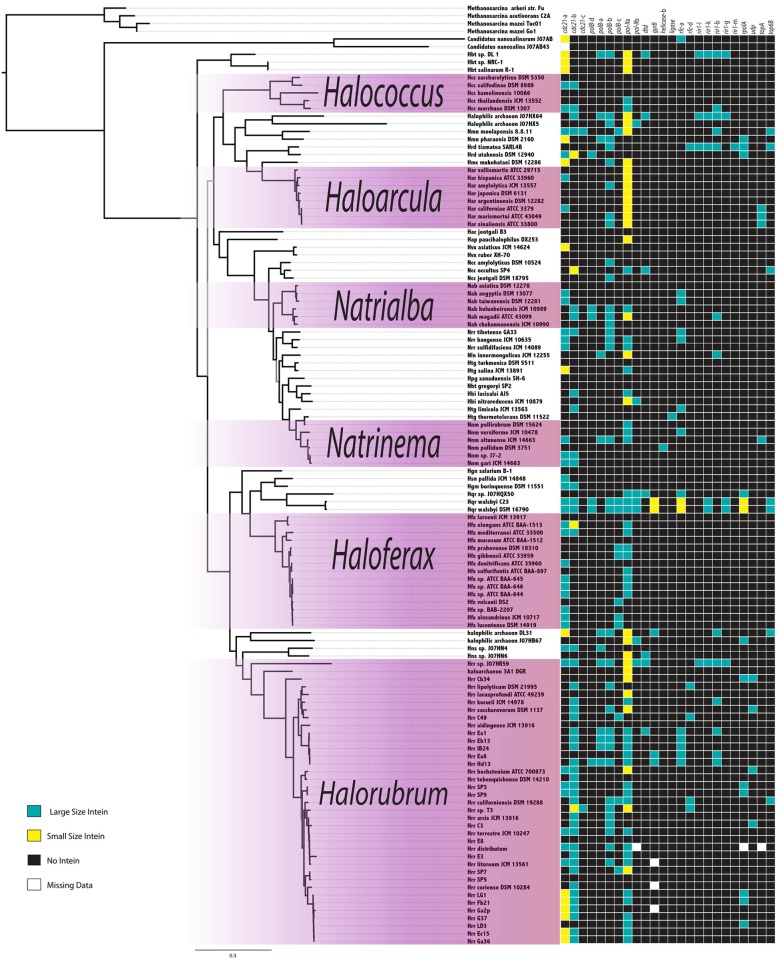
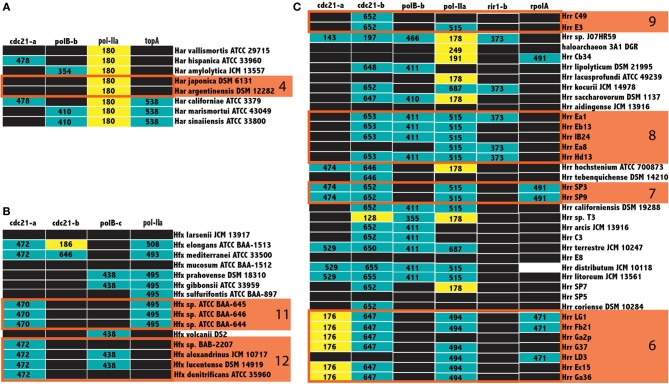
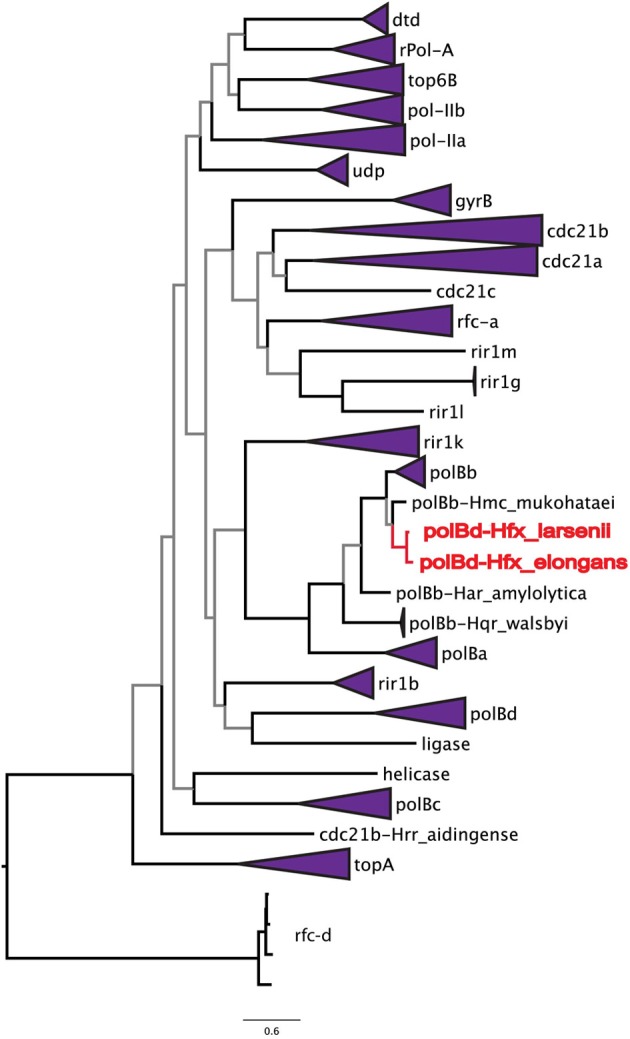
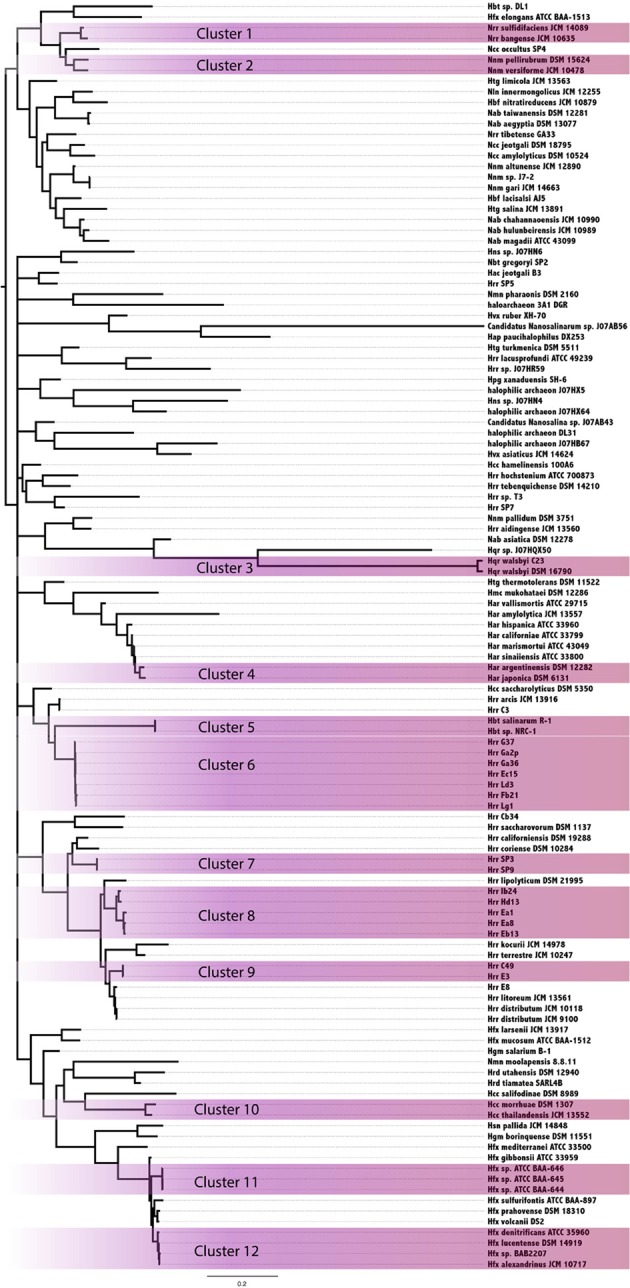
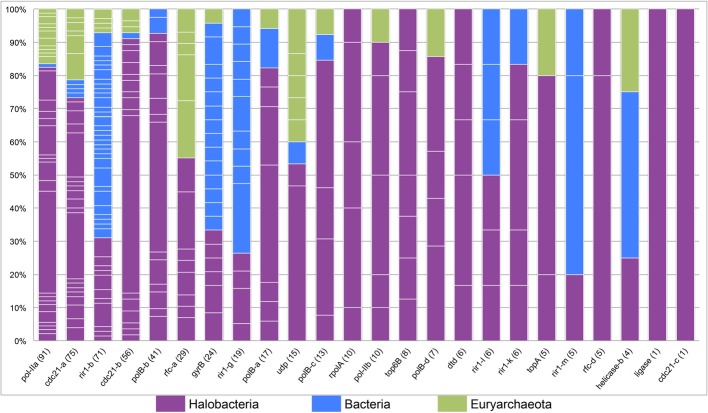
This research uses inteins, a type of mobile genetic element, to infer patterns of gene transfer within the Halobacteria. We surveyed 118 genomes representing 26 genera of Halobacteria for intein sequences. We then used the presence-absence profile, sequence similarity and phylogenies from the inteins recovered to explore how intein distribution can provide insight on the dynamics of gene flow between closely related and divergent organisms. We identified 24 proteins in the Halobacteria that have been invaded by inteins at some point in their evolutionary history, including two proteins not previously reported to contain an intein. Furthermore, the size of an intein is used as a heuristic for the phase of the intein's life cycle. Larger size inteins are assumed to be the canonical two domain inteins, consisting of self-splicing and homing endonuclease domains (HEN); smaller sizes are assumed to have lost the HEN domain. For many halobacterial groups the consensus phylogenetic signal derived from intein sequences is compatible with vertical inheritance or with a strong gene transfer bias creating these clusters. Regardless, the coexistence of intein-free and intein-containing alleles reveal ongoing transfer and loss of inteins within these groups. Inteins were frequently shared with other Euryarchaeota and among the Bacteria, with members of the Cyanobacteria (Cyanothece, Anabaena), Bacteriodetes (Salinibacter), Betaproteobacteria (Delftia, Acidovorax), Firmicutes (Halanaerobium), Actinobacteria (Longispora), and Deinococcus-Thermus-group.
这项研究利用整合酶(intein)——一种移动遗传元件,来推断嗜盐菌内的基因转移模式。我们调查了 118 个代表 26 个属的嗜盐菌基因组,以寻找整合酶序列。然后,我们使用回收的整合酶的存在-缺失图谱、序列相似性和系统发育关系,来探索整合酶的分布如何为密切相关和分化的生物体之间的基因流动动态提供见解。我们在嗜盐菌中发现了 24 种蛋白质,它们在进化历史的某个时刻被整合酶入侵,其中包括两种以前未报道含有整合酶的蛋白质。此外,整合酶的大小被用作整合酶生命周期阶段的启发式。较大的整合酶被认为是典型的具有自我剪接和归巢内切酶结构域(HEN)的双域整合酶;较小的整合酶被认为失去了 HEN 结构域。对于许多嗜盐菌群体,整合酶序列得出的共识系统发育信号与垂直遗传或强烈的基因转移偏倚一致,这些偏倚导致了这些聚类的形成。无论如何,整合酶自由和整合酶包含等位基因的共存揭示了这些群体中整合酶的持续转移和丢失。整合酶经常与其他广古菌和细菌共享,与蓝细菌(Cyanothece、Anabaena)、拟杆菌门(Salinibacter)、β变形菌门(Delftia、Acidovorax)、Firmicutes(Halanaerobium)、放线菌门(Longispora)和 Deinococcus-Thermus 群的成员共享。