Stoner Susan A, Mikko A Tasha, Carpenter Kelly M
Talaria, Inc., Seattle, Washington; The Alcohol and Drug Abuse Institute, University of Washington, Seattle, Washington.
Talaria, Inc., Seattle, Washington.
J Subst Abuse Treat. 2014 Nov-Dec;47(5):362-70. doi: 10.1016/j.jsat.2014.06.009. Epub 2014 Jul 12.
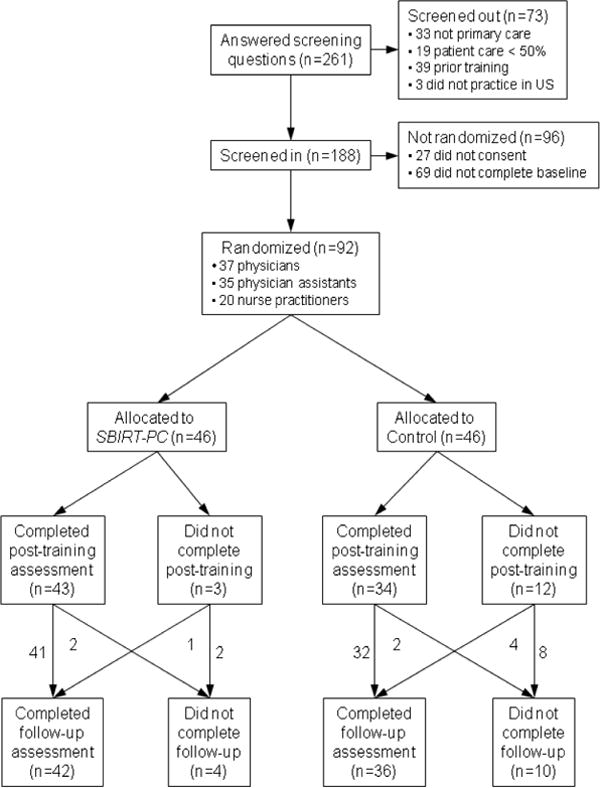
This project evaluated a Web-based multimedia training for primary care providers in screening, brief intervention, and referral to treatment (SBIRT) for unhealthy use of alcohol, tobacco, and other drugs. Physicians (n = 37), physician assistants (n = 35), and nurse practitioners (n = 20) were recruited nationally by email and randomly assigned to online access to either the multimedia training or comparable reading materials. At baseline, compared to non-physicians, physicians reported lower self-efficacy for counseling patients regarding substance use and doing so less frequently. All provider types in both conditions showed significant increases in SBIRT-related knowledge, self-efficacy, and clinical practices. Although the multimedia training was not superior to the reading materials with regard to these outcomes, the multimedia training was more likely to be completed and rated more favorably. Findings indicate that SBIRT training does not have to be elaborate to be effective. However, multimedia training may be more appealing to the target audiences.
该项目评估了一种基于网络的多媒体培训,用于基层医疗服务提供者针对酒精、烟草及其他药物的不健康使用进行筛查、简短干预及转介治疗(SBIRT)。通过电子邮件在全国范围内招募了医生(n = 37)、医师助理(n = 35)和执业护士(n = 20),并将他们随机分配为在线获取多媒体培训或类似的阅读材料。在基线时,与非医生相比,医生报告在为患者提供关于物质使用的咨询方面自我效能较低,且这样做的频率也较低。两种情况下的所有提供者类型在与SBIRT相关的知识、自我效能和临床实践方面均有显著提高。尽管在这些结果方面多媒体培训并不优于阅读材料,但多媒体培训更有可能被完成且评价更高。研究结果表明,SBIRT培训不一定非得复杂才有效。然而,多媒体培训可能对目标受众更具吸引力。