College of Pharmacy, Keimyung University, Daegu, South Korea.
Cancer Sci. 2014 Oct;105(10):1245-53. doi: 10.1111/cas.12497. Epub 2014 Sep 25.
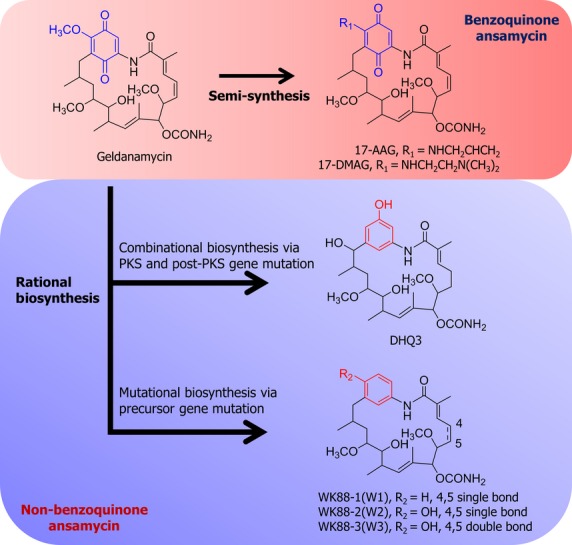
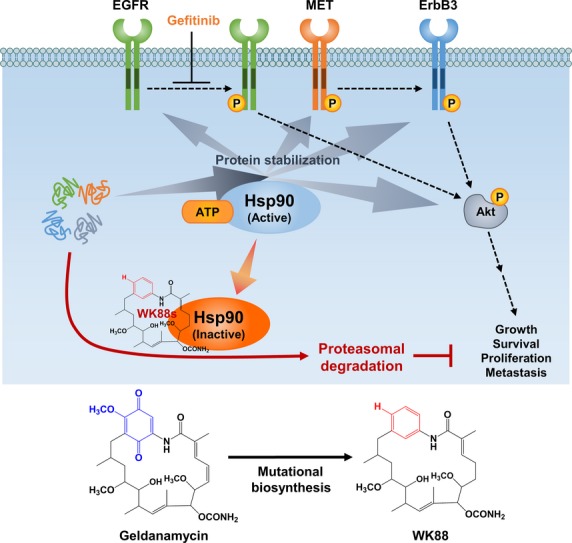
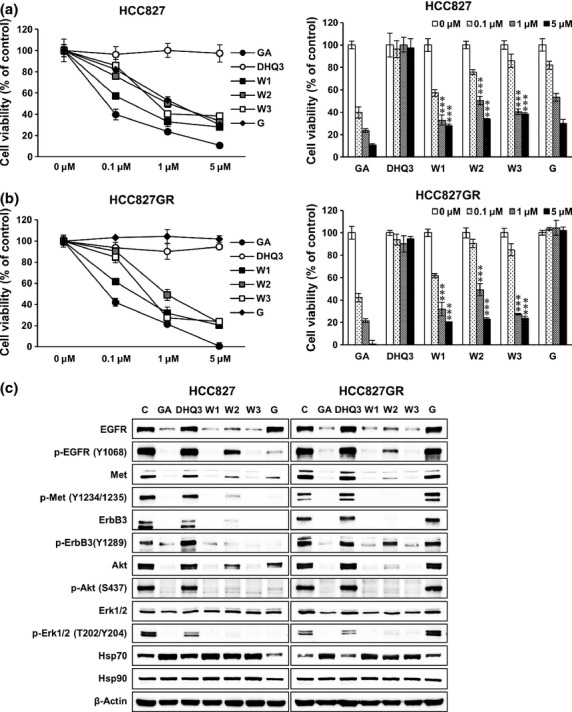
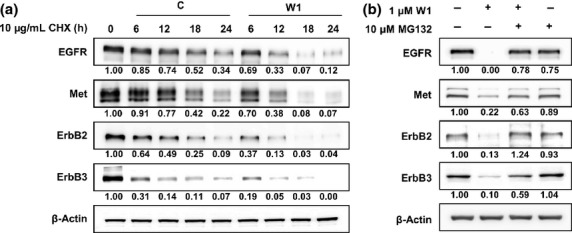
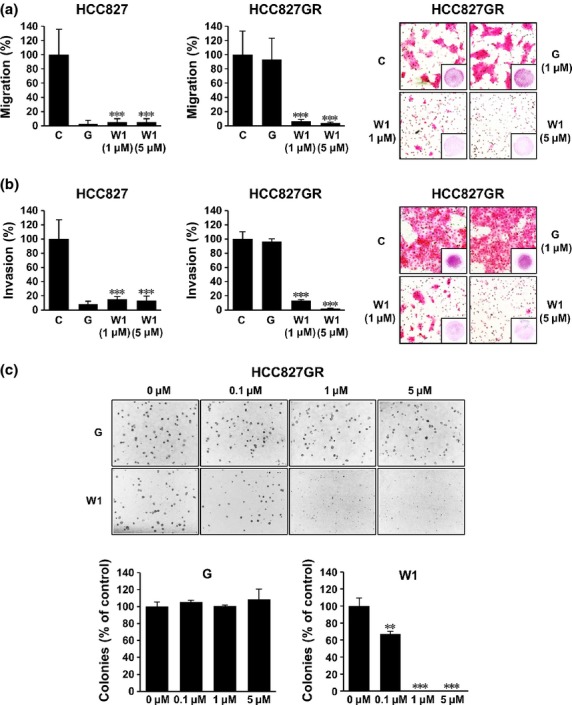
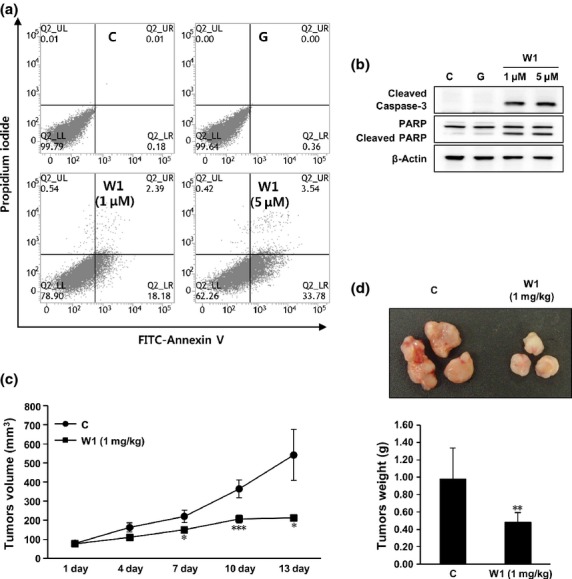
Although epidermal growth factor receptor-tyrosine kinase inhibitors (EGFR-TKIs) have been introduced for the treatment of non-small cell lung cancer (NSCLC), the emergence of secondary T790M mutation in EGFR or amplification of the Met proto-oncogene restrain the clinical success of EGFR-TKIs. Since heat shock protein-90 (Hsp90) stabilizes various oncoproteins including EGFR and c-Met, the inhibition of Hsp90 activity appears as a rational strategy to develop anticancer drugs. Despite preclinical efficacy of geldanamycin-anasamycin (GA)-derivatives containing benzoquinone moiety as Hsp90 inhibitors, the hepatotoxicity of these GA-derivatives restricts their therapeutic benefit. We have prepared WK-88 series of GA-derivatives, which lack the benzoquinone moiety. In this study, we have examined the anticancer effects of WK88-1 in Met-amplified- and gefitinib-resistant (HCC827GR) NSCLC cells and its parental HCC827 cells. Treatment with WK88-1 reduced the cell viability in both HCC827 and HCC827GR cells, which was associated with marked decrease in the constitutive expression of Hsp90 client proteins, such as EGFR, ErbB2, ErbB3, Met and Akt. Moreover, WK88-1 attenuated phosphorylation of these Hsp90 client proteins and reduced the anchorage-independent growth of HCC827GR cells. Administration of WK88-1 did not cause hepatotoxicity in animals and significantly reduced the growth of HCC827GR cells xenograft tumors in nude mice. Our study provides evidence that ErbB3 might be a client for Hsp90 in Met-amplified NSCLCs. In conclusion, we demonstrate that inhibition of Hsp90 dampens the activation of EGFR- or c-Met-mediated survival of Met-amplified NSCLCs and that WK88-1 as a Hsp90 inhibitor alleviates gefitinib resistance in HCC827GR cells.
尽管表皮生长因子受体酪氨酸激酶抑制剂(EGFR-TKIs)已被引入治疗非小细胞肺癌(NSCLC),但 EGFR 中的继发性 T790M 突变或 Met 原癌基因的扩增限制了 EGFR-TKIs 的临床成功。由于热休克蛋白-90(Hsp90)稳定包括 EGFR 和 c-Met 在内的各种癌蛋白,因此抑制 Hsp90 活性似乎是开发抗癌药物的合理策略。尽管含有苯醌部分的格尔德霉素-阿那霉素(GA)衍生物作为 Hsp90 抑制剂具有临床前疗效,但这些 GA 衍生物的肝毒性限制了它们的治疗益处。我们已经制备了不含苯醌部分的 WK-88 系列 GA 衍生物。在这项研究中,我们研究了 WK88-1 在 Met 扩增和吉非替尼耐药(HCC827GR)NSCLC 细胞及其亲本 HCC827 细胞中的抗癌作用。WK88-1 处理降低了 HCC827 和 HCC827GR 细胞的细胞活力,这与 Hsp90 客户蛋白(如 EGFR、ErbB2、ErbB3、Met 和 Akt)的组成型表达明显减少有关。此外,WK88-1 减弱了这些 Hsp90 客户蛋白的磷酸化,并减少了 HCC827GR 细胞的无锚定依赖性生长。WK88-1 在动物中不会引起肝毒性,并显著减少裸鼠中 HCC827GR 细胞异种移植肿瘤的生长。我们的研究提供了证据表明 ErbB3 可能是 Met 扩增 NSCLC 中 Hsp90 的客户蛋白。总之,我们证明抑制 Hsp90 可抑制 EGFR 或 c-Met 介导的 Met 扩增 NSCLC 的生存,并且 WK88-1 作为 Hsp90 抑制剂可减轻 HCC827GR 细胞对吉非替尼的耐药性。