Owonikoko Taofeek K, Zhang Guojing, Deng Xingming, Rossi Michael R, Switchenko Jeffrey M, Doho Gregory H, Chen Zhengjia, Kim Sungjin, Strychor Sandy, Christner Susan M, Beumer Jan, Li Chunyang, Yue Ping, Chen Alice, Sica Gabriel L, Ramalingam Suresh S, Kowalski Jeanne, Khuri Fadlo R, Sun Shi-Yong
Department of Hematology & Medical Oncology, Emory University School of Medicine, Atlanta, Georgia; Winship Cancer Institute of Emory University, Atlanta, Georgia.
Cancer Med. 2014 Dec;3(6):1579-94. doi: 10.1002/cam4.317. Epub 2014 Aug 13.
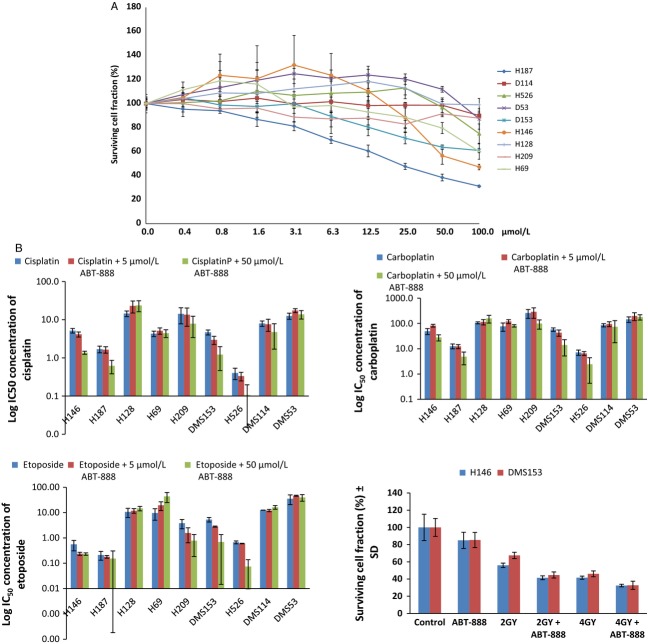
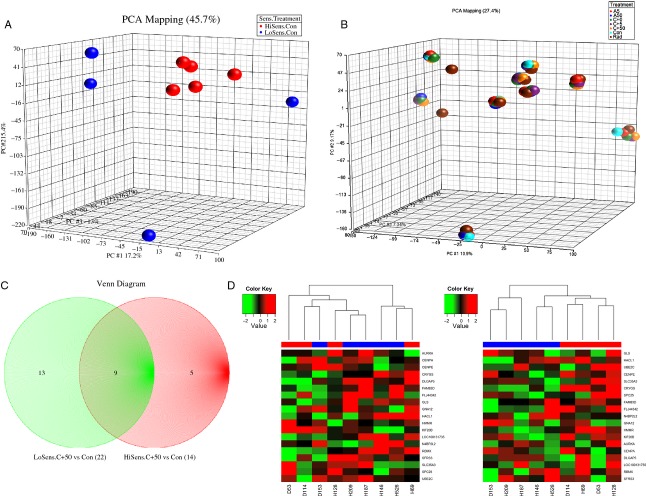
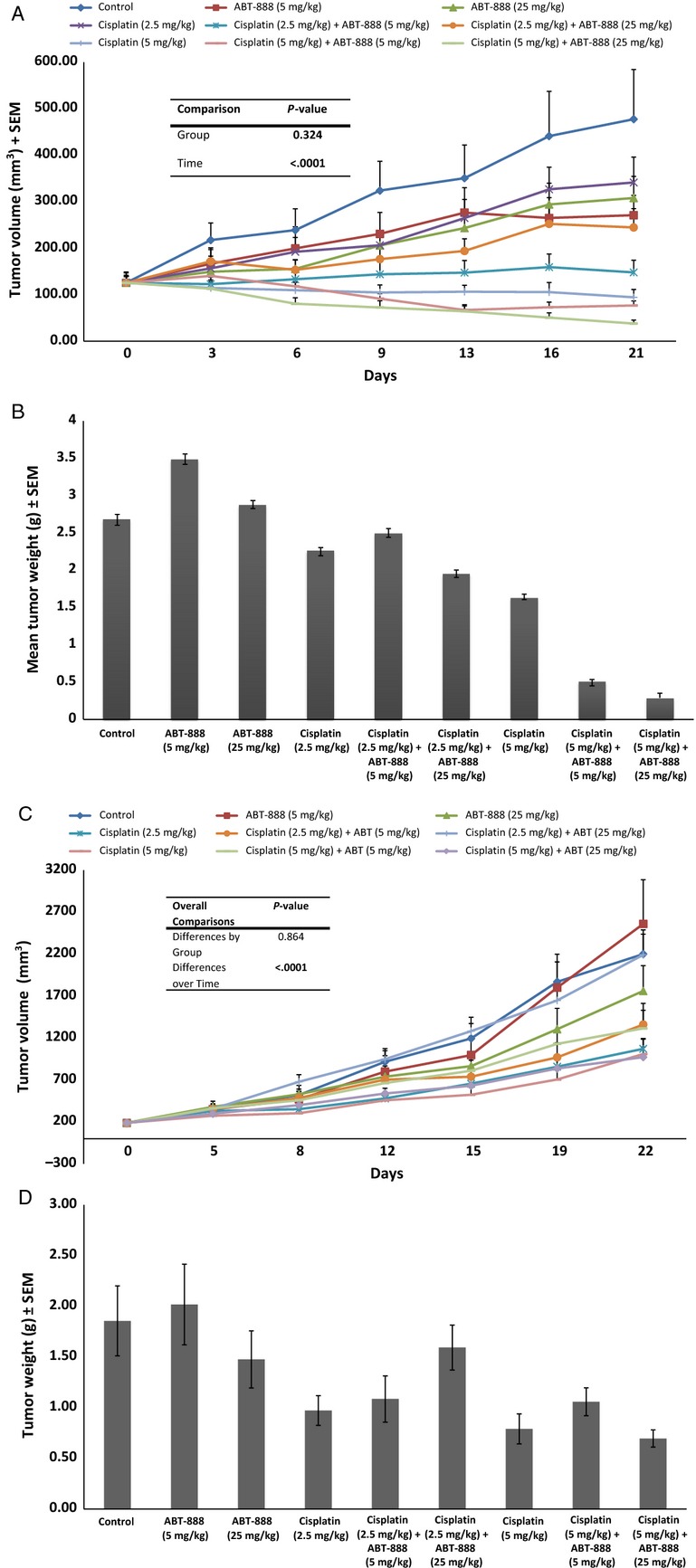
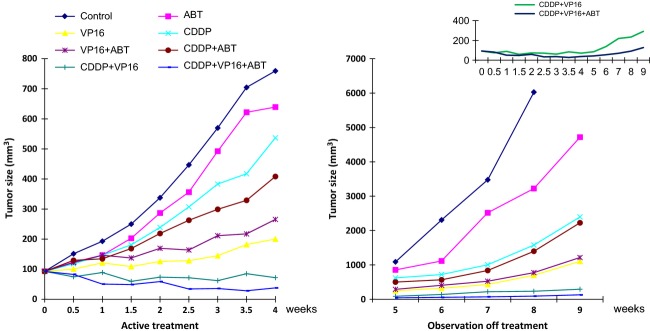
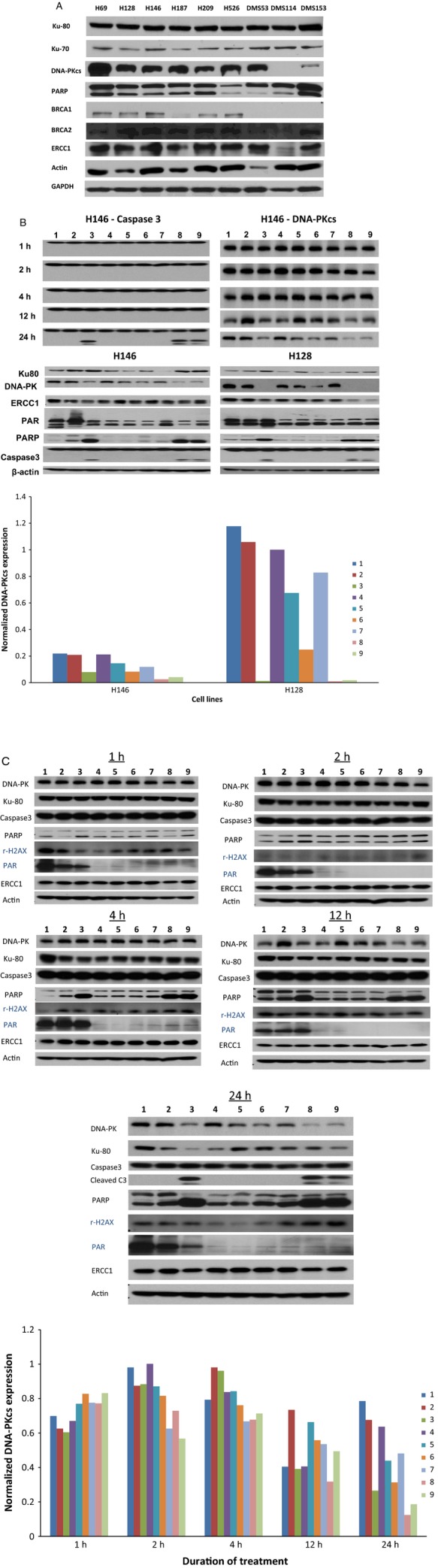
Poly (ADP) ribose polymerase (PARP) plays a key role in DNA repair and is highly expressed in small cell lung cancer (SCLC). We investigated the therapeutic impact of PARP inhibition in SCLC. In vitro cytotoxicity of veliparib, cisplatin, carboplatin, and etoposide singly and combined was determined by MTS in 9 SCLC cell lines (H69, H128, H146, H526, H187, H209, DMS53, DMS153, and DMS114). Subcutaneous xenografts in athymic nu/nu mice of H146 and H128 cells with relatively high and low platinum sensitivity, respectively, were employed for in vivo testing. Mechanisms of differential sensitivity of SCLC cell lines to PARP inhibition were investigated by comparing protein and gene expression profiles of the platinum sensitive and the less sensitive cell lines. Veliparib showed limited single-agent cytotoxicity but selectively potentiated (≥ 50% reduction in IC50 ) cisplatin, carboplatin, and etoposide in vitro in five of nine SCLC cell lines. Veliparib with cisplatin or etoposide or with both cisplatin and etoposide showed greater delay in tumor growth than chemotherapy alone in H146 but not H128 xenografts. The potentiating effect of veliparib was associated with in vitro cell line sensitivity to cisplatin (CC = 0.672; P = 0.048) and DNA-PKcs protein modulation. Gene expression profiling identified differential expression of a 5-gene panel (GLS, UBEC2, HACL1, MSI2, and LOC100129585) in cell lines with relatively greater sensitivity to platinum and veliparib combination. Veliparib potentiates standard cytotoxic agents against SCLC in a cell-specific manner. This potentiation correlates with platinum sensitivity, DNA-PKcs expression and a 5-gene expression profile.
聚(ADP)核糖聚合酶(PARP)在DNA修复中起关键作用,且在小细胞肺癌(SCLC)中高表达。我们研究了PARP抑制对SCLC的治疗影响。通过MTS法测定了维利帕尼、顺铂、卡铂和依托泊苷单药及联合用药对9种SCLC细胞系(H69、H128、H146、H526、H187、H209、DMS53、DMS153和DMS114)的体外细胞毒性。分别选用铂敏感性相对较高的H146细胞和铂敏感性相对较低的H128细胞,接种于无胸腺裸鼠皮下进行体内试验。通过比较铂敏感细胞系和低敏感细胞系的蛋白质和基因表达谱,研究SCLC细胞系对PARP抑制的差异敏感性机制。维利帕尼单药细胞毒性有限,但在9种SCLC细胞系中的5种中,可选择性增强(IC50降低≥50%)顺铂、卡铂和依托泊苷的体外细胞毒性。在H146异种移植瘤中,维利帕尼联合顺铂或依托泊苷或联合顺铂和依托泊苷均比单纯化疗更能显著延迟肿瘤生长,但在H128异种移植瘤中则不然。维利帕尼的增强作用与体外细胞系对顺铂的敏感性(CC = 0.672;P = 0.048)及DNA-PKcs蛋白调节有关。基因表达谱分析确定了对铂和维利帕尼联合用药敏感性相对较高的细胞系中一个5基因面板(GLS、UBEC2、HACL1、MSI2和LOC100129585)的差异表达。维利帕尼以细胞特异性方式增强标准细胞毒性药物对SCLC的作用。这种增强作用与铂敏感性、DNA-PKcs表达及一个5基因表达谱相关。