Ok Chi Young, Chen Jiayu, Xu-Monette Zijun Y, Tzankov Alexandar, Manyam Ganiraju C, Li Ling, Visco Carlo, Montes-Moreno Santiago, Dybkær Karen, Chiu April, Orazi Attilio, Zu Youli, Bhagat Govind, Richards Kristy L, Hsi Eric D, Choi William W L, van Krieken J Han, Huh Jooryung, Zhao Xiaoying, Ponzoni Maurilio, Ferreri Andrés J M, Bertoni Francesco, Farnen John P, Møller Michael B, Piris Miguel A, Winter Jane N, Medeiros L Jeffrey, Young Ken H
Department of Hematopathology, The University of Texas MD Anderson Cancer Center, Houston, Texas.
Medical School of Taizhou University, Taizhou, Zhejiang, China.
Clin Cancer Res. 2014 Oct 1;20(19):5113-23. doi: 10.1158/1078-0432.CCR-14-0683. Epub 2014 Aug 14.
Activated signal transducer and activator of transcription 3 (STAT3) regulates tumor growth, invasion, cell proliferation, angiogenesis, immune response, and survival. Data regarding expression of phosphorylated (activated) STAT3 in diffuse large B-cell lymphoma (DLBCL) and the impact of phosphorylated STAT3 (pSTAT3) on prognosis are limited.
We evaluated expression of pSTAT3 in de novo DLBCL using immunohistochemistry, gene expression profiling (GEP), and gene set enrichment analysis (GSEA). Results were analyzed in correlation with cell-of-origin (COO), critical lymphoma biomarkers, and genetic translocations.
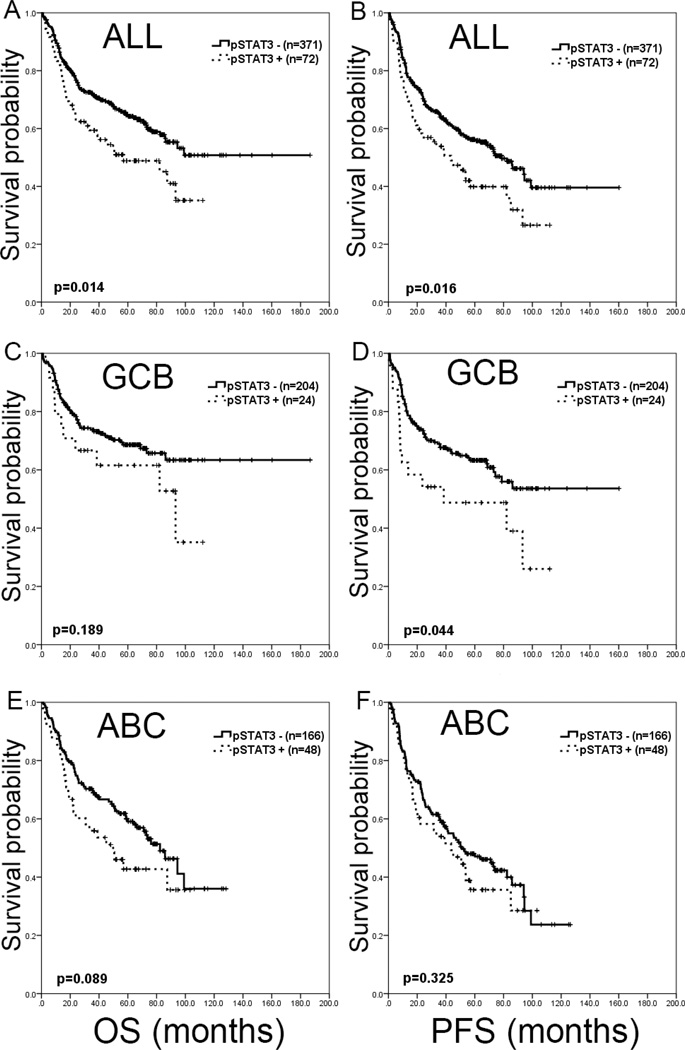
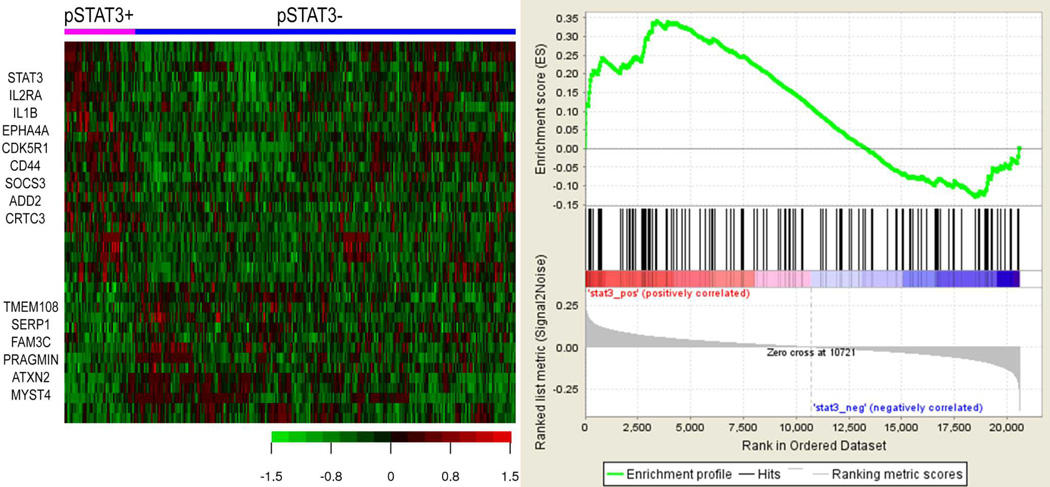
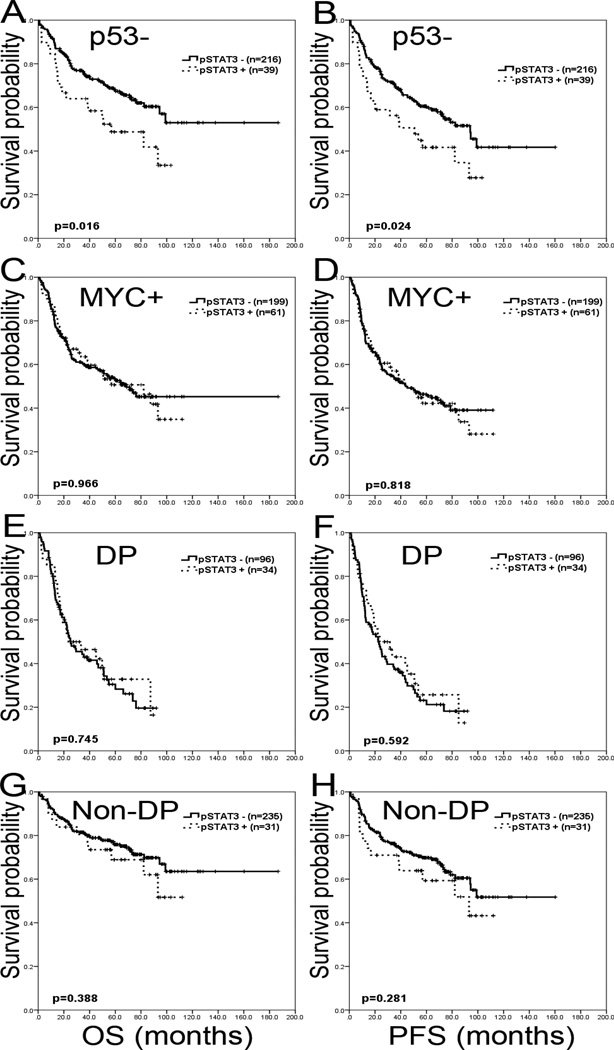
pSTAT3 expression was observed in 16% of DLBCL and was associated with advanced stage, multiple extranodal sites of involvement, activated B-cell-like (ABC) subtype, MYC expression, and MYC/BCL2 expression. Expression of pSTAT3 predicted inferior overall survival (OS) and progression-free survival (PFS) in patients with de novo DLBCL. When DLBCL cases were stratified according to COO or MYC expression, pSTAT3 expression did not predict inferior outcome, respectively. Multivariate analysis showed that the prognostic predictability of pSTAT3 expression was due to its association with the ABC subtype, MYC expression, and adverse clinical features. GEP demonstrated upregulation of genes, which can potentiate function of STAT3. GSEA showed the JAK-STAT pathway to be enriched in pSTAT3(+) DLBCL.
The results of this study provide a rationale for the ongoing successful clinical trials targeting the JAK-STAT pathway in DLBCL.
活化的信号转导子和转录激活子3(STAT3)调节肿瘤生长、侵袭、细胞增殖、血管生成、免疫反应和存活。关于磷酸化(活化)STAT3在弥漫性大B细胞淋巴瘤(DLBCL)中的表达以及磷酸化STAT3(pSTAT3)对预后影响的数据有限。
我们使用免疫组织化学、基因表达谱分析(GEP)和基因集富集分析(GSEA)评估初治DLBCL中pSTAT3的表达。将结果与细胞起源(COO)、关键淋巴瘤生物标志物和基因易位进行相关性分析。
在16%的DLBCL中观察到pSTAT3表达,其与晚期、多个结外受累部位、活化B细胞样(ABC)亚型、MYC表达以及MYC/BCL2表达相关。pSTAT3表达预示初治DLBCL患者的总生存期(OS)和无进展生存期(PFS)较差。当根据COO或MYC表达对DLBCL病例进行分层时,pSTAT3表达分别不能预示较差的预后。多变量分析显示,pSTAT3表达的预后预测性归因于其与ABC亚型、MYC表达以及不良临床特征的关联。GEP显示可增强STAT3功能的基因上调。GSEA显示JAK-STAT通路在pSTAT3(+)DLBCL中富集。
本研究结果为目前针对DLBCL中JAK-STAT通路的成功临床试验提供了理论依据。