Kar Parimal, Gopal Srinivasa Murthy, Cheng Yi-Ming, Panahi Afra, Feig Michael
Department of Biochemistry and Molecular Biology and Department of Chemistry, Michigan State University , East Lansing, Michigan 48824, United States.
Departments of Chemistry and Biophysics, University of Michigan , Ann Arbor, Michigan 48109, United States.
J Chem Theory Comput. 2014 Aug 12;10(8):3459-3472. doi: 10.1021/ct500443v. Epub 2014 Jun 16.
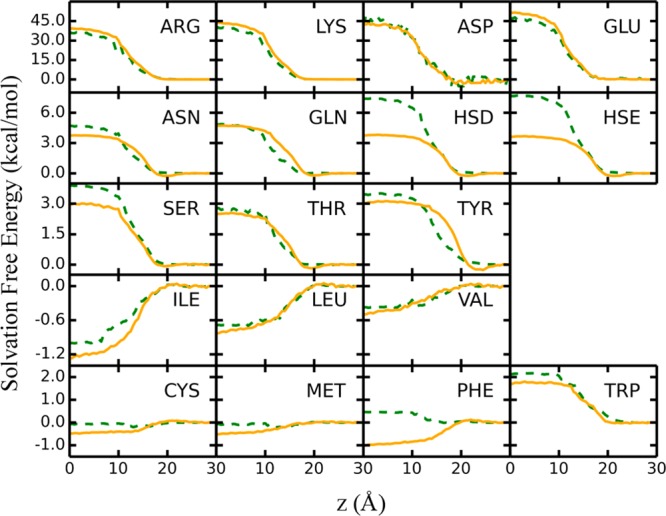
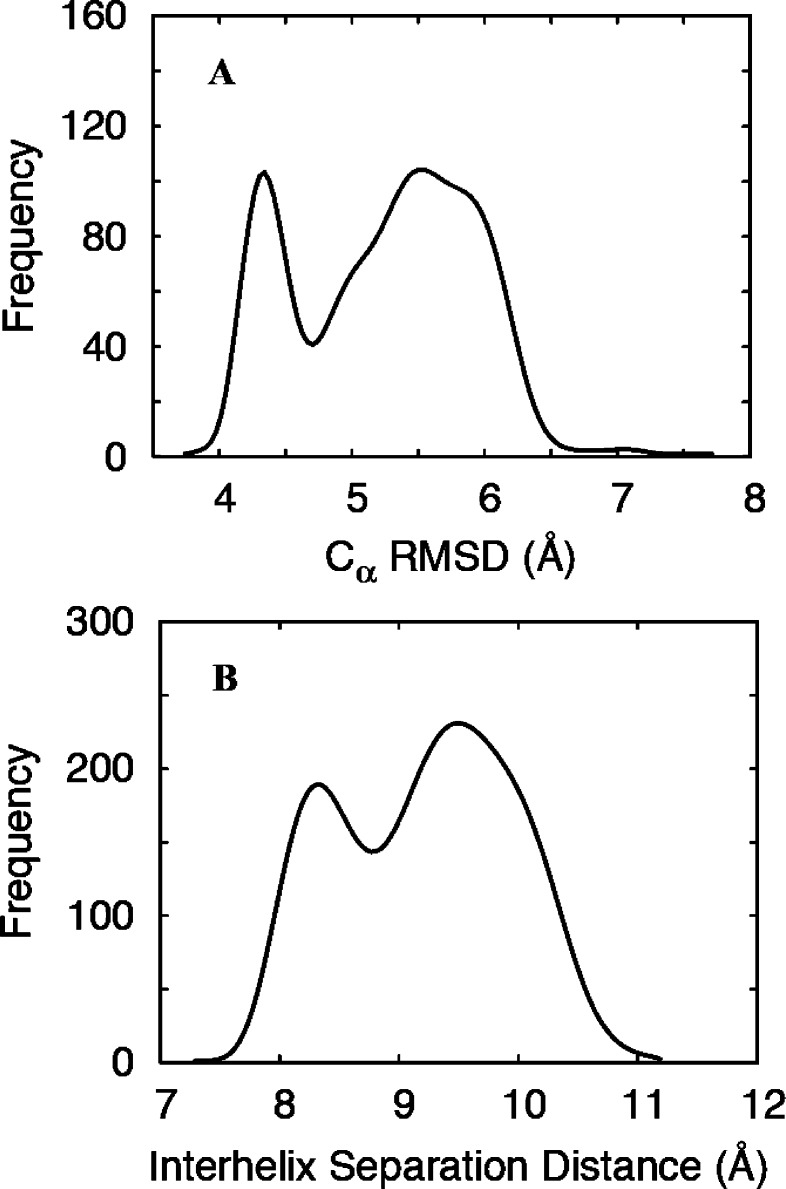
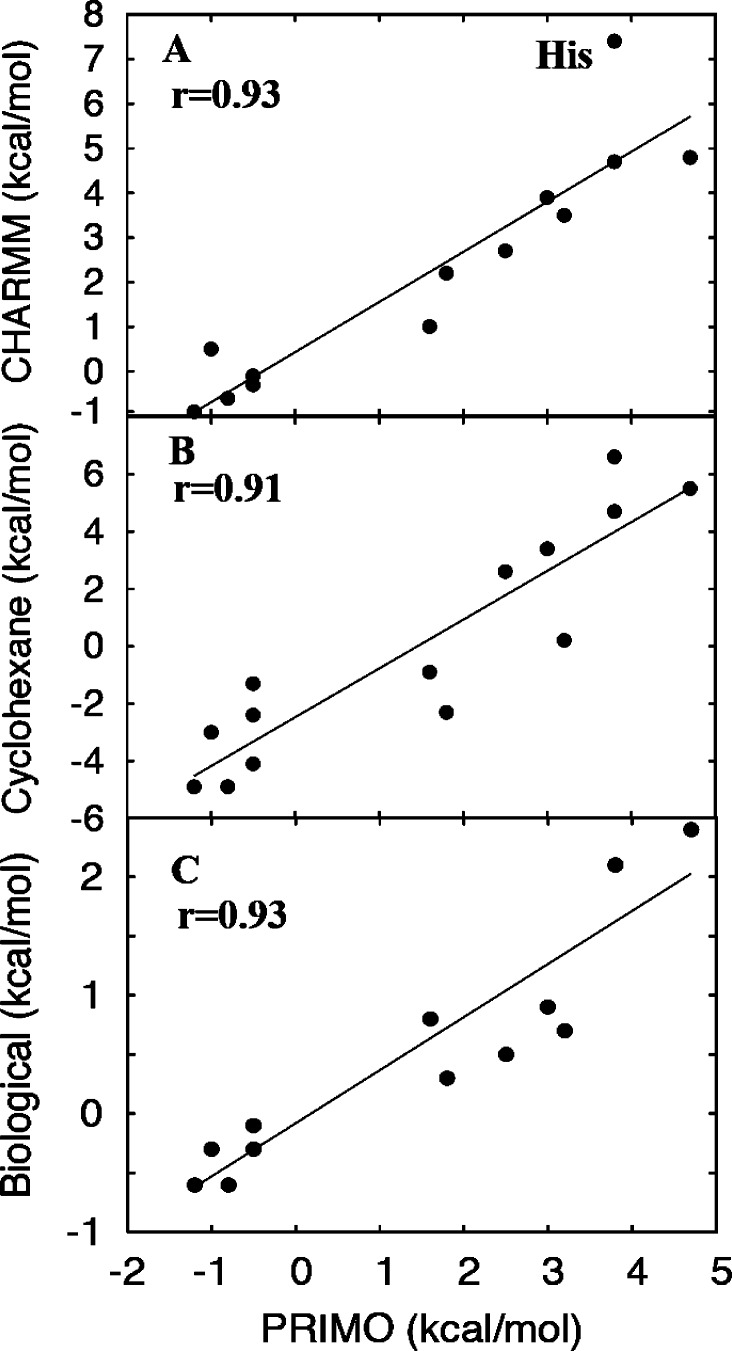
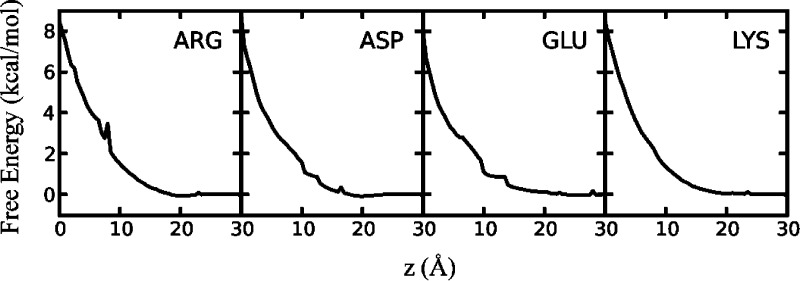
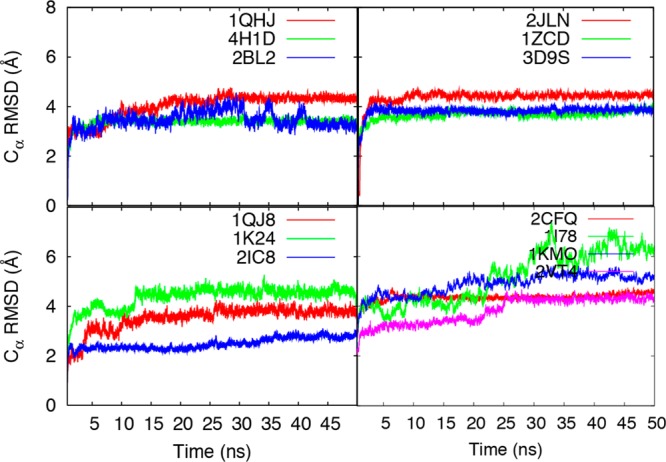
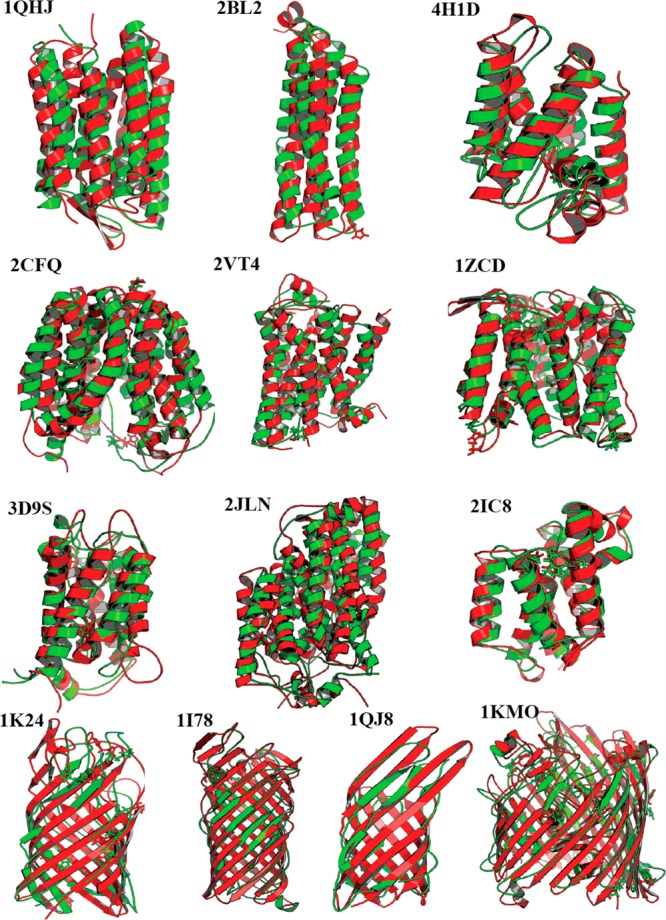
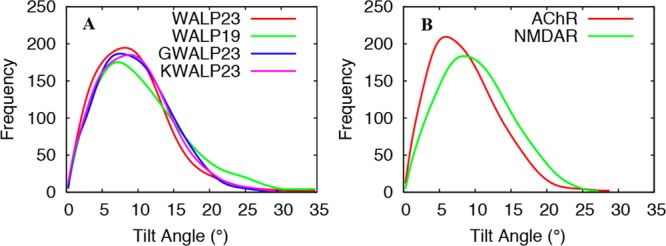
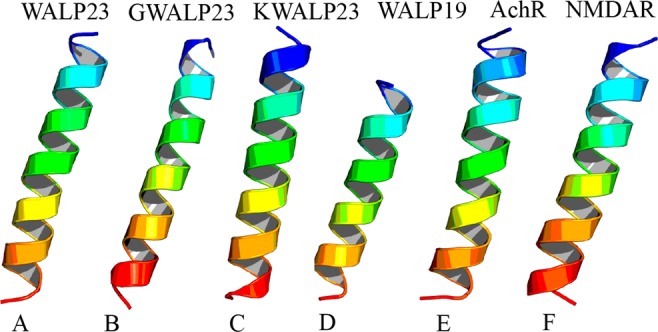
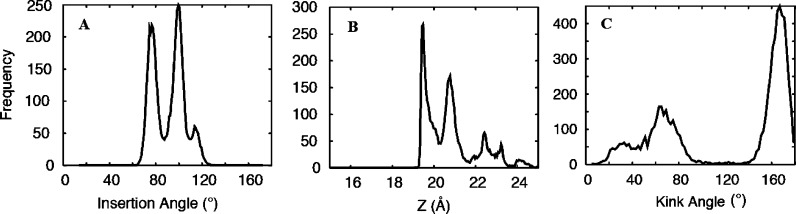
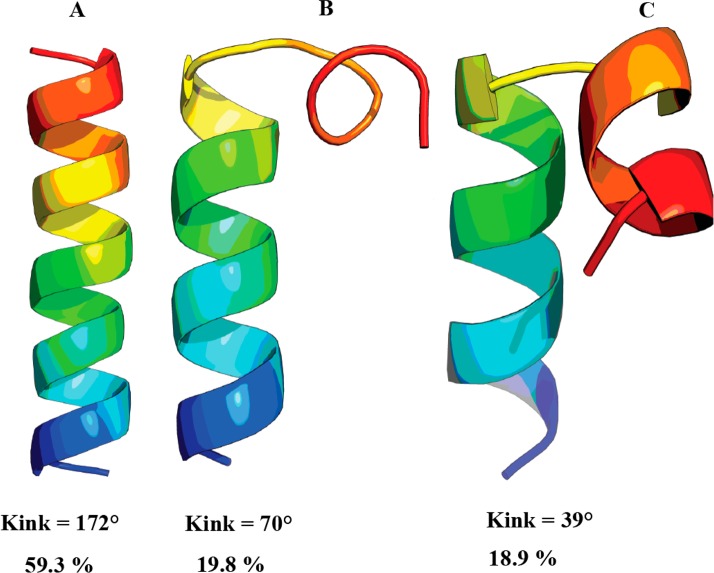
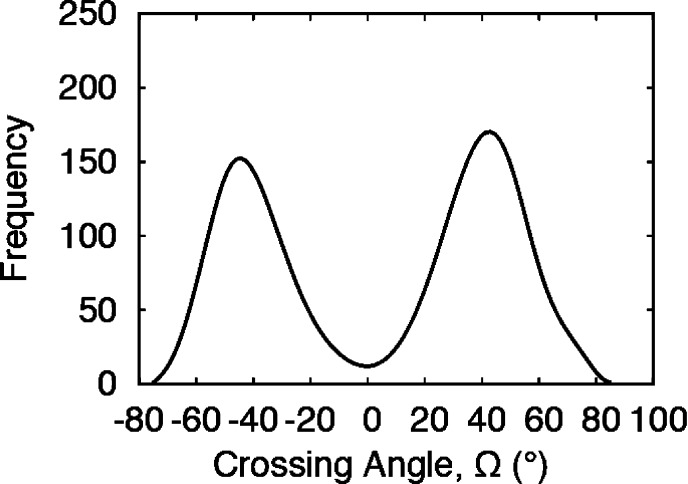
An extension of the recently developed PRIMO coarse-grained force field to membrane environments, PRIMO-M, is described. The membrane environment is modeled with the heterogeneous dielectric generalized Born (HDGB) methodology that simply replaces the standard generalized Born model in PRIMO without further parametrization. The resulting model was validated by comparing amino acid insertion free energy profiles and application in molecular dynamics simulations of membrane proteins and membrane-interacting peptides. Membrane proteins with 148-661 amino acids show stable root-mean-squared-deviations (RMSD) between 2 and 4 Å for most systems. Transmembrane helical peptides maintain helical shape and exhibit tilt angles in good agreement with experimental or other simulation data. The association of two glycophorin A (GpA) helices was simulated using replica exchange molecular dynamics simulations yielding the correct dimer structure with a crossing angle in agreement with previous studies. Finally, conformational sampling of the influenza fusion peptide also generates structures in agreement with previous studies. Overall, these findings suggest that PRIMO-M can be used to study membrane bound peptides and proteins and validates the transferable nature of the PRIMO coarse-grained force field.
本文描述了最近开发的PRIMO粗粒度力场在膜环境中的扩展版本PRIMO-M。膜环境采用非均匀介电广义玻恩(HDGB)方法进行建模,该方法只需在PRIMO中替换标准广义玻恩模型,无需进一步参数化。通过比较氨基酸插入自由能分布以及在膜蛋白和膜相互作用肽的分子动力学模拟中的应用,对所得模型进行了验证。对于大多数系统,含有148 - 661个氨基酸的膜蛋白显示出2至4 Å之间稳定的均方根偏差(RMSD)。跨膜螺旋肽保持螺旋形状,并且其倾斜角度与实验数据或其他模拟数据高度吻合。使用副本交换分子动力学模拟对两个血型糖蛋白A(GpA)螺旋的缔合进行了模拟,得到了正确的二聚体结构,其交叉角与先前研究一致。最后,流感融合肽的构象采样也生成了与先前研究一致的结构。总体而言,这些发现表明PRIMO-M可用于研究膜结合肽和蛋白质,并验证了PRIMO粗粒度力场的可转移性。