Department of Fish, Wildlife, and Conservation Biology, Colorado State University , Fort Collins, CO , USA ; National Park Service, Natural Sounds and Night Skies Division , Fort Collins, CO , USA.
Department of Fish, Wildlife, and Conservation Biology, Colorado State University , Fort Collins, CO , USA ; Graduate Degree Program in Ecology, Colorado State University , Fort Collins, CO , USA.
PeerJ. 2014 Aug 28;2:e532. doi: 10.7717/peerj.532. eCollection 2014.
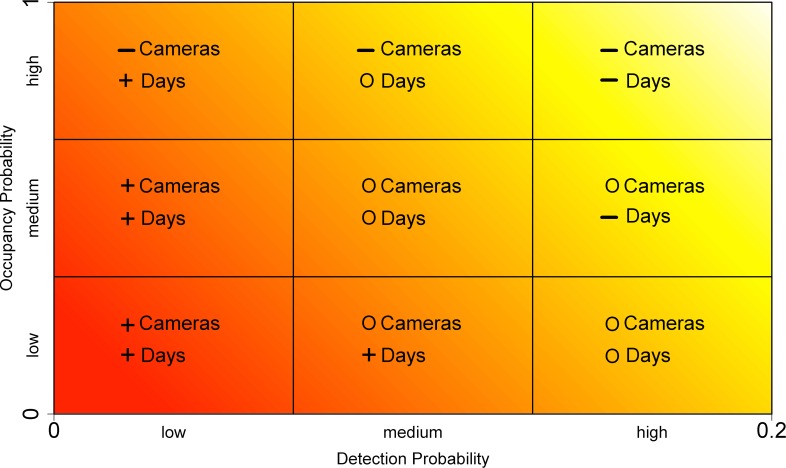
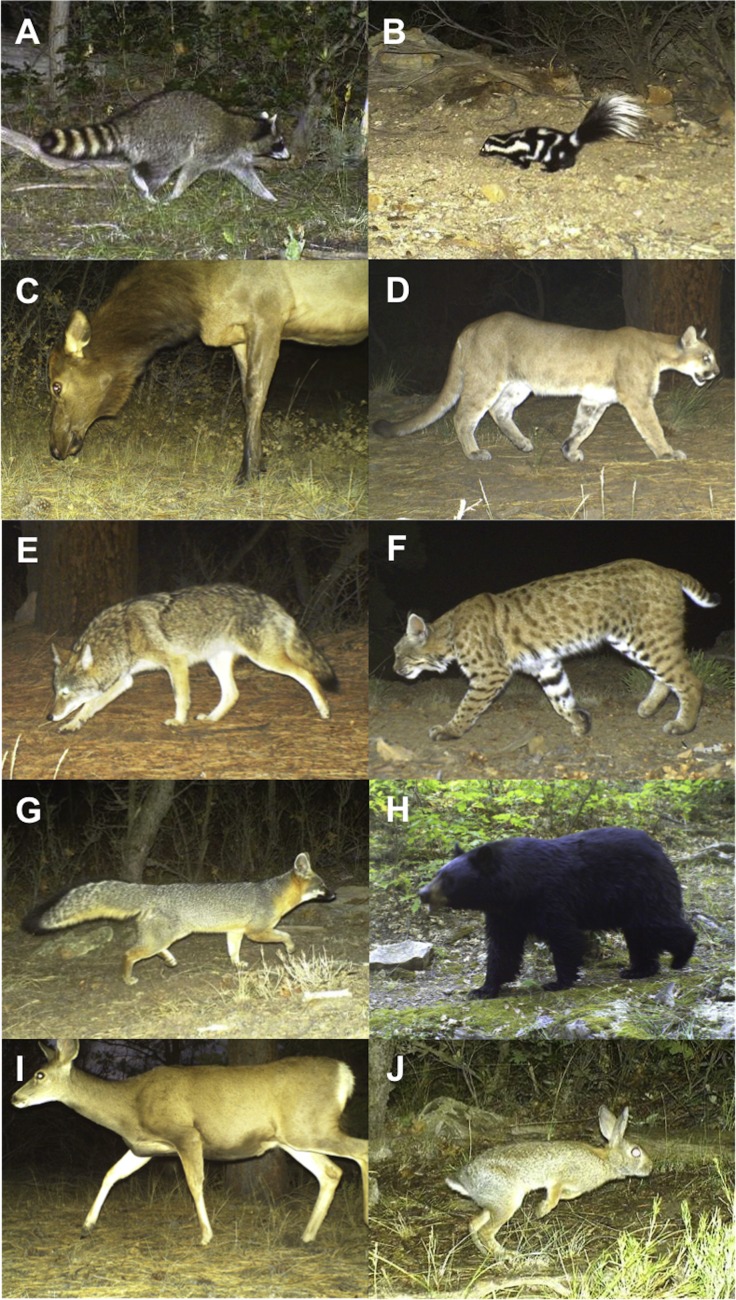
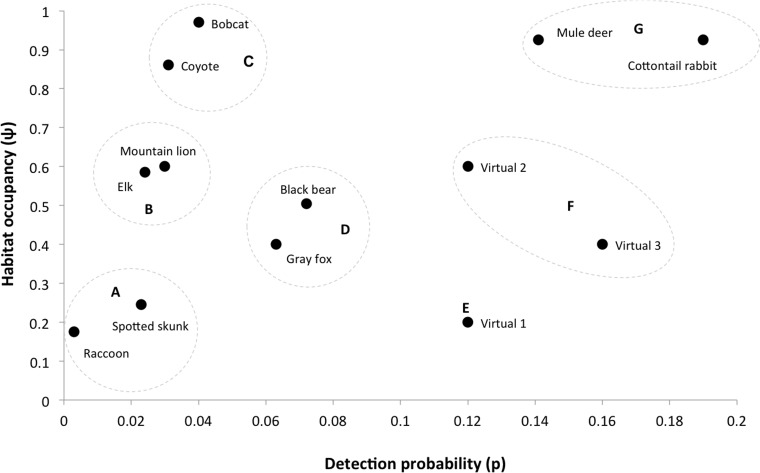
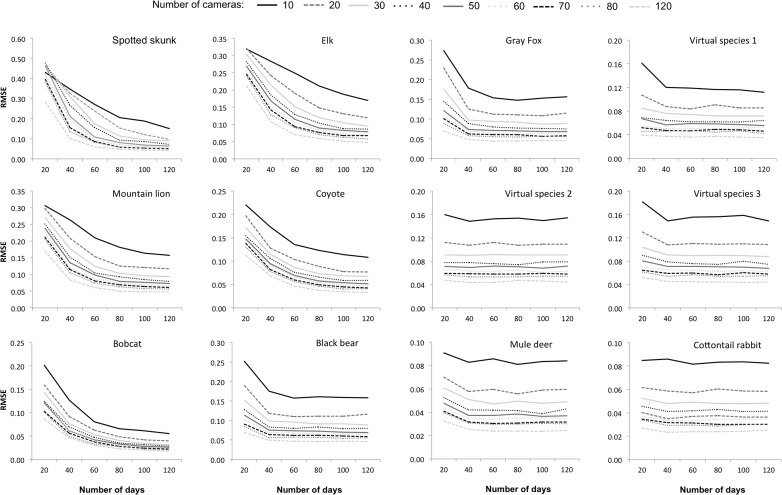
Motion-activated cameras are a versatile tool that wildlife biologists can use for sampling wild animal populations to estimate species occurrence. Occupancy modelling provides a flexible framework for the analysis of these data; explicitly recognizing that given a species occupies an area the probability of detecting it is often less than one. Despite the number of studies using camera data in an occupancy framework, there is only limited guidance from the scientific literature about survey design trade-offs when using motion-activated cameras. A fuller understanding of these trade-offs will allow researchers to maximise available resources and determine whether the objectives of a monitoring program or research study are achievable. We use an empirical dataset collected from 40 cameras deployed across 160 km(2) of the Western Slope of Colorado, USA to explore how survey effort (number of cameras deployed and the length of sampling period) affects the accuracy and precision (i.e., error) of the occupancy estimate for ten mammal and three virtual species. We do this using a simulation approach where species occupancy and detection parameters were informed by empirical data from motion-activated cameras. A total of 54 survey designs were considered by varying combinations of sites (10-120 cameras) and occasions (20-120 survey days). Our findings demonstrate that increasing total sampling effort generally decreases error associated with the occupancy estimate, but changing the number of sites or sampling duration can have very different results, depending on whether a species is spatially common or rare (occupancy = ψ) and easy or hard to detect when available (detection probability = p). For rare species with a low probability of detection (i.e., raccoon and spotted skunk) the required survey effort includes maximizing the number of sites and the number of survey days, often to a level that may be logistically unrealistic for many studies. For common species with low detection (i.e., bobcat and coyote) the most efficient sampling approach was to increase the number of occasions (survey days). However, for common species that are moderately detectable (i.e., cottontail rabbit and mule deer), occupancy could reliably be estimated with comparatively low numbers of cameras over a short sampling period. We provide general guidelines for reliably estimating occupancy across a range of terrestrial species (rare to common: ψ = 0.175-0.970, and low to moderate detectability: p = 0.003-0.200) using motion-activated cameras. Wildlife researchers/managers with limited knowledge of the relative abundance and likelihood of detection of a particular species can apply these guidelines regardless of location. We emphasize the importance of prior biological knowledge, defined objectives and detailed planning (e.g., simulating different study-design scenarios) for designing effective monitoring programs and research studies.
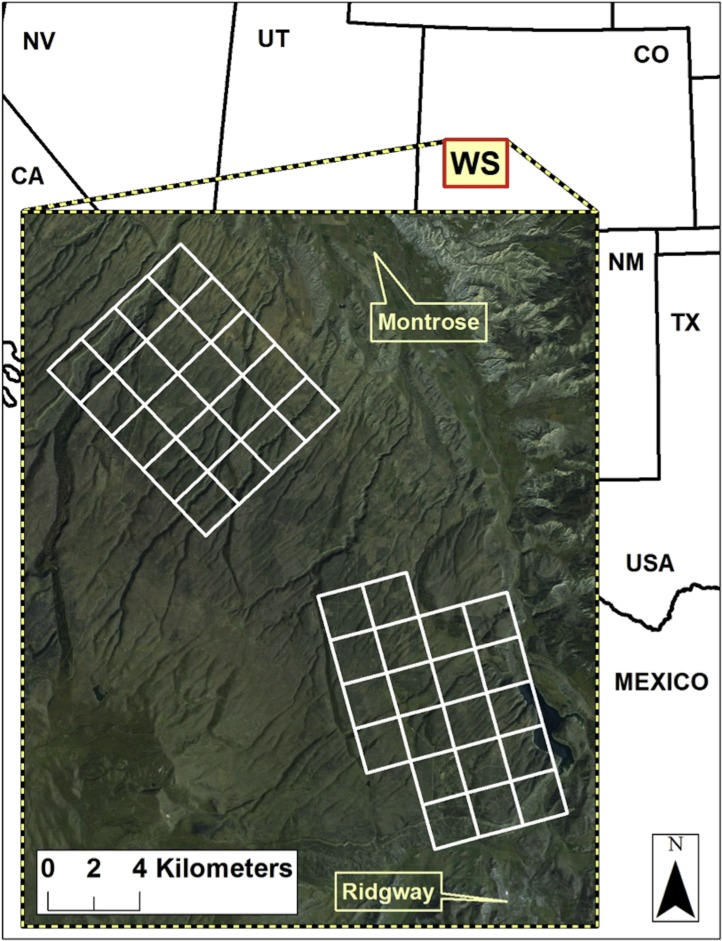
运动激活相机是野生动物生物学家采样野生动物种群以估计物种出现的一种多功能工具。占据模型为分析这些数据提供了一个灵活的框架;明确认识到,给定一个物种占据一个区域,检测到它的概率通常小于一。尽管有许多研究使用相机数据在占据框架中,但在使用运动激活相机时,科学文献中关于调查设计权衡的指导意见非常有限。更全面地了解这些权衡将使研究人员能够最大限度地利用可用资源,并确定监测计划或研究目标是否可以实现。我们使用从美国科罗拉多州西部斜坡的 160 平方公里范围内的 40 个相机收集的经验数据集来探讨调查力度(部署的相机数量和采样时间的长度)如何影响十种哺乳动物和三种虚拟物种的占用估计的准确性和精度(即误差)。我们通过使用从运动激活相机获得的经验数据来告知物种占据和检测参数的模拟方法来实现这一目标。总共考虑了 54 种调查设计,通过改变站点(10-120 个相机)和场合(20-120 个调查日)的组合来实现。我们的研究结果表明,增加总采样量通常会降低与占用估计相关的误差,但改变站点数量或采样持续时间的结果可能会因物种是否在空间上常见或稀有(占用=ψ)以及在可用时是否容易或难以检测(检测概率=p)而大不相同。对于稀有且检测概率低的物种(例如浣熊和臭鼬),所需的调查工作包括最大限度地增加站点数量和调查天数,通常达到许多研究在后勤上不切实际的水平。对于低检测率的常见物种(例如山猫和郊狼),最有效的采样方法是增加采样次数(调查天数)。然而,对于中等可检测性的常见物种(例如棉尾兔和骡鹿),在短采样期内可以使用相对较少的相机可靠地估计占用率。我们为使用运动激活相机可靠地估计一系列陆地物种(从稀有到常见:ψ=0.175-0.970,从低到中等可检测性:p=0.003-0.200)提供了一般指南。对于特定物种的相对丰度和检测可能性了解有限的野生动物研究/管理人员可以在任何地点应用这些指南。我们强调了先验生物知识、明确的目标和详细规划(例如,模拟不同的研究设计方案)的重要性,以设计有效的监测计划和研究。