Kartz Gabriella A, Holme Rebecca L, Nicholson Kay, Sahoo Daisy
Departments of Pharmacology & Toxicology, ‡Biochemistry, and §Medicine, Medical College of Wisconsin , Milwaukee, Wisconsin 53226, United States.
Biochemistry. 2014 Oct 7;53(39):6173-82. doi: 10.1021/bi500706x. Epub 2014 Sep 23.
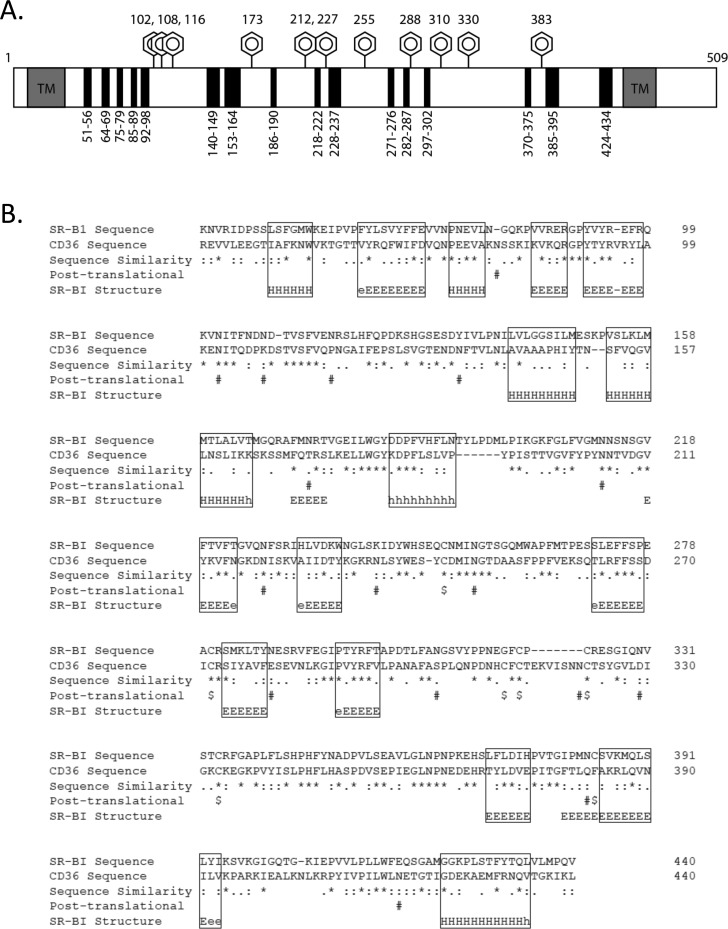
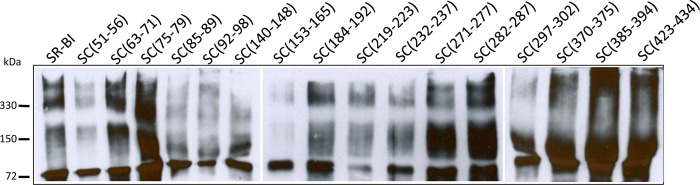
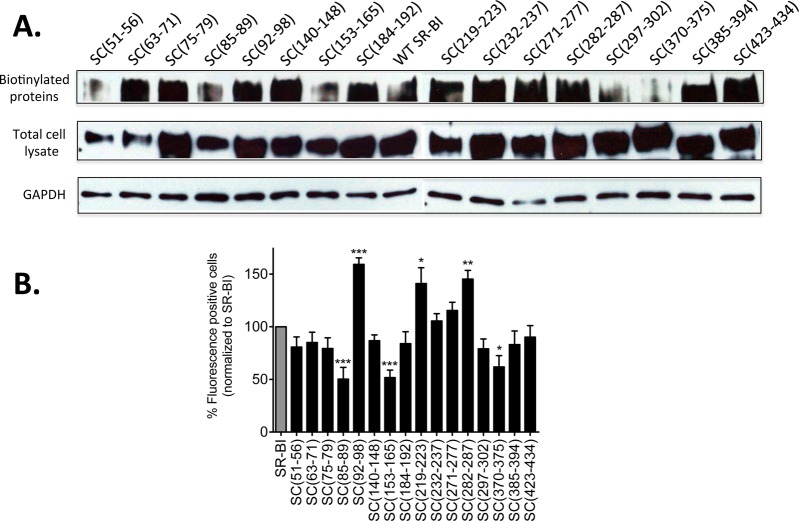
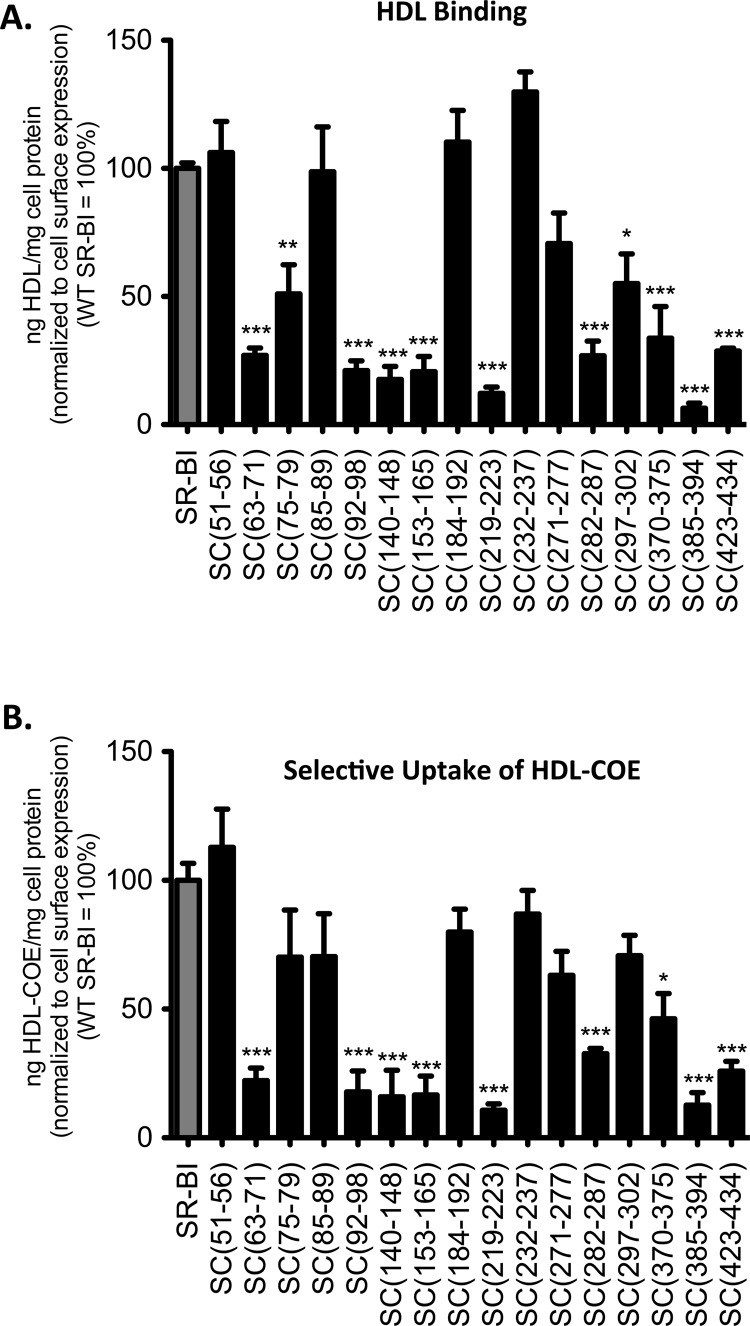
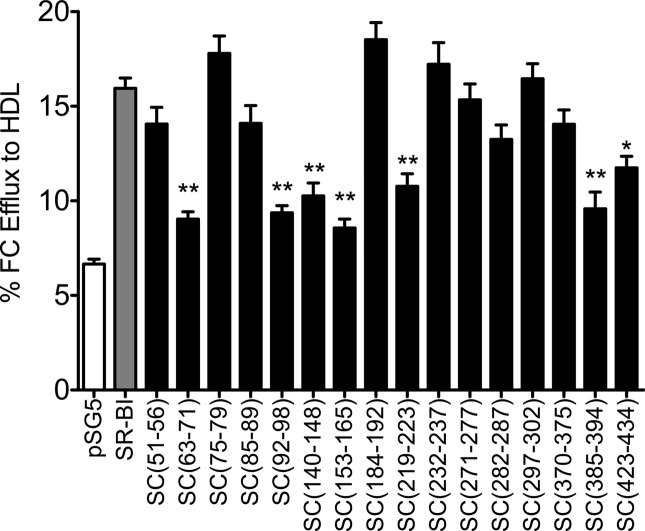
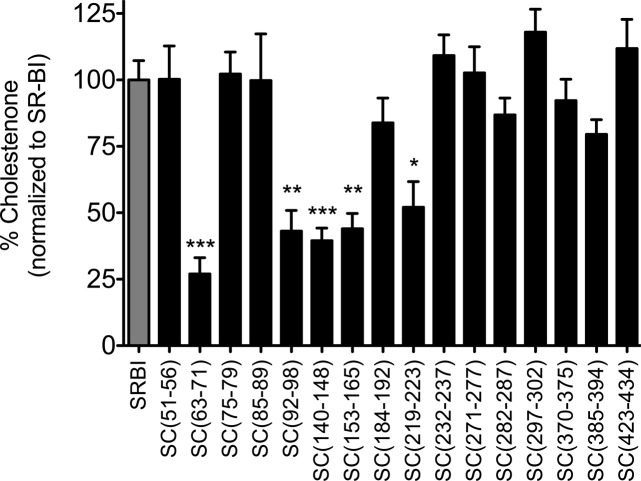
High-density lipoproteins (HDLs) are athero-protective, primarily because of their ability to promote cholesterol flux from peripheral tissues to the liver by reverse cholesterol transport (RCT). The delivery of HDL-cholesteryl esters (CE) into cells is mediated by the HDL receptor, scavenger receptor class B type I (SR-BI), a promising target for enhancing whole body cholesterol disposal and preventing cardiovascular disease. A detailed understanding of the structural determinants underlying proper SR-BI/HDL alignment that supports the selective uptake of HDL-CE into cells remains lacking. To this end, we exploited CD36, a class B scavenger receptor with a predicted topology similar to that of SR-BI that binds HDL but is unable to mediate efficient selective uptake of HDL-CE. We generated a series of SR-BI/CD36 chimeric receptors that span the extracellular (EC) domain of SR-BI to delineate regions that are essential for SR-BI's cholesterol transport functions. All 16 SR-BI/CD36 chimeras were transiently expressed in COS-7 cells, and their plasma membrane localization was confirmed. The majority of SR-BI/CD36 chimeric receptors displayed significant reductions in their ability to (i) bind HDL, (ii) deliver HDL-CE to cells, (iii) mediate efflux of free cholesterol (FC) to HDL, and (iv) redistribute plasma membrane domains of FC. We also demonstrated that changes in SR-BI function were independent of receptor oligomerization. Altogether, we have identified discrete subdomains, particularly in the N-terminal and C-terminal regions of the EC domain of SR-BI, that are critical for productive receptor-ligand interactions and the various cholesterol transport functions of SR-BI.
高密度脂蛋白(HDL)具有抗动脉粥样硬化作用,主要是因为其能够通过逆向胆固醇转运(RCT)促进胆固醇从外周组织流向肝脏。HDL胆固醇酯(CE)进入细胞是由HDL受体B类I型清道夫受体(SR-BI)介导的,SR-BI是增强全身胆固醇清除和预防心血管疾病的一个有前景的靶点。目前仍缺乏对支持HDL-CE选择性摄取进入细胞的SR-BI/HDL正确排列的结构决定因素的详细了解。为此,我们利用了CD36,一种B类清道夫受体,其预测拓扑结构与SR-BI相似,能结合HDL,但不能介导HDL-CE的有效选择性摄取。我们生成了一系列跨越SR-BI胞外(EC)结构域的SR-BI/CD36嵌合受体,以确定对SR-BI胆固醇转运功能至关重要的区域。所有16种SR-BI/CD36嵌合体在COS-7细胞中瞬时表达,并确认了它们在质膜上的定位。大多数SR-BI/CD36嵌合受体在以下能力方面表现出显著降低:(i)结合HDL;(ii)将HDL-CE递送至细胞;(iii)介导游离胆固醇(FC)向HDL的流出;(iv)重新分布FC的质膜结构域。我们还证明了SR-BI功能的变化与受体寡聚化无关。总之,我们确定了离散的亚结构域,特别是在SR-BI的EC结构域的N端和C端区域,这些区域对于有效的受体-配体相互作用和SR-BI的各种胆固醇转运功能至关重要。