Reddy Ramesh, Fahiminiya Somayyeh, El Zir Elie, Mansour Ahmad, Megarbane Andre, Majewski Jacek, Slim Rima
Departments of Human Genetics and Obstetrics-Gynecology, McGill University Health Centre, Montreal, Canada.
McGill University and Genome Quebec Innovation Centre and Department of Human Genetics, Montreal, Canada.
PLoS One. 2014 Sep 11;9(9):e107326. doi: 10.1371/journal.pone.0107326. eCollection 2014.
Usher syndrome (USH) is a genetically heterogeneous condition with ten disease-causing genes. The spectrum of genes and mutations causing USH in the Lebanese and Middle Eastern populations has not been described. Consequently, diagnostic approaches designed to screen for previously reported mutations were unlikely to identify the mutations in 11 unrelated families, eight of Lebanese and three of Middle Eastern origins. In addition, six of the ten USH genes consist of more than 20 exons, each, which made mutational analysis by Sanger sequencing of PCR-amplified exons from genomic DNA tedious and costly. The study was aimed at the identification of USH causing genes and mutations in 11 unrelated families with USH type I or II.
Whole exome sequencing followed by expanded familial validation by Sanger sequencing.
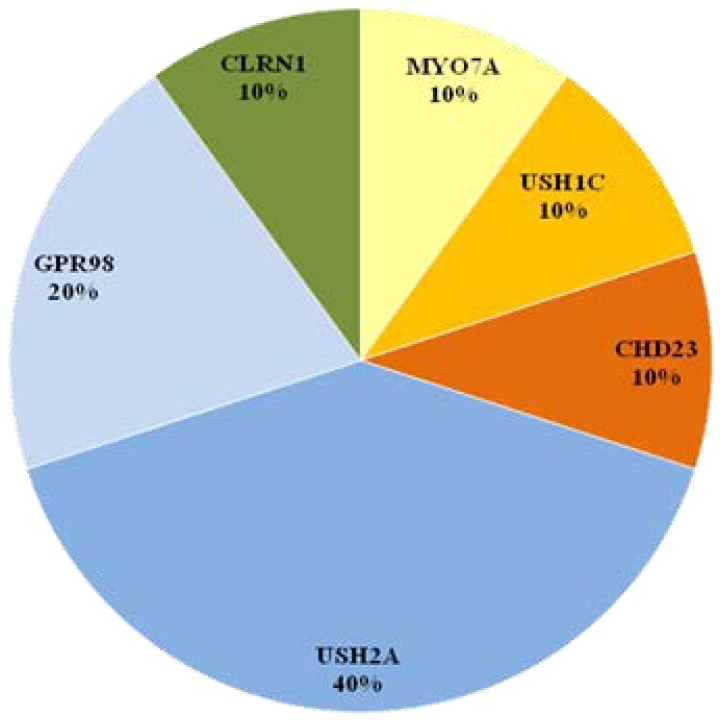
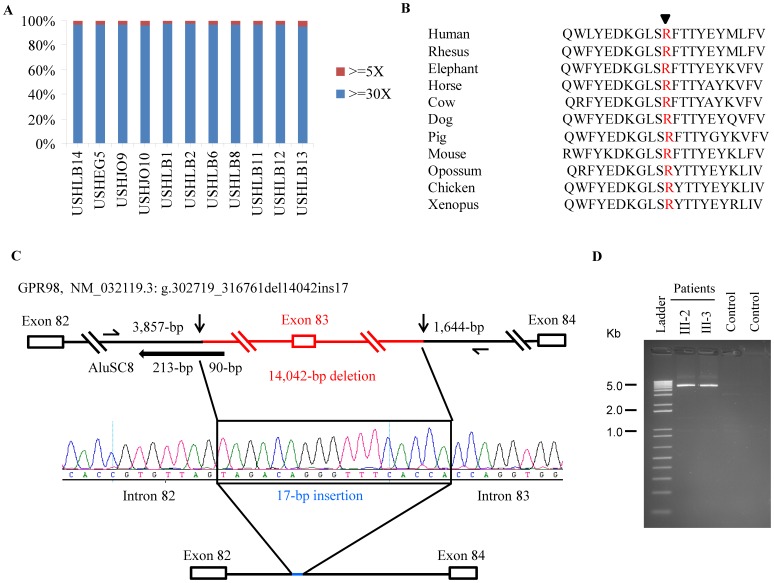
We identified disease-causing mutations in all the analyzed patients in four USH genes, MYO7A, USH2A, GPR98 and CDH23. Eleven of the mutations were novel and protein truncating, including a complex rearrangement in GPR98.
Our data highlight the genetic diversity of Usher syndrome in the Lebanese population and the time and cost-effectiveness of whole exome sequencing approach for mutation analysis of genetically heterogeneous conditions caused by large genes.
尤塞氏综合征(USH)是一种具有十个致病基因的基因异质性疾病。尚未描述导致黎巴嫩和中东人群USH的基因和突变谱。因此,旨在筛查先前报道的突变的诊断方法不太可能识别11个无关家族中的突变,其中8个家族来自黎巴嫩,3个家族来自中东。此外,十个USH基因中的六个每个都由20多个外显子组成,这使得通过桑格测序对基因组DNA中PCR扩增的外显子进行突变分析既繁琐又昂贵。该研究旨在鉴定11个患有I型或II型USH的无关家族中导致USH的基因和突变。
全外显子组测序,随后通过桑格测序进行扩展的家族验证。
我们在四个USH基因MYO7A、USH2A、GPR98和CDH23的所有分析患者中鉴定出致病突变。其中11个突变是新的且导致蛋白质截短,包括GPR98中的一个复杂重排。
我们的数据突出了黎巴嫩人群中尤塞氏综合征的遗传多样性,以及全外显子组测序方法在分析由大基因引起的基因异质性疾病突变方面的时间和成本效益。