Camargo Sabrina, Riedl Maik, Anteneodo Celia, Kurths Jürgen, Penzel Thomas, Wessel Niels
Department of Physics, Humboldt-Universität zu Berlin, Berlin, Germany; EMAp, Fundação Getúlio Vargas, Rio de Janeiro, Brazil; Department of Physics, PUC-Rio, Rio de Janeiro, Brazil.
Department of Physics, Humboldt-Universität zu Berlin, Berlin, Germany.
PLoS One. 2014 Sep 15;9(9):e107581. doi: 10.1371/journal.pone.0107581. eCollection 2014.
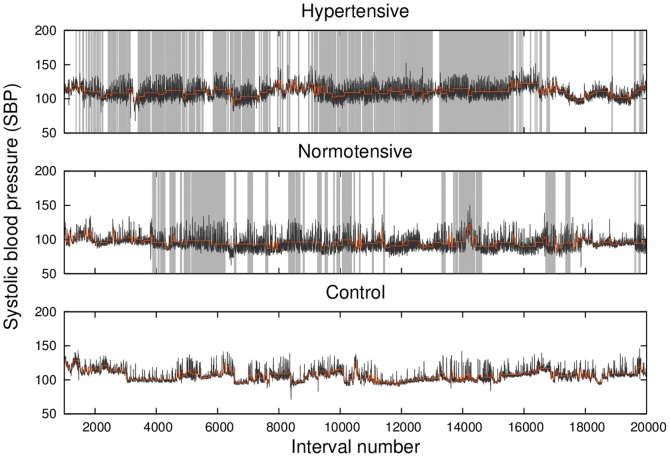
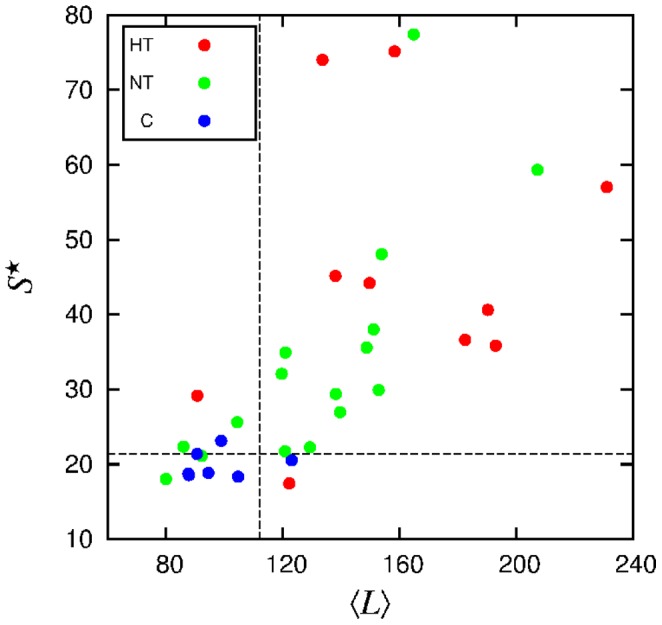
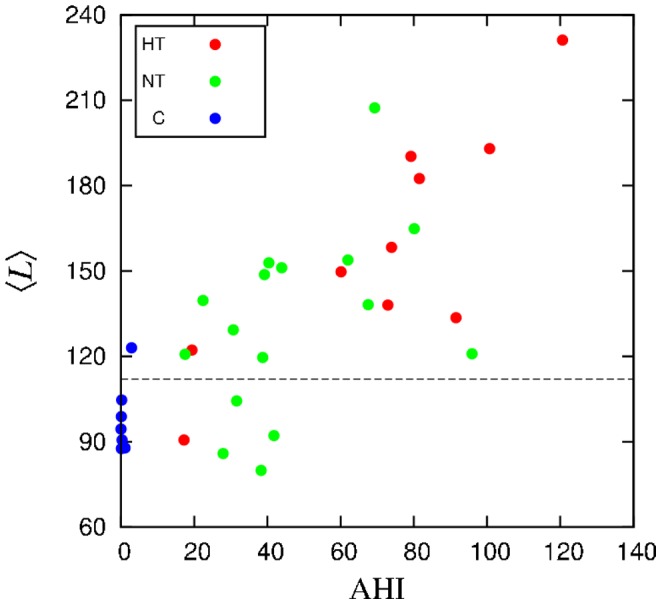
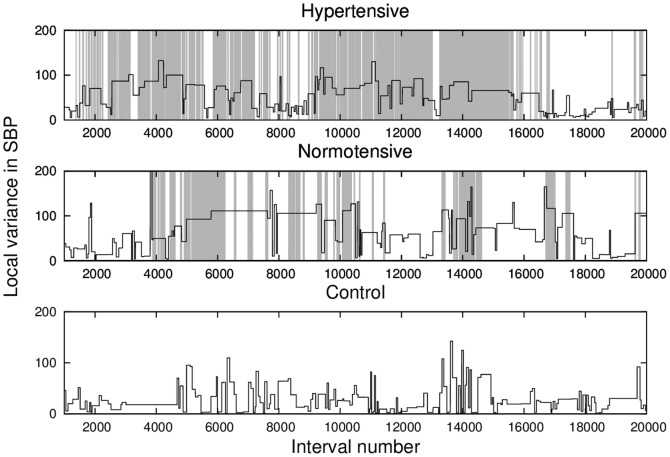
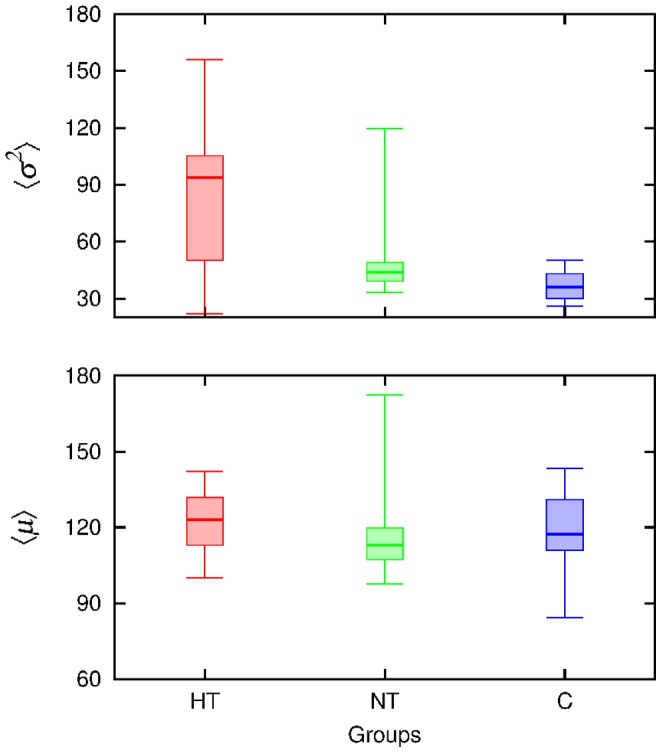
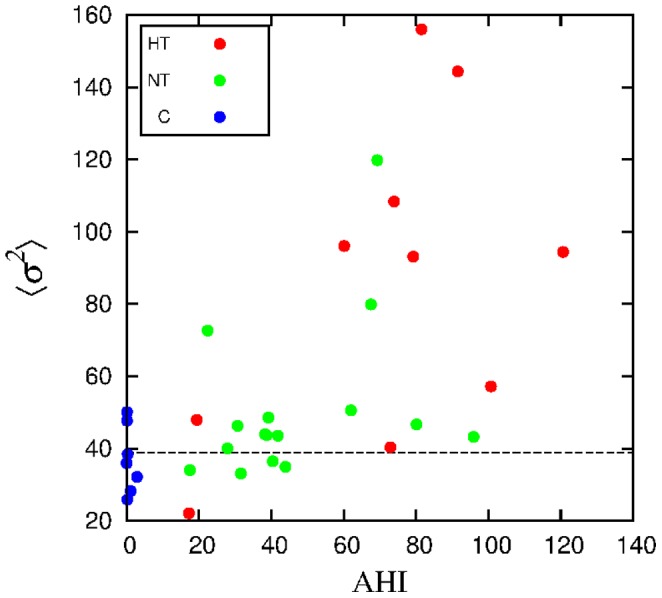
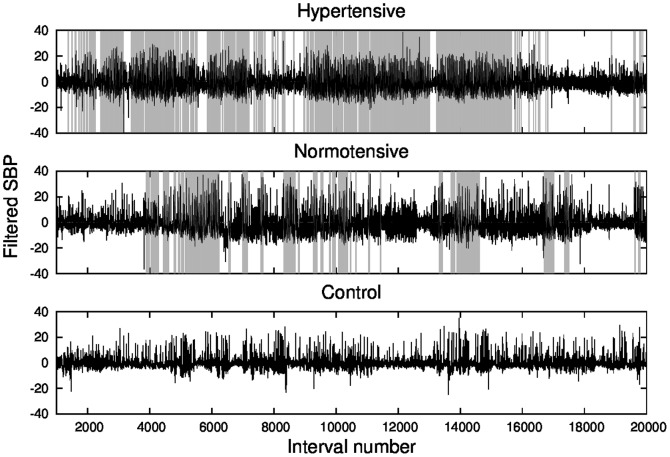
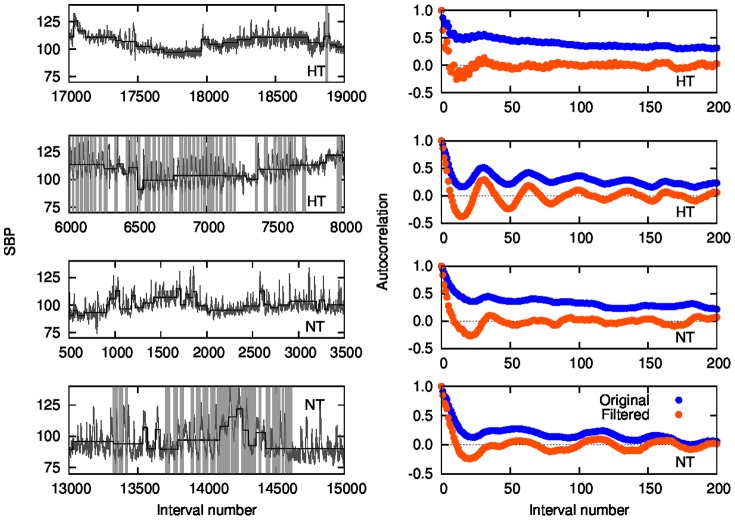
Sleep disorders are a major risk factor for cardiovascular diseases. Sleep apnea is the most common sleep disturbance and its detection relies on a polysomnography, i.e., a combination of several medical examinations performed during a monitored sleep night. In order to detect occurrences of sleep apnea without the need of combined recordings, we focus our efforts on extracting a quantifier related to the events of sleep apnea from a cardiovascular time series, namely systolic blood pressure (SBP). Physiologic time series are generally highly nonstationary and entrap the application of conventional tools that require a stationary condition. In our study, data nonstationarities are uncovered by a segmentation procedure which splits the signal into stationary patches, providing local quantities such as mean and variance of the SBP signal in each stationary patch, as well as its duration L. We analysed the data of 26 apneic diagnosed individuals, divided into hypertensive and normotensive groups, and compared the results with those of a control group. From the segmentation procedure, we identified that the average duration
睡眠障碍是心血管疾病的主要风险因素。睡眠呼吸暂停是最常见的睡眠障碍,其检测依赖于多导睡眠图,即在监测睡眠的夜晚进行的几种医学检查的组合。为了在无需联合记录的情况下检测睡眠呼吸暂停的发生,我们致力于从心血管时间序列,即收缩压(SBP)中提取与睡眠呼吸暂停事件相关的量化指标。生理时间序列通常高度非平稳,这限制了需要平稳条件的传统工具的应用。在我们的研究中,通过一种分割程序揭示了数据的非平稳性,该程序将信号分割成平稳片段,提供每个平稳片段中SBP信号的局部量,如均值和方差,以及其持续时间L。我们分析了26名被诊断为呼吸暂停的个体的数据,分为高血压组和血压正常组,并将结果与对照组进行了比较。从分割程序中,我们发现平均持续时间