Mitsis E M, Riggio S, Kostakoglu L, Dickstein D L, Machac J, Delman B, Goldstein M, Jennings D, D'Antonio E, Martin J, Naidich T P, Aloysi A, Fernandez C, Seibyl J, DeKosky S T, Elder G A, Marek K, Gordon W, Hof P R, Sano M, Gandy S
1] Department of Psychiatry, Icahn School of Medicine at Mount Sinai, New York, NY, USA [2] Mount Sinai's Alzheimer's Disease Research Center, Icahn School of Medicine at Mount Sinai, New York, NY, USA [3] James J. Peters VA Medical Center, Bronx, NY, USA.
1] Department of Psychiatry, Icahn School of Medicine at Mount Sinai, New York, NY, USA [2] James J. Peters VA Medical Center, Bronx, NY, USA [3] Department of Neurology, Icahn School of Medicine at Mount Sinai, New York, NY, USA [4] The NFL Neurological Program, Icahn School of Medicine at Mount Sinai, New York, NY, USA.
Transl Psychiatry. 2014 Sep 16;4(9):e441. doi: 10.1038/tp.2014.91.
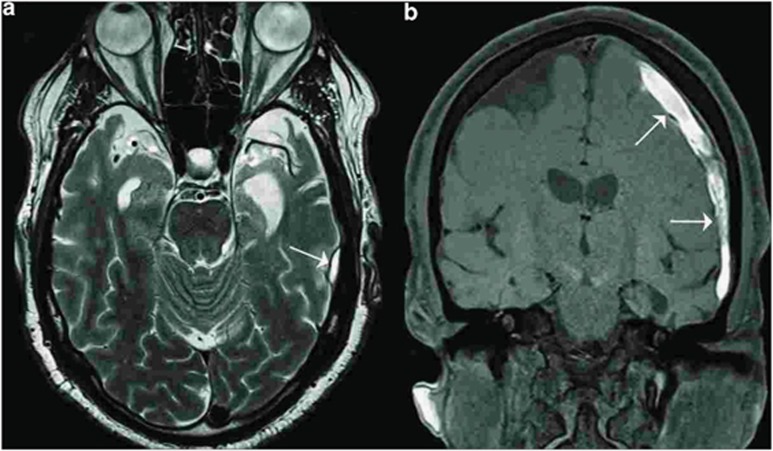
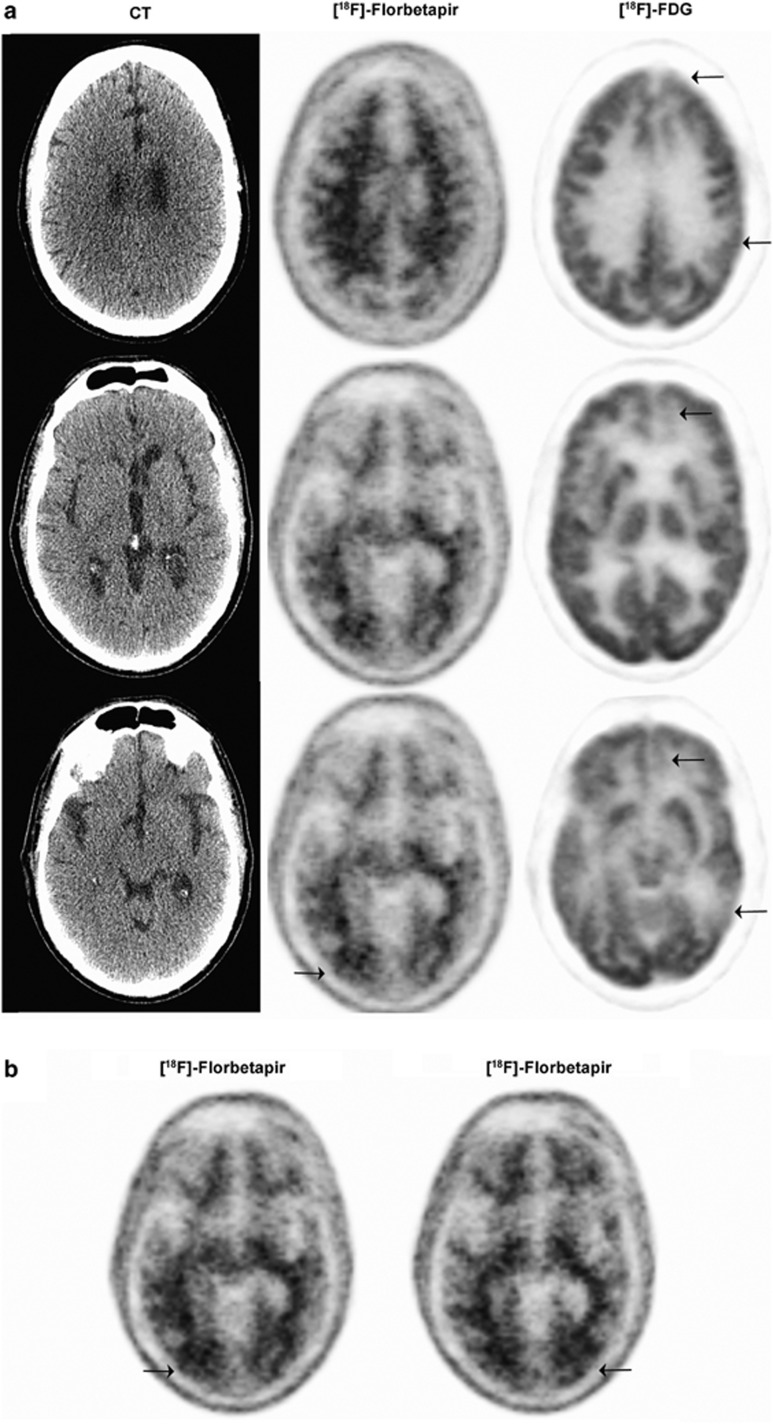
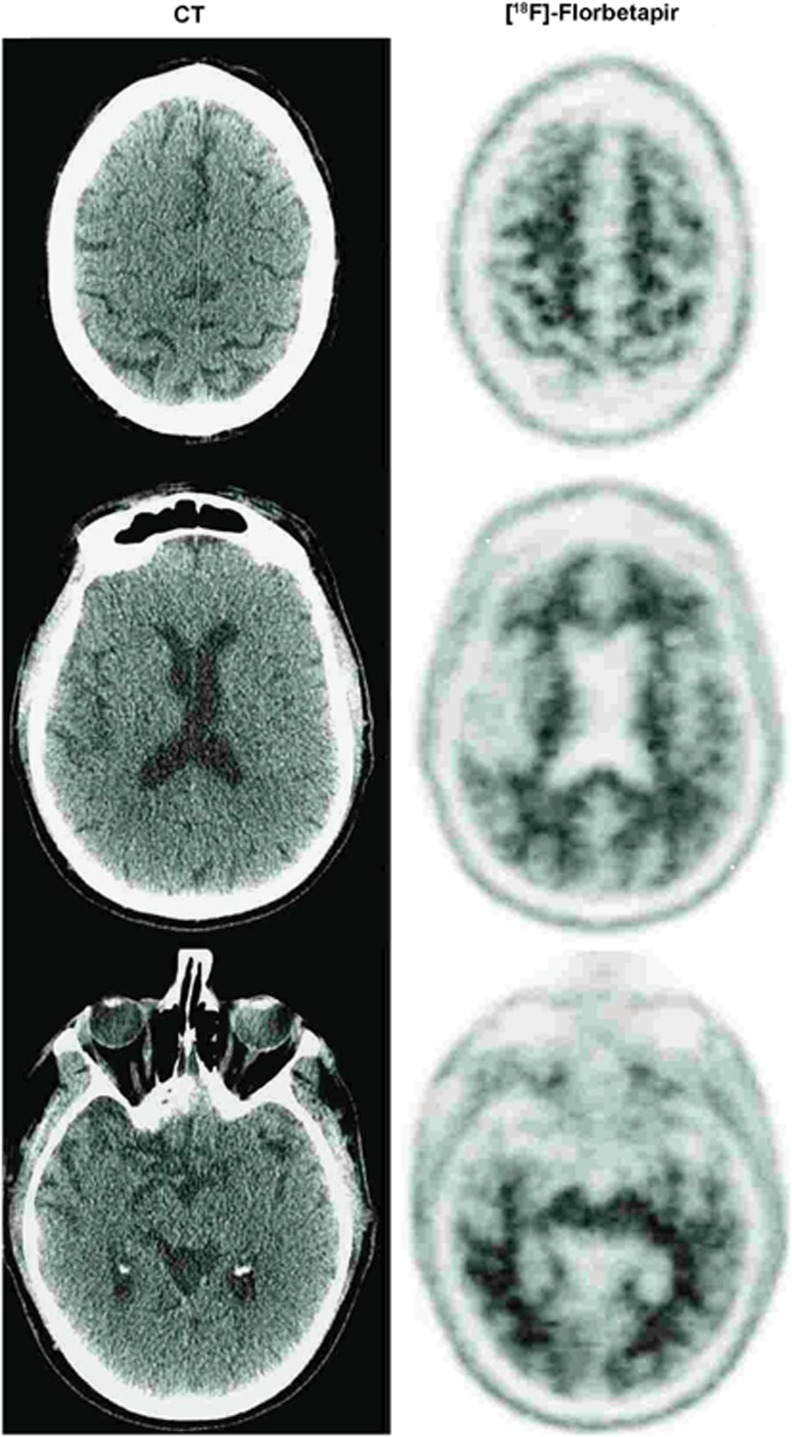
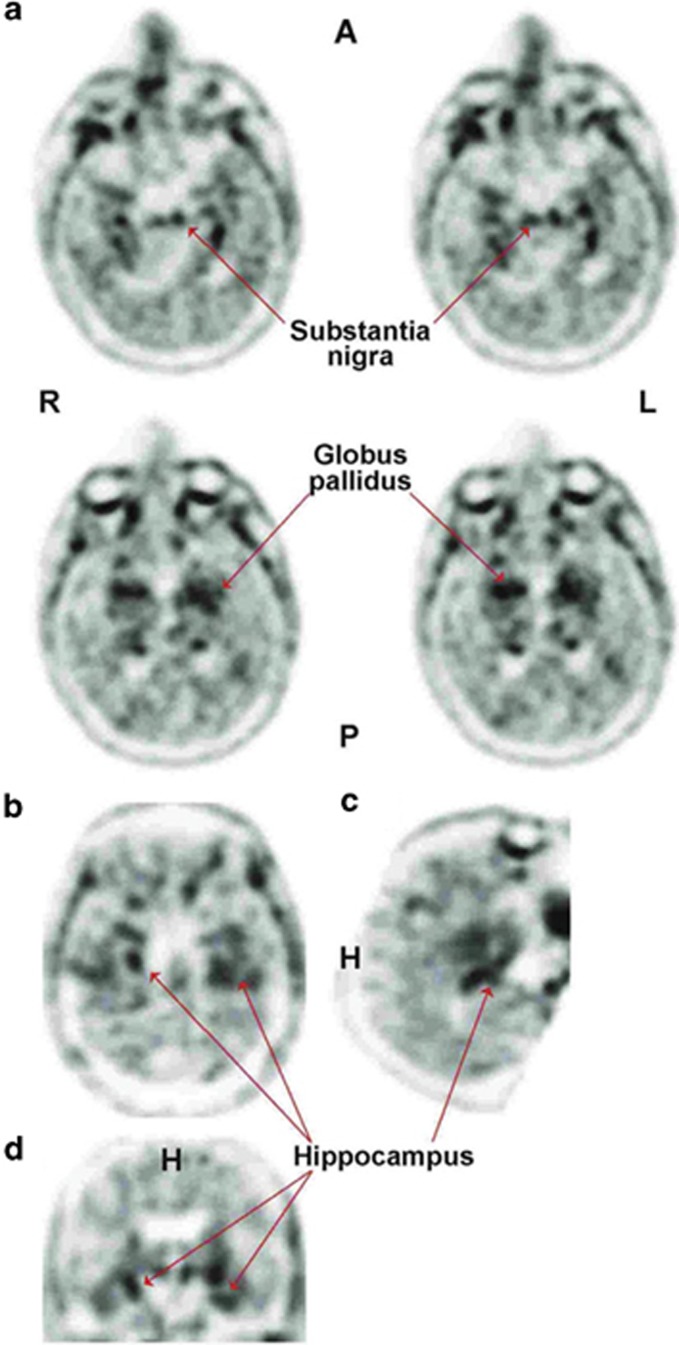
Single, severe traumatic brain injury (TBI) which elevates CNS amyloid, increases the risk of Alzheimer's disease (AD); while repetitive concussive and subconcussive events as observed in athletes and military personnel, may increase the risk of chronic traumatic encephalopathy (CTE). We describe two clinical cases, one with a history of multiple concussions during a career in the National Football League (NFL) and the second with frontotemporal dementia and a single, severe TBI. Both patients presented with cognitive decline and underwent [(18)F]-Florbetapir positron emission tomography (PET) imaging for amyloid plaques; the retired NFL player also underwent [(18)F]-T807 PET imaging, a new ligand binding to tau, the main constituent of neurofibrillary tangles (NFT). Case 1, the former NFL player, was 71 years old when he presented with memory impairment and a clinical profile highly similar to AD. [(18)F]-Florbetapir PET imaging was negative, essentially excluding AD as a diagnosis. CTE was suspected clinically, and [(18)F]-T807 PET imaging revealed striatal and nigral [(18)F]-T807 retention consistent with the presence of tauopathy. Case 2 was a 56-year-old man with personality changes and cognitive decline who had sustained a fall complicated by a subdural hematoma. At 1 year post injury, [(18)F]-Florbetapir PET imaging was negative for an AD pattern of amyloid accumulation in this subject. Focal [(18)F]-Florbetapir retention was noted at the site of impact. In case 1, amyloid imaging provided improved diagnostic accuracy where standard clinical and laboratory criteria were inadequate. In that same case, tau imaging with [(18)F]-T807 revealed a subcortical tauopathy that we interpret as a novel form of CTE with a distribution of tauopathy that mimics, to some extent, that of progressive supranuclear palsy (PSP), despite a clinical presentation of amnesia without any movement disorder complaints or signs. A key distinguishing feature is that our patient presented with hippocampal involvement, which is more frequently seen in CTE than in PSP. In case 2, focal [(18)F]-Florbetapir retention at the site of injury in an otherwise negative scan suggests focal amyloid aggregation. In each of these complex cases, a combination of [(18)F]-fluorodeoxyglucose, [(18)F]-Florbetapir and/or [(18)F]-T807 PET molecular imaging improved the accuracy of diagnosis and prevented inappropriate interventions.
单次严重创伤性脑损伤(TBI)会升高中枢神经系统淀粉样蛋白水平,增加患阿尔茨海默病(AD)的风险;而运动员和军事人员中观察到的重复性脑震荡和亚脑震荡事件,可能会增加患慢性创伤性脑病(CTE)的风险。我们描述了两个临床病例,一个有在美国国家橄榄球联盟(NFL)职业生涯中多次脑震荡的病史,另一个患有额颞叶痴呆且有单次严重TBI。两名患者均出现认知功能下降,并接受了[(18)F] - 氟代贝他吡正电子发射断层扫描(PET)成像以检测淀粉样斑块;这位退役的NFL球员还接受了[(18)F] - T807 PET成像,这是一种与tau结合的新配体,tau是神经原纤维缠结(NFT)的主要成分。病例1,这位前NFL球员,71岁时出现记忆障碍,临床特征与AD高度相似。[(18)F] - 氟代贝他吡PET成像为阴性,基本排除了AD的诊断。临床上怀疑为CTE,[(18)F] - T807 PET成像显示纹状体和黑质有[(18)F] - T807滞留,与tau病变的存在一致。病例2是一名56岁男性,有性格改变和认知功能下降,曾因跌倒并发硬膜下血肿。受伤后1年,该患者的[(18)F] - 氟代贝他吡PET成像未显示出AD模式的淀粉样蛋白积累。在撞击部位发现了局灶性[(18)F] - 氟代贝他吡滞留。在病例1中,淀粉样蛋白成像在标准临床和实验室标准不足时提高了诊断准确性。在同一病例中,[(18)F] - T807的tau成像显示出一种皮质下tau病变,我们将其解释为一种新型的CTE,其tau病变分布在一定程度上模仿了进行性核上性麻痹(PSP),尽管临床表现为失忆,没有任何运动障碍的主诉或体征。一个关键的区别特征是我们的患者出现了海马体受累,这在CTE中比在PSP中更常见。在病例2中,在其他部位扫描为阴性的情况下,受伤部位出现局灶性[(18)F] - 氟代贝他吡滞留提示局灶性淀粉样蛋白聚集。在每一个这些复杂病例中,[(18)F] - 氟脱氧葡萄糖、[(18)F] - 氟代贝他吡和/或[(18)F] - T807 PET分子成像的联合应用提高了诊断准确性,并避免了不适当的干预。