Porras Ana M, Shanmuganayagam Dhanansayan, Meudt Jennifer J, Krueger Christian G, Reed Jess D, Masters Kristyn S
Department of Biomedical Engineering, University of Wisconsin-Madison.
Department of Animal Sciences, University of Wisconsin-Madison.
Genom Data. 2014 Dec 1;2:261-263. doi: 10.1016/j.gdata.2014.08.004.
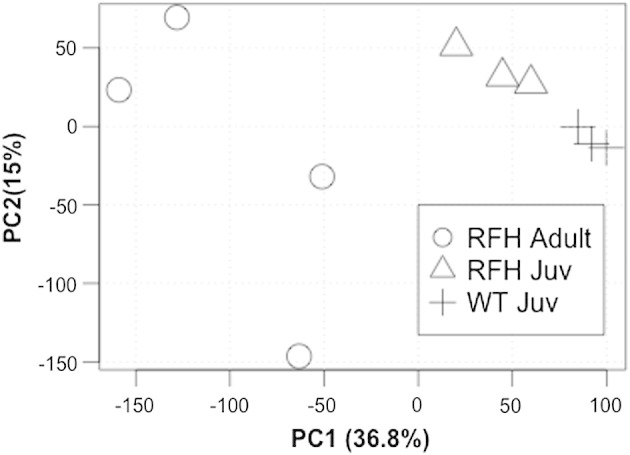
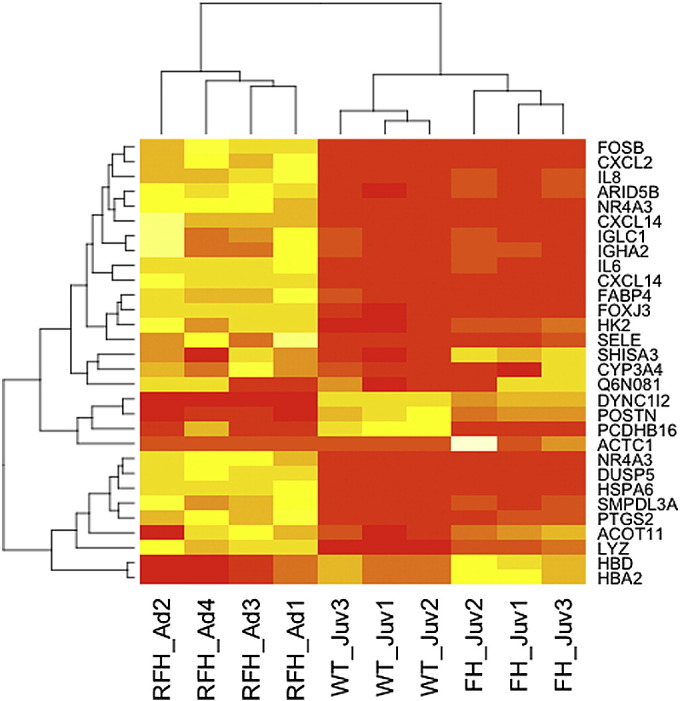
Rapacz familial hypercholesterolemic (RFH) swine are a well-established model of human FH, a highly prevalent hereditary disease associated with increased risk of coronary artery disease and calcific aortic valve disease (CAVD). However, while these animals have been used extensively for the study of atherosclerosis, the heart valves from RFH swine have not previously been examined. We report the analysis of valvular interstitial cell gene expression in adult (two year old) and juvenile (three months old) RFH and WT swine by microarray analysis via the Affymetrix Porcine Genome Array (GEO #: GSE53997). Principal component and hierarchical clustering analysis revealed grouping and almost no variability between the RFH juvenile and WT juvenile groups. Additionally, only 21 genes were found differentially expressed between these two experimental groups whereas over 900 genes were differentially expressed when comparing either RFH or WT juvenile swine to RFH adults.
拉帕茨家族性高胆固醇血症(RFH)猪是一种成熟的人类家族性高胆固醇血症(FH)模型,FH是一种高度常见的遗传性疾病,与冠状动脉疾病和钙化性主动脉瓣疾病(CAVD)风险增加相关。然而,尽管这些动物已被广泛用于动脉粥样硬化研究,但此前尚未对RFH猪的心脏瓣膜进行过检查。我们通过Affymetrix猪基因组阵列(GEO编号:GSE53997)进行微阵列分析,报告了对成年(两岁)和幼年(三个月大)RFH猪及野生型(WT)猪瓣膜间质细胞基因表达的分析。主成分分析和层次聚类分析显示,RFH幼年组和WT幼年组之间存在分组且几乎没有变异性。此外,在这两个实验组之间仅发现21个基因差异表达,而将RFH或WT幼年猪与RFH成年猪进行比较时,有超过900个基因差异表达。