Geeleher Paul, Cox Nancy, Huang R Stephanie
Section of Hematology/Oncology, Department of Medicine, University of Chicago, Chicago, Illinois, United States of America.
Section of Genetic Medicine, Department of Medicine, University of Chicago, Chicago, Illinois, United States of America.
PLoS One. 2014 Sep 17;9(9):e107468. doi: 10.1371/journal.pone.0107468. eCollection 2014.
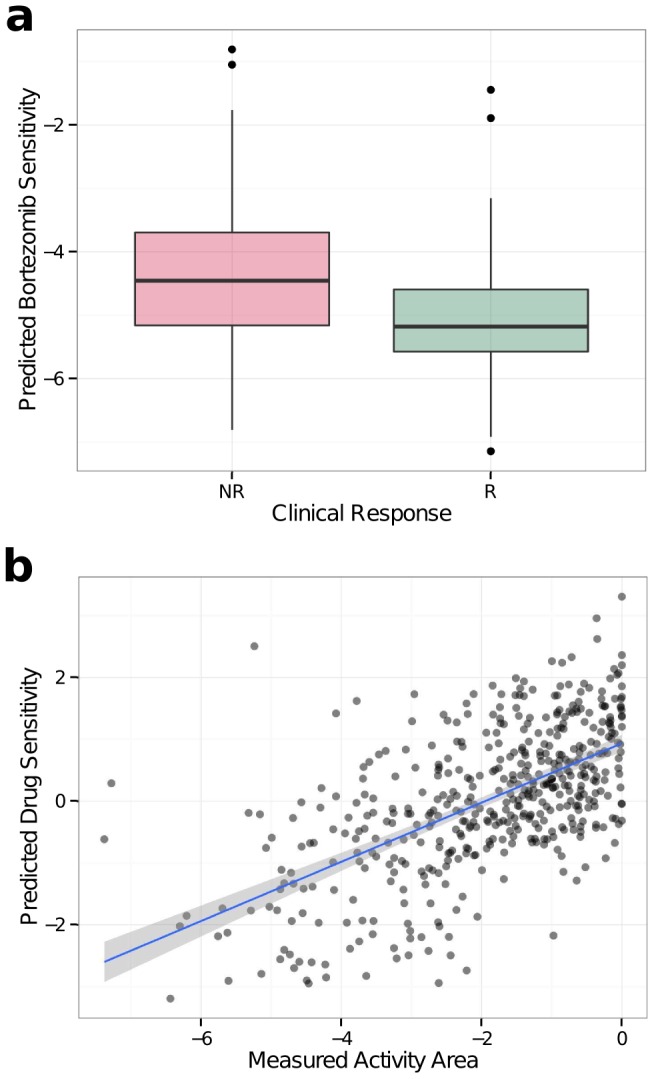
We recently described a methodology that reliably predicted chemotherapeutic response in multiple independent clinical trials. The method worked by building statistical models from gene expression and drug sensitivity data in a very large panel of cancer cell lines, then applying these models to gene expression data from primary tumor biopsies. Here, to facilitate the development and adoption of this methodology we have created an R package called pRRophetic. This also extends the previously described pipeline, allowing prediction of clinical drug response for many cancer drugs in a user-friendly R environment. We have developed several other important use cases; as an example, we have shown that prediction of bortezomib sensitivity in multiple myeloma may be improved by training models on a large set of neoplastic hematological cell lines. We have also shown that the package facilitates model development and prediction using several different classes of data.
我们最近描述了一种方法,该方法在多个独立的临床试验中可靠地预测了化疗反应。该方法通过在大量癌细胞系中根据基因表达和药物敏感性数据构建统计模型,然后将这些模型应用于原发性肿瘤活检的基因表达数据来发挥作用。在此,为了促进该方法的开发和应用,我们创建了一个名为pRRophetic的R包。这也扩展了之前描述的流程,允许在用户友好的R环境中预测多种癌症药物的临床药物反应。我们还开发了其他几个重要的用例;例如,我们已经表明,通过在大量肿瘤血液细胞系上训练模型,可以提高对多发性骨髓瘤中硼替佐米敏感性的预测。我们还表明,该包有助于使用几种不同类型的数据进行模型开发和预测。