Lambermont Verena A, Schlepütz Marco, Dassow Constanze, König Peter, Zimmermann Luc J, Uhlig Stefan, Kramer Boris W, Martin Christian
Department of Pediatrics, Maastricht University Medical Center, Maastricht, the Netherlands.
Institute of Pharmacology and Toxicology, University Hospital Aachen, Aachen, Germany.
PLoS One. 2014 Sep 17;9(9):e97610. doi: 10.1371/journal.pone.0097610. eCollection 2014.
Animal models should display important characteristics of the human disease. Sheep have been considered particularly useful to study allergic airway responses to common natural antigens causing human asthma. A rationale of this study was to establish a model of ovine precision-cut lung slices (PCLS) for the in vitro measurement of airway responses in newborn and adult animals. We hypothesized that differences in airway reactivity in sheep are present at different ages.
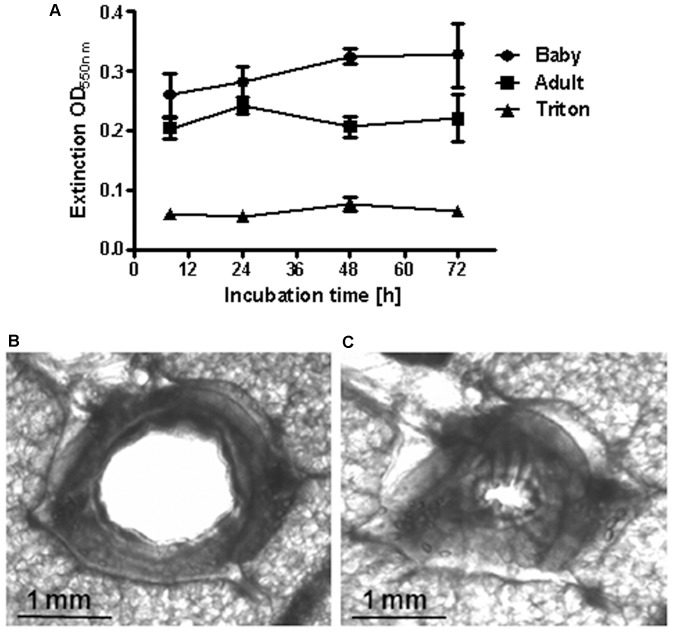
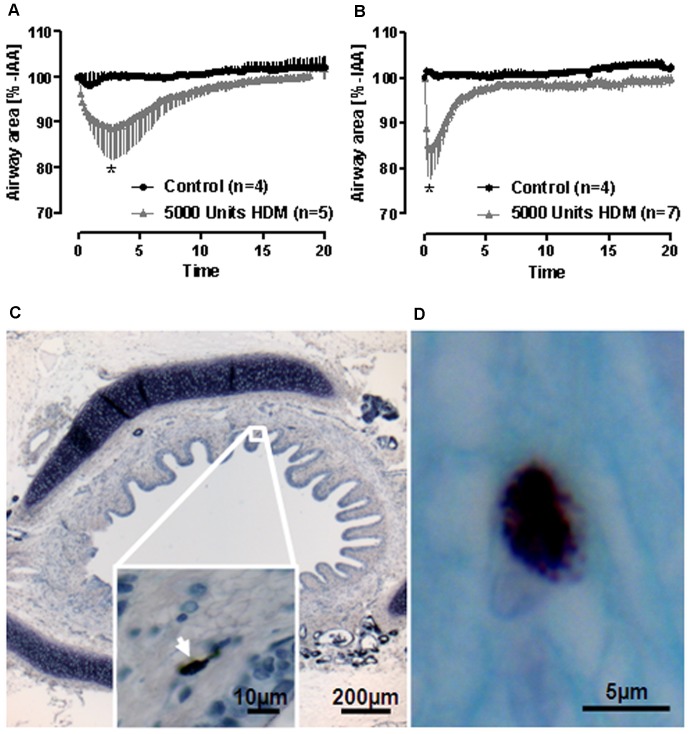
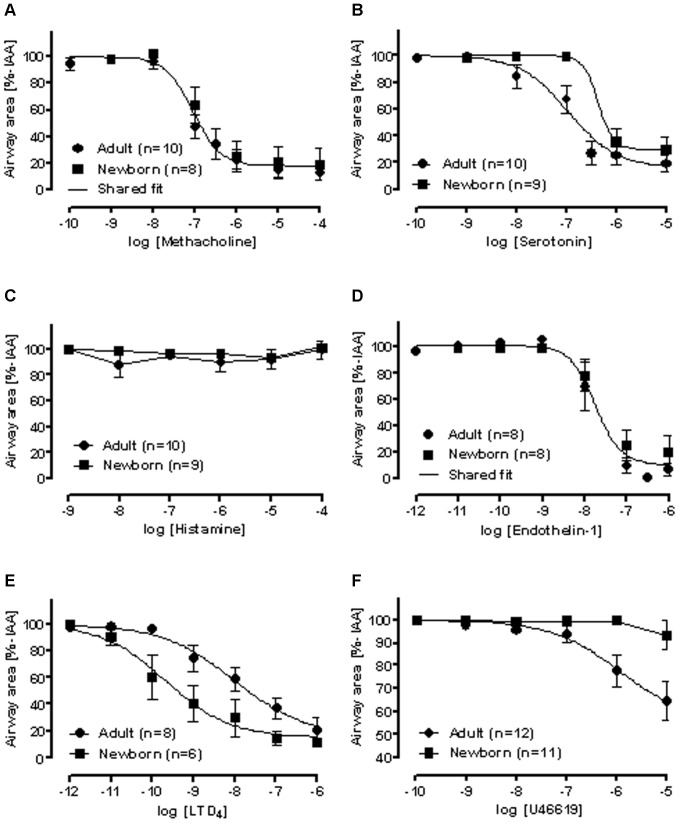
Lambs were delivered spontaneously at term (147d) and adult sheep lived till 18 months. Viability of PCLS was confirmed by the MTT-test. To study airway provocations cumulative concentration-response curves were performed with different allergic response mediators and biogenic amines. In addition, electric field stimulation, passive sensitization with house dust mite (HDM) and mast cells staining were evaluated.
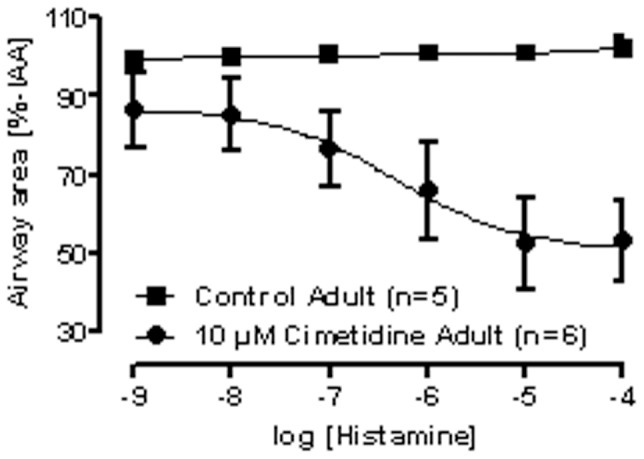
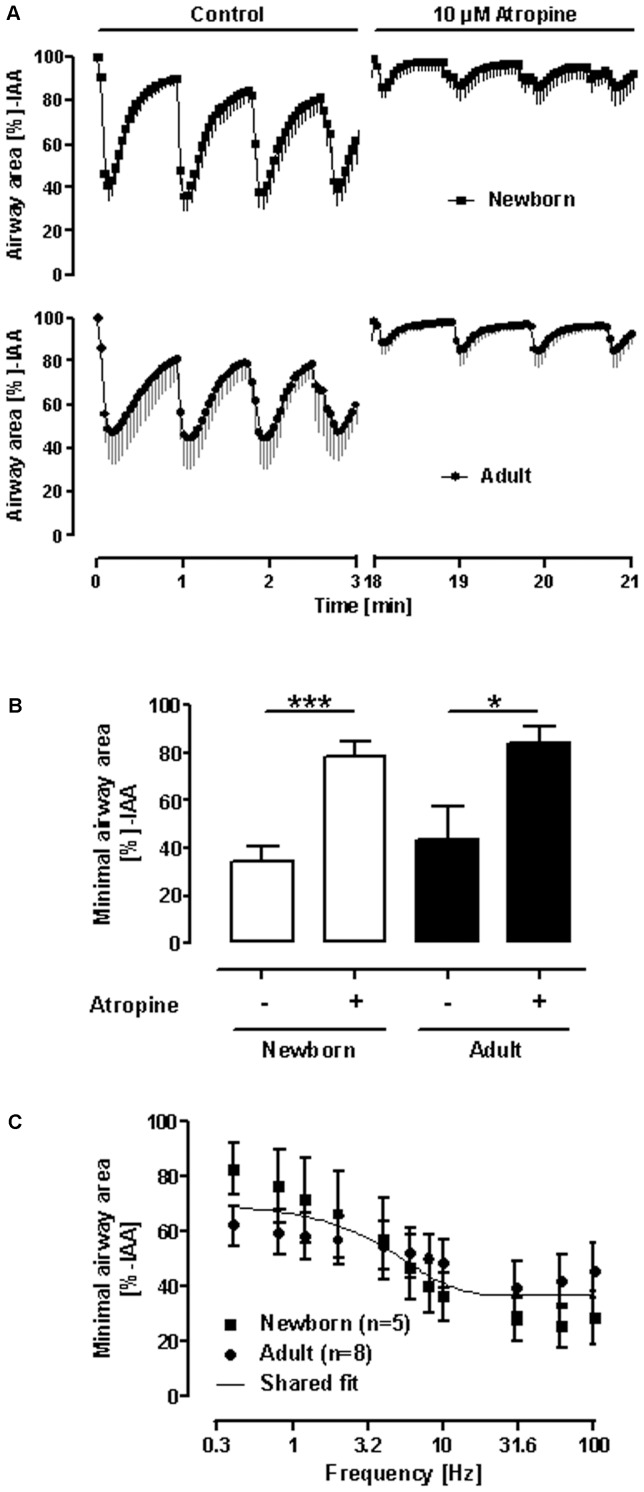
PCLS from sheep were viable for at least three days. PCLS of newborn and adult sheep responded equally strong to methacholine and endothelin-1. The responses to serotonin, leukotriene D4 and U46619 differed with age. No airway contraction was evoked by histamine, except after cimetidine pretreatment. In response to EFS, airways in PCLS from adult and newborn sheep strongly contracted and these contractions were atropine sensitive. Passive sensitization with HDM evoked a weak early allergic response in PCLS from adult and newborn sheep, which notably was prolonged in airways from adult sheep. Only few mast cells were found in the lungs of non-sensitized sheep at both ages.
PCLS from sheep lungs represent a useful tool to study pharmacological airway responses for at least three days. Sheep seem well suited to study mechanisms of cholinergic airway contraction. The notable differences between newborn and adult sheep demonstrate the importance of age in such studies.
动物模型应展现人类疾病的重要特征。绵羊被认为对研究人类哮喘常见天然抗原引起的过敏性气道反应特别有用。本研究的一个基本原理是建立一种绵羊精密切割肺片(PCLS)模型,用于体外测量新生和成年动物的气道反应。我们假设绵羊气道反应性在不同年龄存在差异。
羔羊足月自然分娩(147天),成年绵羊存活至18个月。通过MTT试验确认PCLS的活力。为研究气道激发,用不同的过敏反应介质和生物胺绘制累积浓度 - 反应曲线。此外,评估了电场刺激、屋尘螨(HDM)被动致敏和肥大细胞染色。
绵羊的PCLS至少三天内保持活力。新生和成年绵羊的PCLS对乙酰甲胆碱和内皮素 - 1的反应同样强烈。对5 - 羟色胺、白三烯D4和U46619的反应随年龄而异。组胺未引起气道收缩,西咪替丁预处理后除外。对电场刺激的反应,成年和新生绵羊PCLS中的气道强烈收缩,且这些收缩对阿托品敏感。HDM被动致敏在成年和新生绵羊的PCLS中引起微弱的早期过敏反应,成年绵羊气道中的反应明显延长。两个年龄段未致敏绵羊的肺中仅发现少量肥大细胞。
绵羊肺的PCLS是研究药理学气道反应至少三天的有用工具。绵羊似乎非常适合研究胆碱能气道收缩机制。新生和成年绵羊之间的显著差异表明年龄在此类研究中的重要性。