Knuth Nicolas D, Johannsen Darcy L, Tamboli Robyn A, Marks-Shulman Pamela A, Huizenga Robert, Chen Kong Y, Abumrad Naji N, Ravussin Eric, Hall Kevin D
National Institute of Diabetes and Digestive and Kidney Diseases, National Institutes of Health, Bethesda, Maryland, USA.
Obesity (Silver Spring). 2014 Dec;22(12):2563-9. doi: 10.1002/oby.20900. Epub 2014 Sep 19.
To measure changes in resting metabolic rate (RMR) and body composition in obese subjects following massive weight loss achieved via bariatric surgery or calorie restriction plus vigorous exercise.
Body composition and RMR were measured in 13 pairs of obese subjects retrospectively matched for sex, body mass index, weight, and age who underwent either Roux-en-Y gastric bypass surgery (RYGB) or participated in "The Biggest Loser" weight loss competition (BLC).
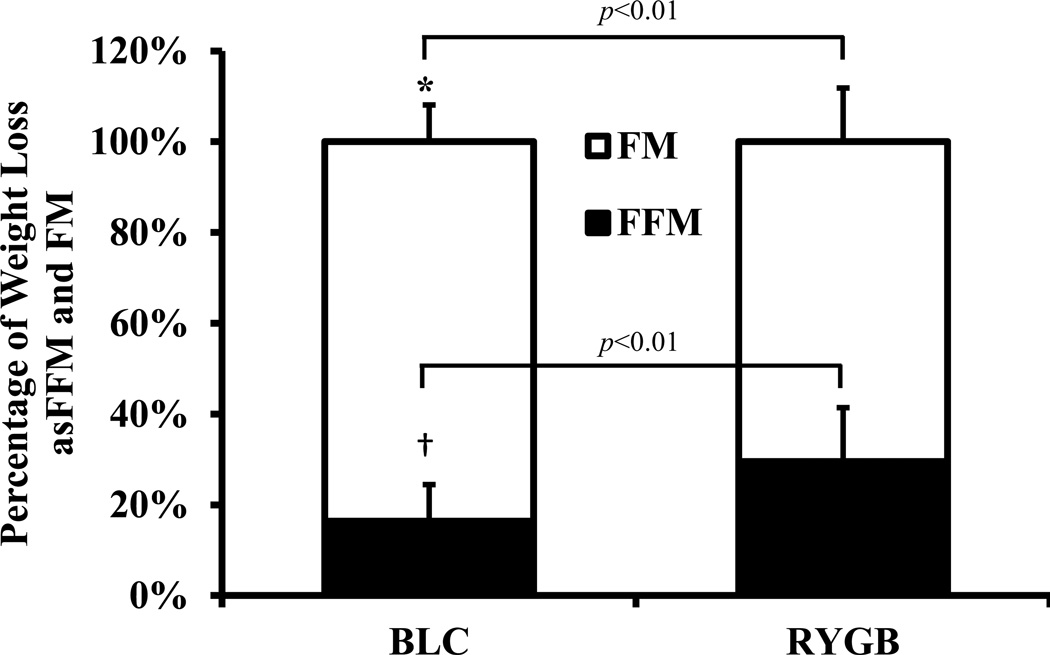
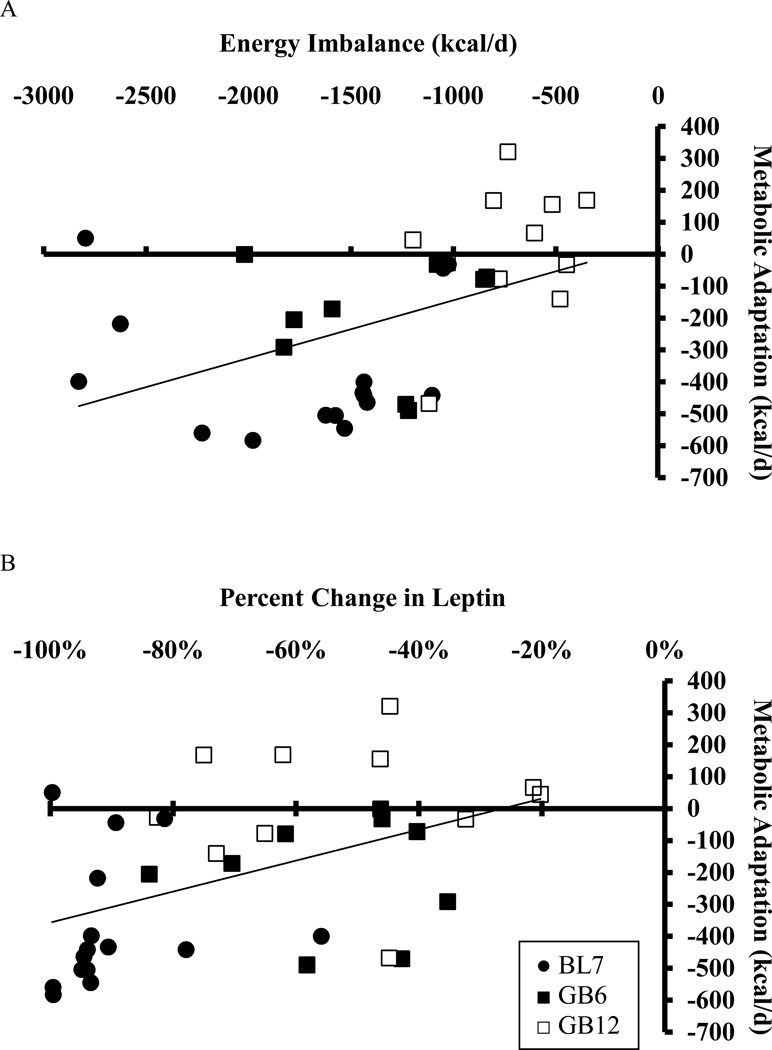
Both groups had similar final weight loss (RYGB: 40.2 ± 12.7 kg, BLC: 48.8 ± 14.9 kg; P = 0.14); however, RYGB lost a larger proportion of their weight as fat-free mass (FFM) (RYGB: 30 ± 12%, BLC: 16 ± 8% [P < 0.01]). In both groups, RMR decreased significantly more than expected based on measured body composition changes. The magnitude of this metabolic adaptation was correlated with the degree of energy imbalance (r = 0.55, P = 0.004) and the decrease in circulating leptin (r = 0.47, P = 0.02).
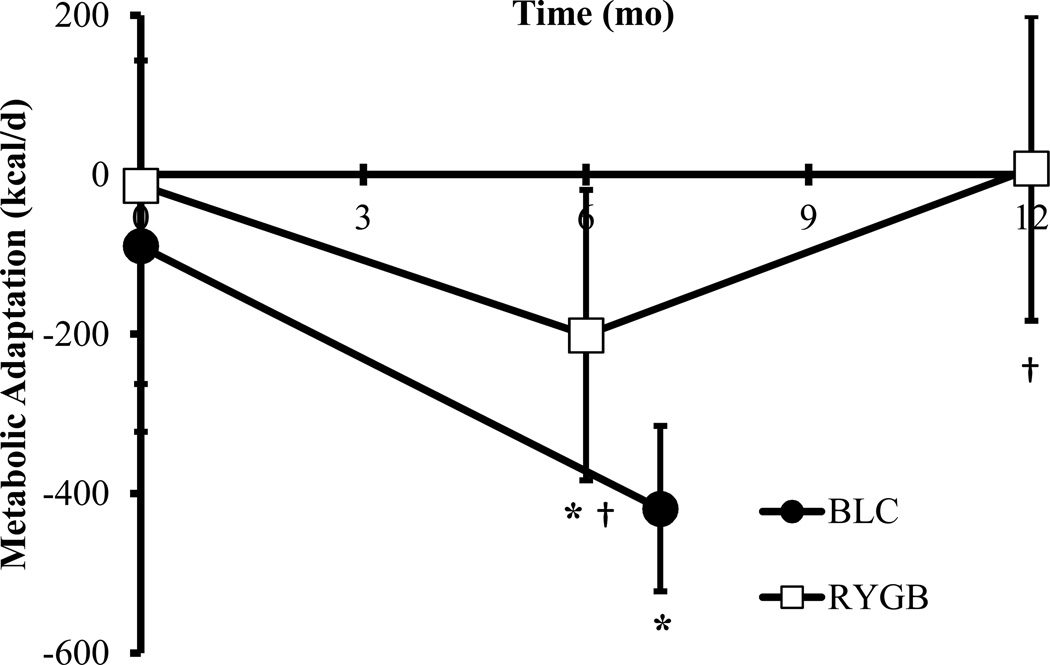
Calorie restriction along with vigorous exercise in BLC participants resulted in preservation of FFM and greater metabolic adaption compared to RYGB subjects despite comparable weight loss. Metabolic adaptation was related to the degree of energy imbalance and the changes in circulating leptin.
测量肥胖受试者通过减肥手术或热量限制加剧烈运动实现大幅减重后的静息代谢率(RMR)和身体成分变化。
对13对肥胖受试者进行身体成分和RMR测量,这些受试者在性别、体重指数、体重和年龄方面进行了回顾性匹配,他们分别接受了Roux-en-Y胃旁路手术(RYGB)或参加了“超级减肥王”减肥竞赛(BLC)。
两组最终减重相似(RYGB组:40.2±12.7千克,BLC组:48.8±14.9千克;P = 0.14);然而,RYGB组减掉的体重中无脂肪量(FFM)所占比例更大(RYGB组:30±12%,BLC组:16±8% [P < 0.01])。在两组中,RMR的下降幅度均明显大于根据测量的身体成分变化所预期的幅度。这种代谢适应的程度与能量失衡程度相关(r = 0.55,P = 0.004),也与循环瘦素的下降相关(r = 0.47,P = 0.02)。
尽管减重相当,但与RYGB组受试者相比,BLC参与者的热量限制加剧烈运动导致了FFM的保留和更大的代谢适应。代谢适应与能量失衡程度和循环瘦素的变化有关。