Sehgal Vishal, Bajwa Sukhminder Jit Singh, Sehgal Rinku, Eagan Jeremiah, Reddy Praveen, Lesko Samuel M
Department of Internal Medicine, University of South Carolina.Greenville, South Carolina, USA.
Department of Anesthesiology and Intensive Care Medicine, Gian Sagar Medical College, Banur, Patiala, Punjab, India.
Int J Endocrinol Metab. 2014 Jul 1;12(3):e16713. doi: 10.5812/ijem.16713. eCollection 2014 Jul.
Few studies have focused on patients' characteristics that affects acute kidney injury (AKI) after total knee replacement surgery (TKR).
The primary objective of this retrospective study was to identify patients' characteristics associated with AKI after TKR.
Between January 2008 and December 2009, 659 patients with a mean age of 67.1 years (range, 39-99) underwent TKA at Regional Hospital Knee and Hip Institute. Retrospective chart review was done to identify patients' characteristics that were associated with AKI after TKR. Logistic regression was used to evaluate AKI.
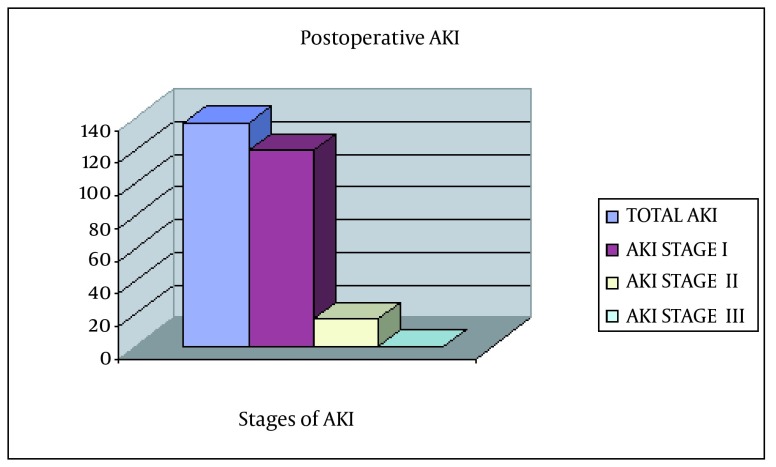
AKI occurred in 21.9% of patients. AKI risk decreased between 2008 and 2009 (odds ratio, 0.55; 95% CI, -0.37 to 0.82) but increased with age (P < 0.001), diabetes mellitus (DM), and angiotensin converting enzyme inhibitors (ACEI)/angiotensin receptor blockers (ARB) use (OR, -1.6; 95% CI, -1.0 to 2.5; and OR, -1.5, 95% CI, -1.0 to 2.3, respectively). However, the effects of DM and ACEI/ARB use were not independent; when both were included in the regression model, neither was statistically significant, and both ORs were smaller than combined OR.
When examined separately, both DM and preoperative ACEI/ARB use increased the risk of AKI; however these factors were correlated and were not independent predictors of significantly increased risk. Patients with DM have higher tendency to develop AKI and hence, preoperative renal risk stratification should be done in all patients with DM.
很少有研究关注全膝关节置换术(TKR)后影响急性肾损伤(AKI)的患者特征。
这项回顾性研究的主要目的是确定TKR后与AKI相关的患者特征。
2008年1月至2009年12月期间,659例平均年龄67.1岁(范围39 - 99岁)的患者在地区医院膝关节与髋关节研究所接受了全膝关节置换术(TKA)。通过回顾病历以确定TKR后与AKI相关的患者特征。采用逻辑回归评估AKI。
21.9%的患者发生了AKI。2008年至2009年期间AKI风险降低(比值比,0.55;95%置信区间,-0.37至0.82),但随年龄增长(P < 0.001)、糖尿病(DM)以及使用血管紧张素转换酶抑制剂(ACEI)/血管紧张素受体阻滞剂(ARB)而增加(比值比分别为-1.6;95%置信区间,-1.0至2.5;以及比值比-1.5,95%置信区间,-1.0至2.3)。然而,DM和使用ACEI/ARB的影响并非独立;当两者都纳入回归模型时,两者均无统计学意义,且两个比值比均小于合并后的比值比。
单独检查时,DM和术前使用ACEI/ARB均增加了AKI风险;然而这些因素相互关联,并非显著增加风险的独立预测因素。DM患者发生AKI的倾向更高,因此,所有DM患者术前均应进行肾脏风险分层。