Yuan Haoran, Deng Lifang, Qi Yujie, Kobayashi Noriyuki, Tang Jiahuan
Guangzhou Institute of Energy Conversion, Chinese Academy of Sciences, Guangzhou 510640, China ; Key Laboratory of Renewable Energy, Chinese Academy of Sciences, Guangzhou 510640, China.
Guangdong Institute of Eco-Environmental and Soil Sciences, 808 Tianyuan Road, Guangzhou, Guangdong 510650, China.
ScientificWorldJournal. 2014;2014:832850. doi: 10.1155/2014/832850. Epub 2014 Aug 26.
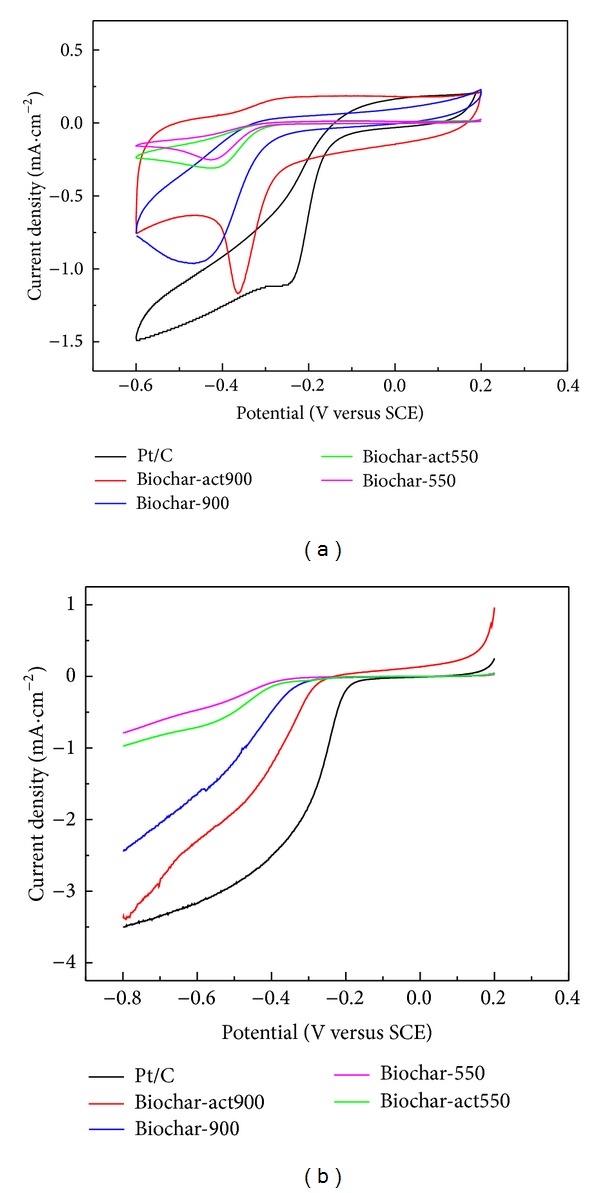
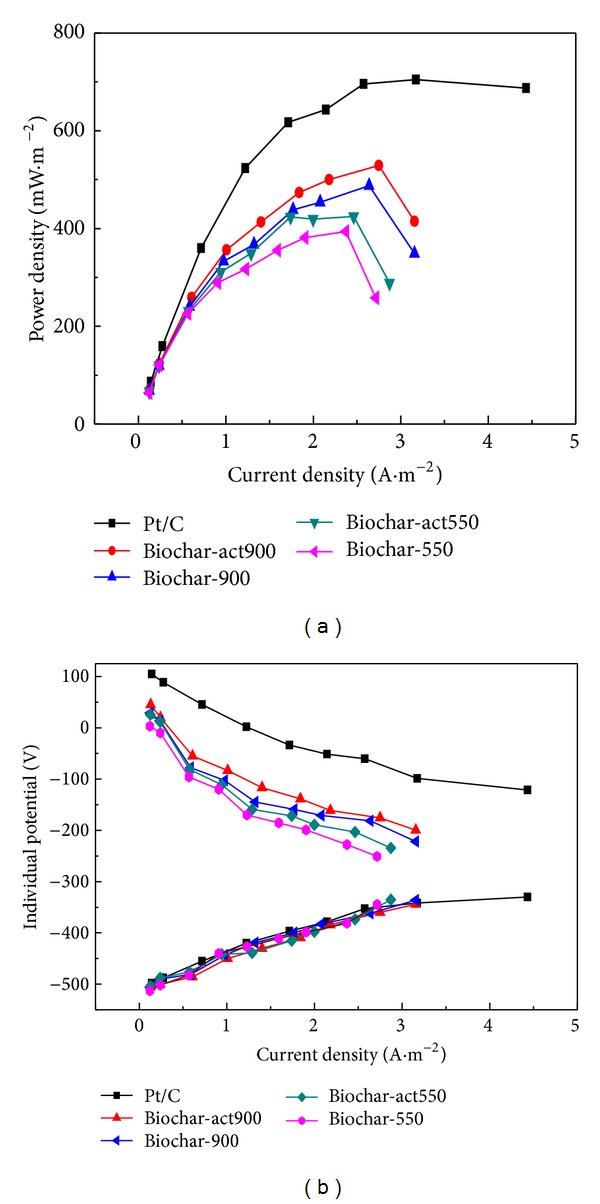
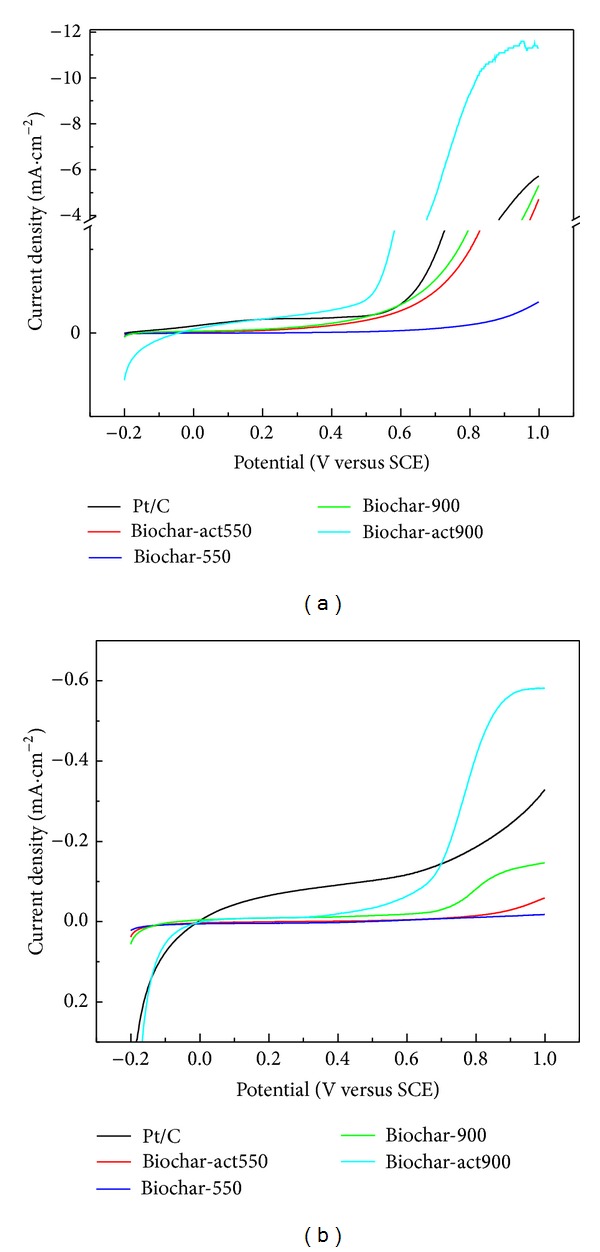
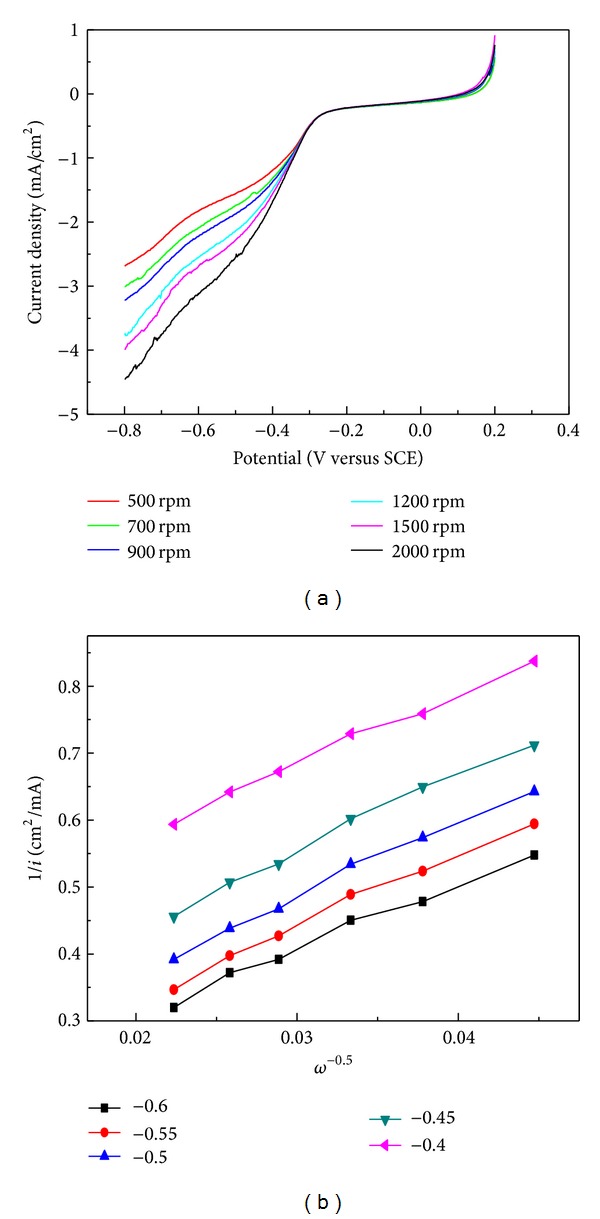
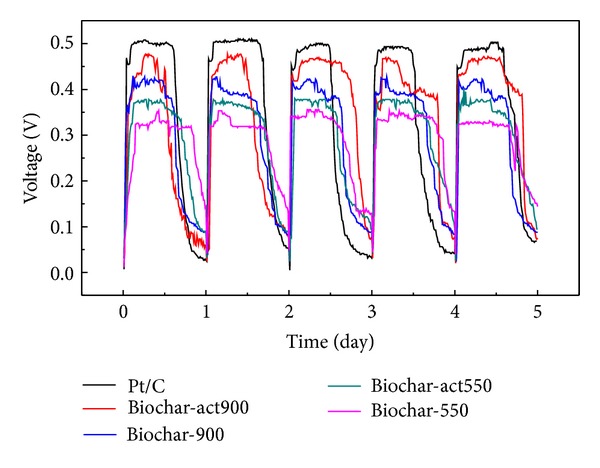
Nonactivated and activated biochars have been successfully prepared by bananas at different thermotreatment temperatures. The activated biochar generated at 900°C (Biochar-act900) exhibited improved oxygen reduction reaction (ORR) and oxygen evolution reaction (OER) performances in alkaline media, in terms of the onset potential and generated current density. Rotating disk electron result shows that the average of 2.65 electrons per oxygen molecule was transferred during ORR of Biochar-act900. The highest power density of 528.2 mW/m(2) and the maximum stable voltage of 0.47 V were obtained by employing Biochar-act900 as cathode catalyst, which is comparable to the Pt/C cathode. Owning to these advantages, it is expected that the banana-derived biochar cathode can find application in microbial fuel cell systems.
通过香蕉在不同热处理温度下已成功制备出未活化和活化生物炭。在900°C下生成的活化生物炭(Biochar-act900)在碱性介质中,就起始电位和产生的电流密度而言,展现出改善的氧还原反应(ORR)和析氧反应(OER)性能。旋转圆盘电极结果表明,在Biochar-act900的ORR过程中,每个氧分子平均转移2.65个电子。以Biochar-act900作为阴极催化剂时,获得了528.2 mW/m²的最高功率密度和0.47 V的最大稳定电压,这与Pt/C阴极相当。由于这些优点,预计香蕉衍生的生物炭阴极可在微生物燃料电池系统中得到应用。