Zhang Ling, Shang Xue-Jun, Li Hong-Fei, Shi Yu-Qin, Li Wei, Teves Maria E, Wang Zhi-Qiong, Jiang Gao-Feng, Song Shi-Zhen, Zhang Zhi-Bing
Department of Preventive Medicine, School of Public Health, Wuhan University of Science and Technology, Wuhan, China; Department of Obstetrics and Gynecology, Virginia Commonwealth University, Richmond, VA, USA, China.
Asian J Androl. 2015 Jan-Feb;17(1):86-93. doi: 10.4103/1008-682X.138186.
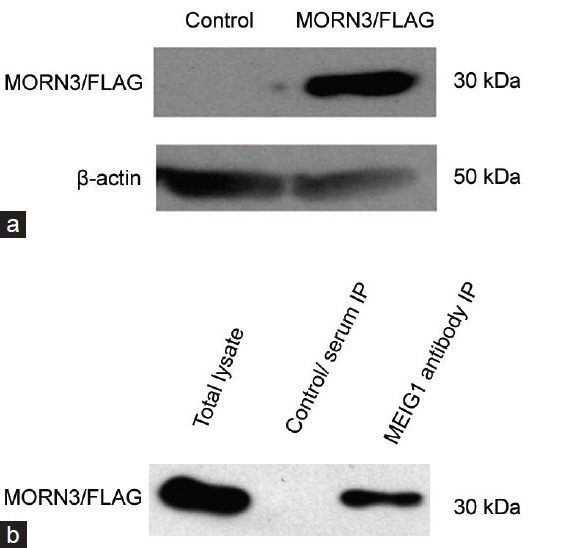
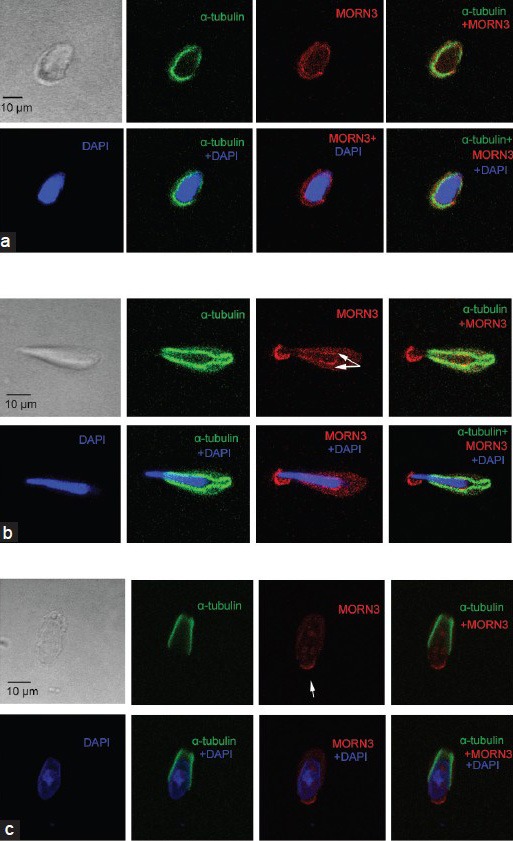
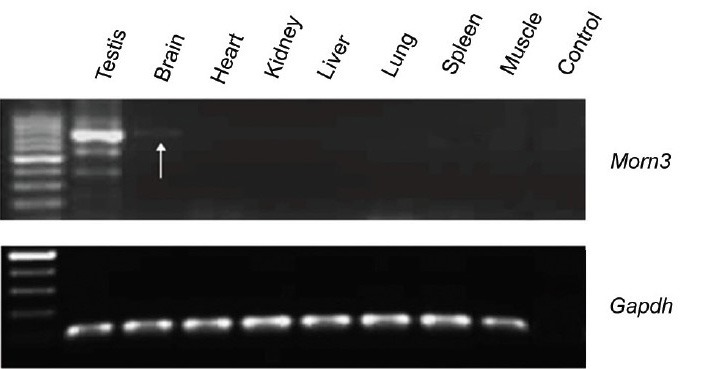
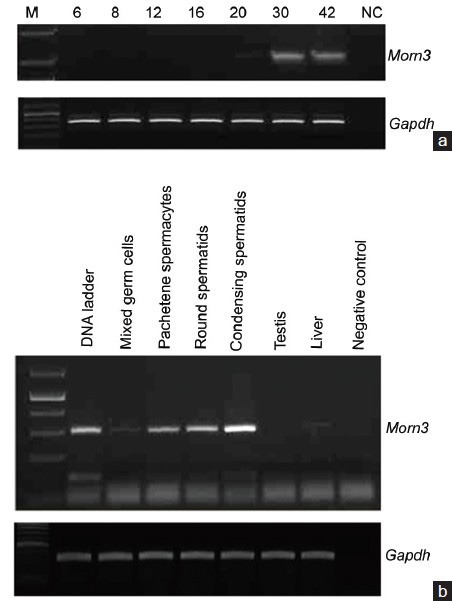
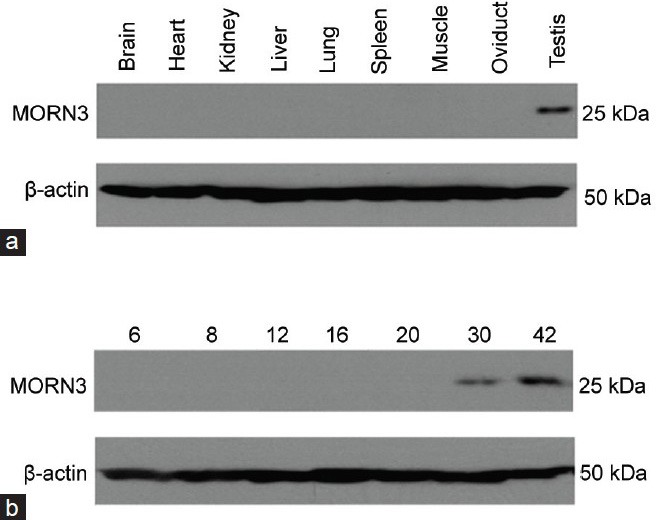
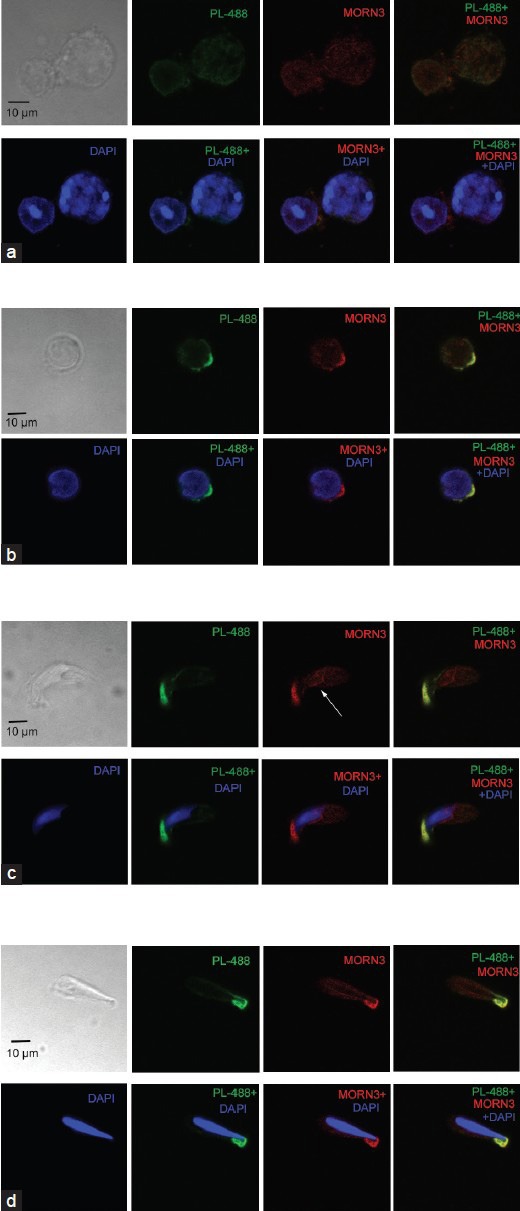
Mammalian spermatogenesis is a well-organized process of cell development and differentiation. Meiosis expressed gene 1 (MEIG1) plays an essential role in the regulation of spermiogenesis. To explore potential mechanisms of MEIG1's action, a yeast two-hybrid screen was conducted, and several potential binding partners were identified; one of them was membrane occupation and recognition nexus repeat containing 3 (MORN3). MORN3 mRNA is only abundant in mouse testis. In the testis, Morn3 mRNA is highly expressed in the spermiogenesis stage. Specific anti-MORN3 polyclonal antibody was generated against N-terminus of the full-length MORN3 protein, and MORN3 expression and localization was examined in vitro and in vivo. In transfected Chinese hamster ovary cells, the antibody specifically crossed-reacted the full-length MORN3 protein, and immunofluorescence staining revealed that MORN3 was localized throughout the cytoplasm. Among multiple mouse tissues, about 25 kDa protein, was identified only in the testis. The protein was highly expressed after day 20 of birth. Immunofluorescence staining on mixed testicular cells isolated from adult wild-type mice demonstrated that MORN3 was expressed in the acrosome in germ cells throughout spermiogenesis. The protein was also present in the manchette of elongating spermatids. The total MORN3 expression and acrosome localization were not changed in the Meig 1-deficient mice. However, its expression in manchette was dramatically reduced in the mutant mice. Our studies suggest that MORN3 is another regulator for spermatogenesis, probably together with MEIG1.
哺乳动物精子发生是一个细胞发育和分化的有序过程。减数分裂表达基因1(MEIG1)在精子形成的调控中起关键作用。为了探究MEIG1作用的潜在机制,进行了酵母双杂交筛选,并鉴定出几个潜在的结合伙伴;其中之一是含3个膜占据与识别连接重复序列(MORN3)。MORN3 mRNA仅在小鼠睾丸中大量存在。在睾丸中,Morn3 mRNA在精子形成阶段高度表达。针对全长MORN3蛋白的N端制备了特异性抗MORN3多克隆抗体,并在体外和体内检测了MORN3的表达和定位。在转染的中国仓鼠卵巢细胞中,该抗体与全长MORN3蛋白发生特异性交叉反应,免疫荧光染色显示MORN3定位于整个细胞质中。在多种小鼠组织中,仅在睾丸中鉴定出约25 kDa的蛋白。该蛋白在出生后20天开始高度表达。对从成年野生型小鼠分离的混合睾丸细胞进行免疫荧光染色表明,在整个精子形成过程中,MORN3在生殖细胞的顶体中表达。该蛋白也存在于伸长精子细胞的环中。在Meig 1基因缺陷小鼠中,MORN3的总表达和顶体定位没有改变。然而,在突变小鼠中,其在环中的表达显著降低。我们的研究表明,MORN3可能是精子发生的另一个调节因子,可能与MEIG1共同发挥作用。