Reichl Patrick, Dengler Mirko, van Zijl Franziska, Huber Heidemarie, Führlinger Gerhard, Reichel Christian, Sieghart Wolfgang, Peck-Radosavljevic Markus, Grubinger Markus, Mikulits Wolfgang
Department of Medicine I, Division: Institute of Cancer Research, Comprehensive Cancer Center, Medical University of Vienna, Vienna, Austria.
Hepatology. 2015 Mar;61(3):930-41. doi: 10.1002/hep.27492. Epub 2015 Jan 28.
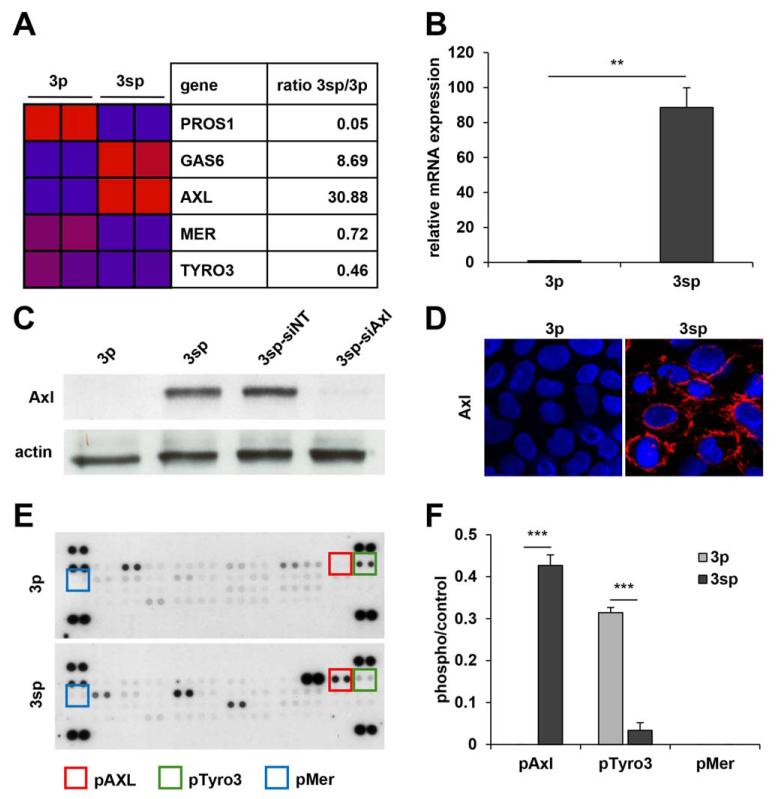
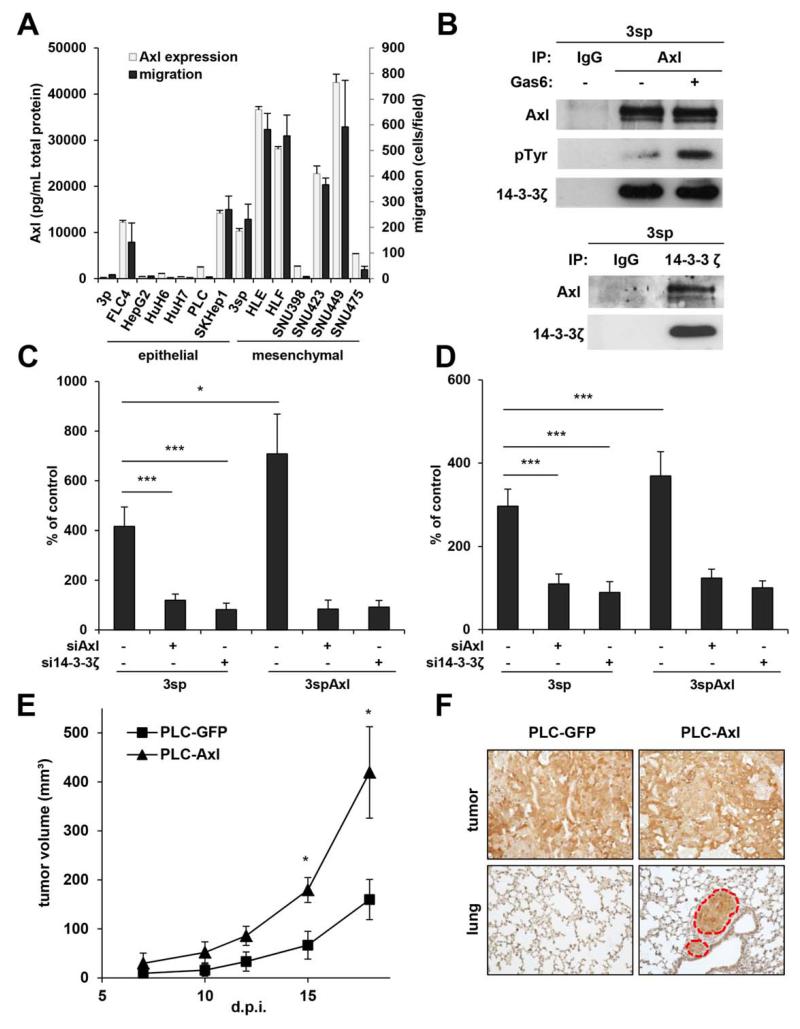
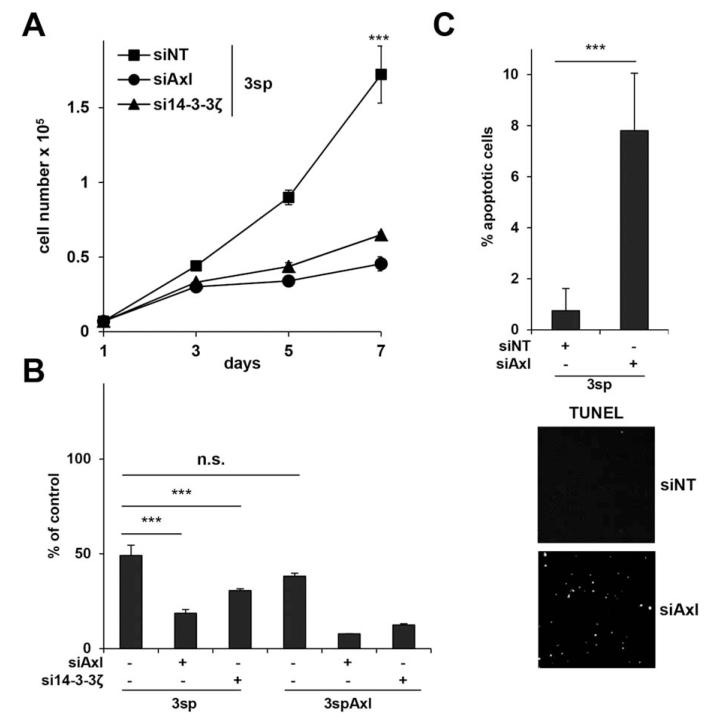
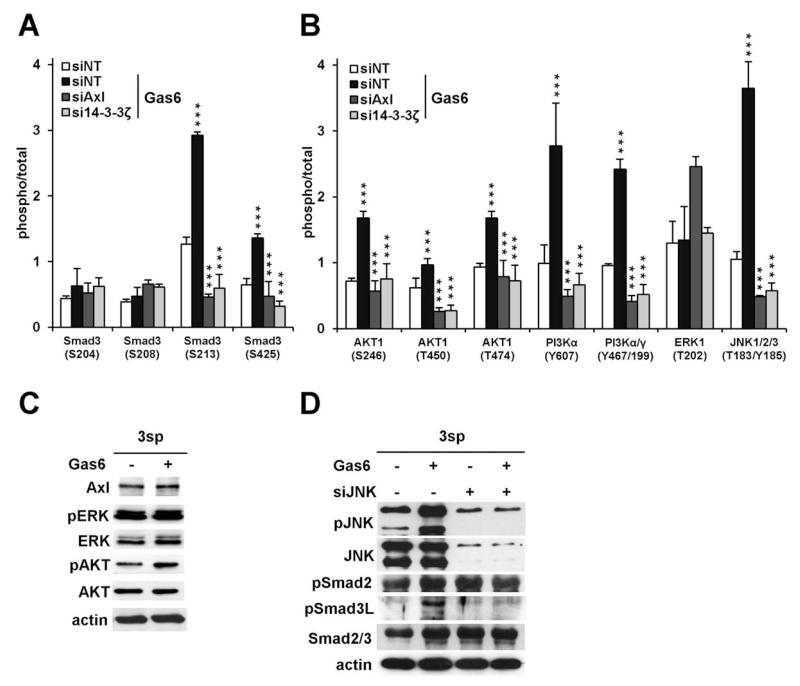
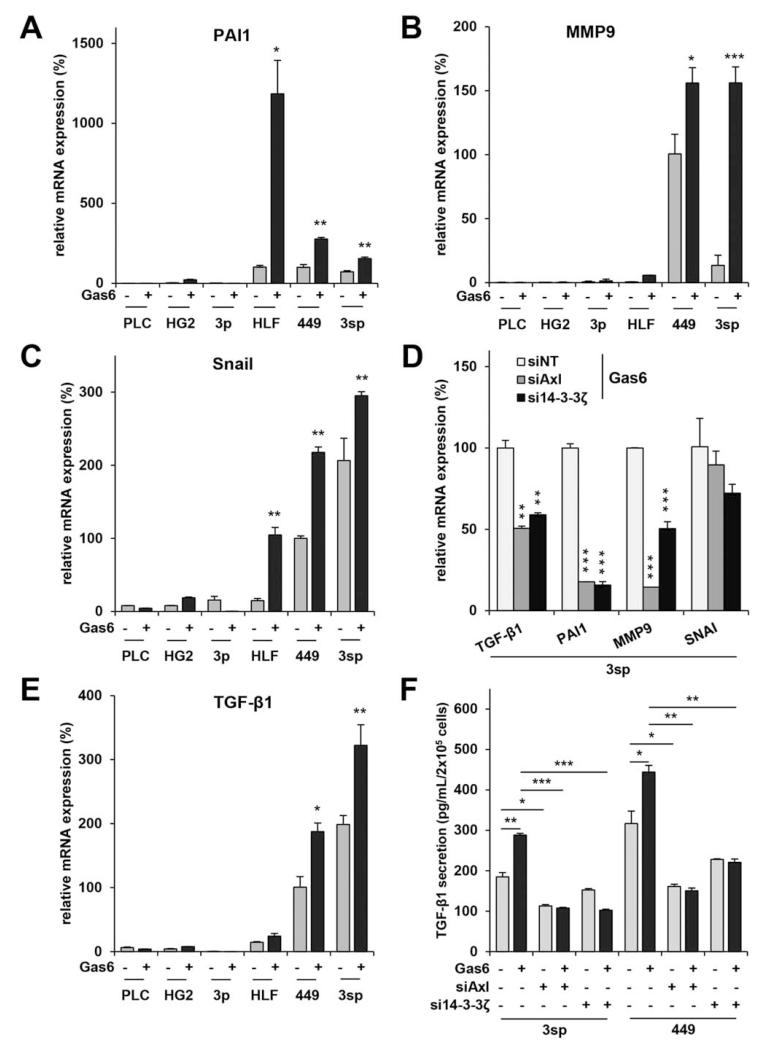
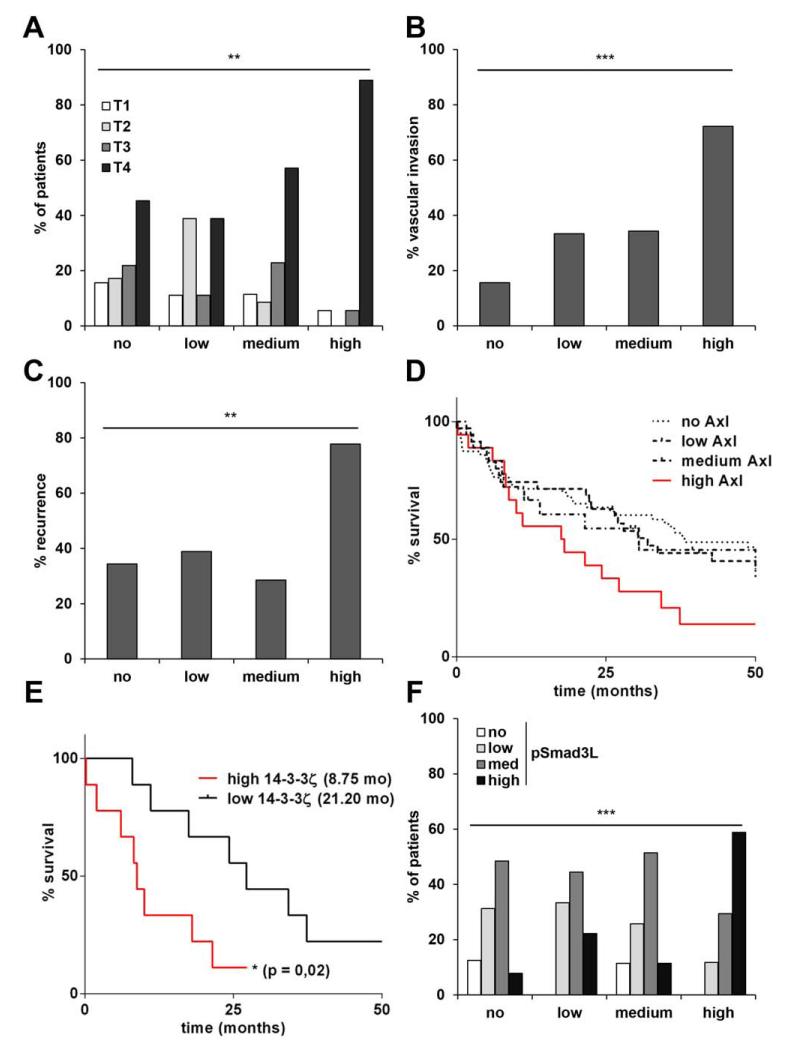
In hepatocellular carcinoma (HCC), intrahepatic metastasis frequently correlates with epithelial to mesenchymal transition (EMT) of malignant hepatocytes. Several mechanisms have been identified to be essentially involved in hepatocellular EMT, among them transforming growth factor (TGF)-β signaling. Here we show the up-regulation and activation of the receptor tyrosine kinase Axl in EMT-transformed hepatoma cells. Knockdown of Axl expression resulted in abrogation of invasive and transendothelial migratory abilities of mesenchymal HCC cells in vitro and Axl overexpression-induced metastatic colonization of epithelial hepatoma cells in vivo. Importantly, Axl knockdown severely impaired resistance to TGF-β-mediated growth inhibition. Analysis of the Axl interactome revealed binding of Axl to 14-3-3ζ, which is essentially required for Axl-mediated cell invasion, transendothelial migration, and resistance against TGF-β. Axl/14-3-3ζ signaling caused phosphorylation of Smad3 linker region (Smad3L) at Ser213, resulting in the up-regulation of tumor-progressive TGF-β target genes such as PAI1, MMP9, and Snail as well as augmented TGF-β1 secretion in mesenchymal HCC cells. Accordingly, high Axl expression in HCC patient samples correlated with elevated vessel invasion of HCC cells, higher risk of tumor recurrence after liver transplantation, strong phosphorylation of Smad3L, and lower survival. In addition, elevated expression of both Axl and 14-3-3ζ showed strongly reduced survival of HCC patients.
Our data suggest that Axl/14-3-3ζ signaling is central for TGF-β-mediated HCC progression and a promising target for HCC therapy.
在肝细胞癌(HCC)中,肝内转移常与恶性肝细胞的上皮-间质转化(EMT)相关。已确定几种机制基本参与肝细胞EMT,其中包括转化生长因子(TGF)-β信号传导。在此我们展示了受体酪氨酸激酶Axl在EMT转化的肝癌细胞中的上调和激活。敲低Axl表达导致间充质HCC细胞在体外的侵袭和跨内皮迁移能力丧失,而Axl过表达诱导上皮肝癌细胞在体内发生转移定植。重要的是,敲低Axl严重损害了对TGF-β介导的生长抑制的抗性。对Axl相互作用组的分析揭示了Axl与14-3-3ζ的结合,这是Axl介导的细胞侵袭、跨内皮迁移和对TGF-β抗性所必需的。Axl/14-3-3ζ信号传导导致Smad3连接区(Smad3L)在Ser213处磷酸化,导致间充质HCC细胞中肿瘤进展相关的TGF-β靶基因如PAI1、MMP9和Snail上调以及TGF-β1分泌增加。因此,HCC患者样本中高Axl表达与HCC细胞的血管侵袭增加、肝移植后肿瘤复发风险更高、Smad3L的强磷酸化以及较低的生存率相关。此外,Axl和14-3-3ζ两者的表达升高均显示HCC患者的生存率大幅降低。
我们的数据表明,Axl/14-3-3ζ信号传导是TGF-β介导的HCC进展的核心,是HCC治疗的一个有前景的靶点。