Cheng Xin-Hua, Black Markaisa, Ustiyan Vladimir, Le Tien, Fulford Logan, Sridharan Anusha, Medvedovic Mario, Kalinichenko Vladimir V, Whitsett Jeffrey A, Kalin Tanya V
Division of Pulmonary Biology, the Perinatal Institute of Cincinnati Children's Research Foundation, Cincinnati, Ohio, United States of America.
Department of Environmental Health, College of Medicine, University of Cincinnati, Cincinnati, Ohio, United States of America.
PLoS Genet. 2014 Sep 25;10(9):e1004656. doi: 10.1371/journal.pgen.1004656. eCollection 2014 Sep.
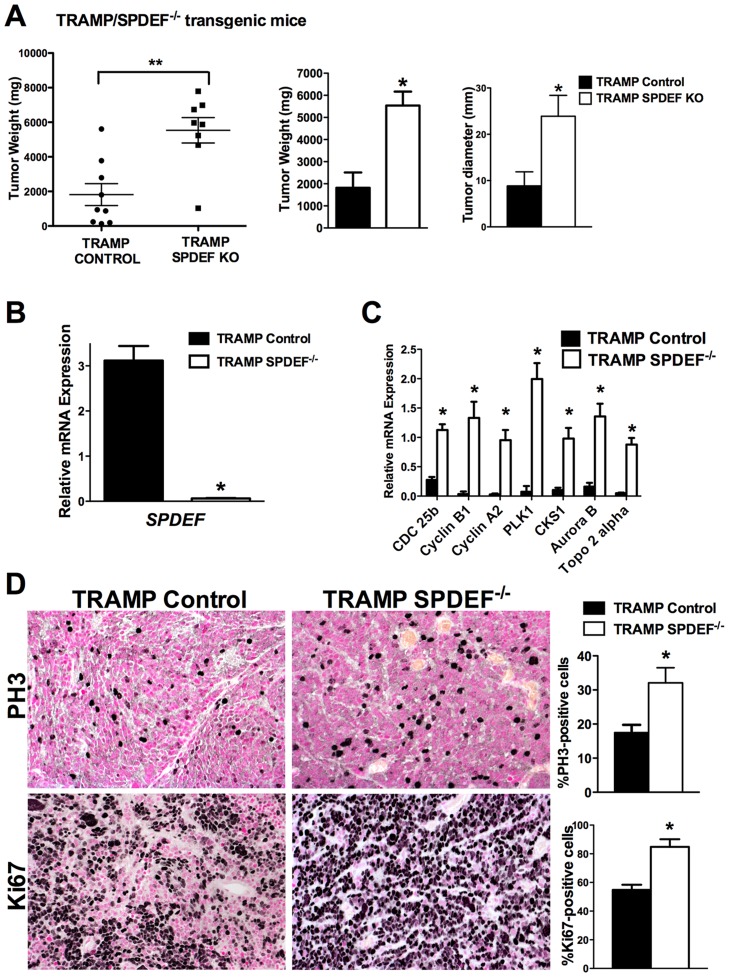
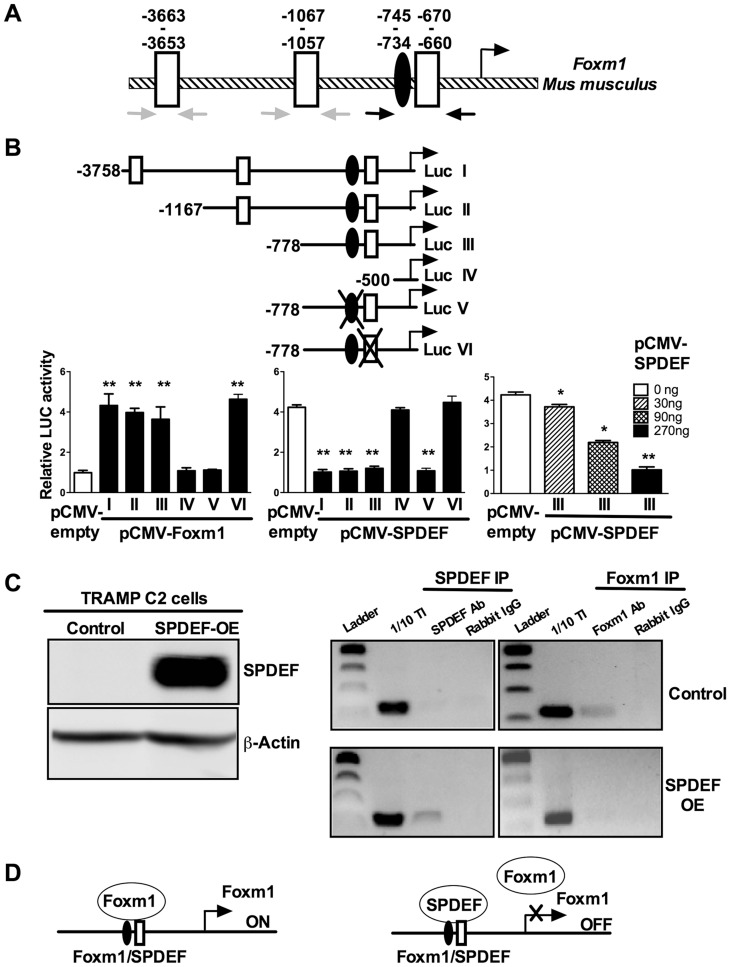
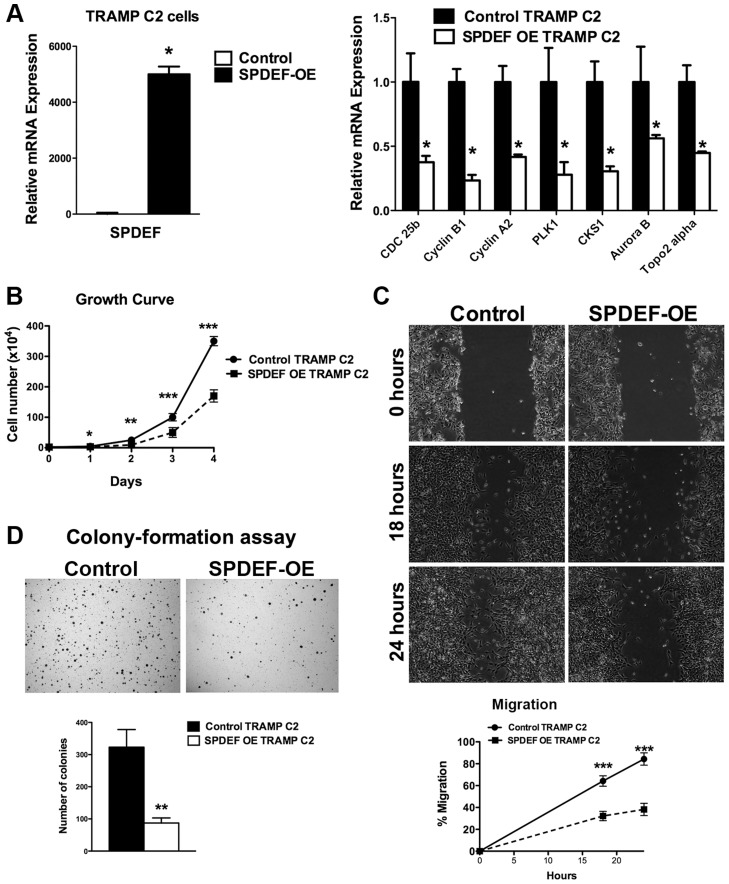
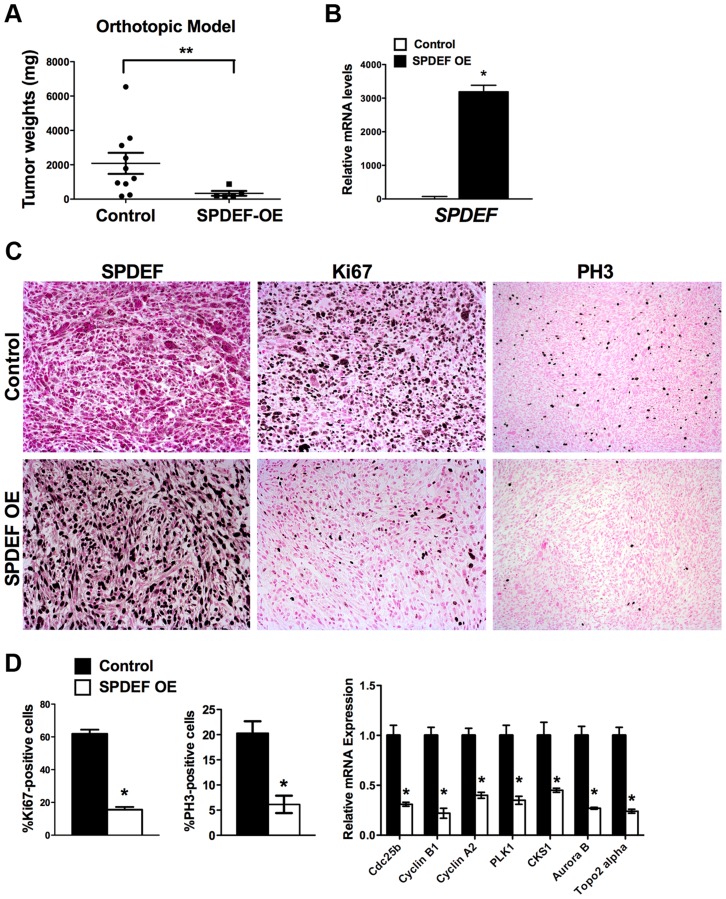
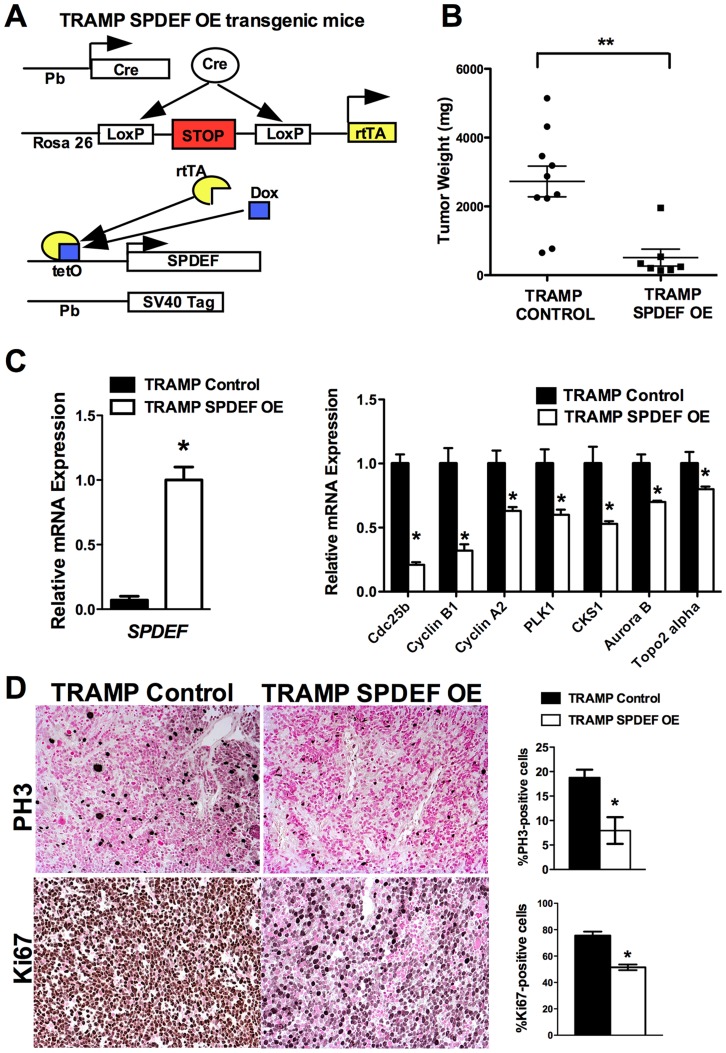
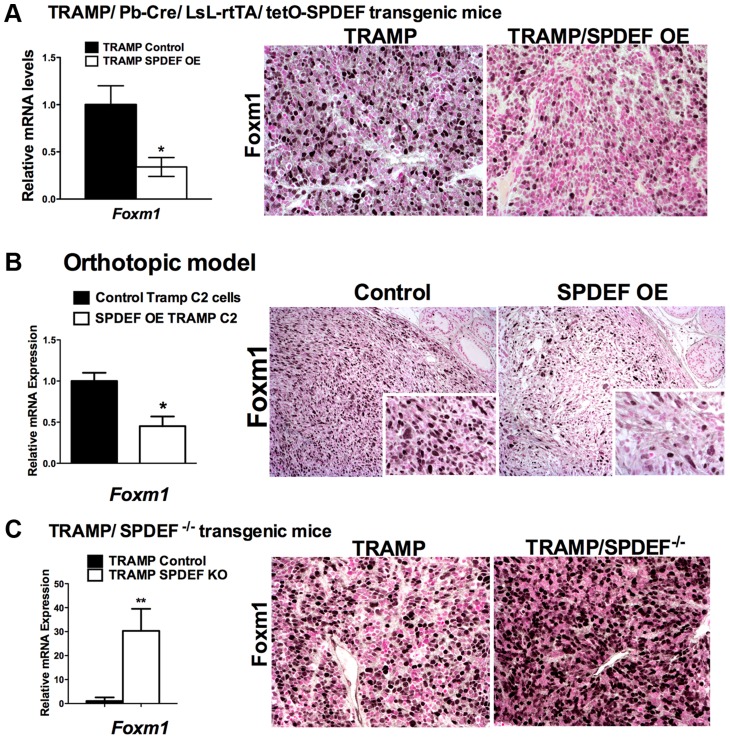
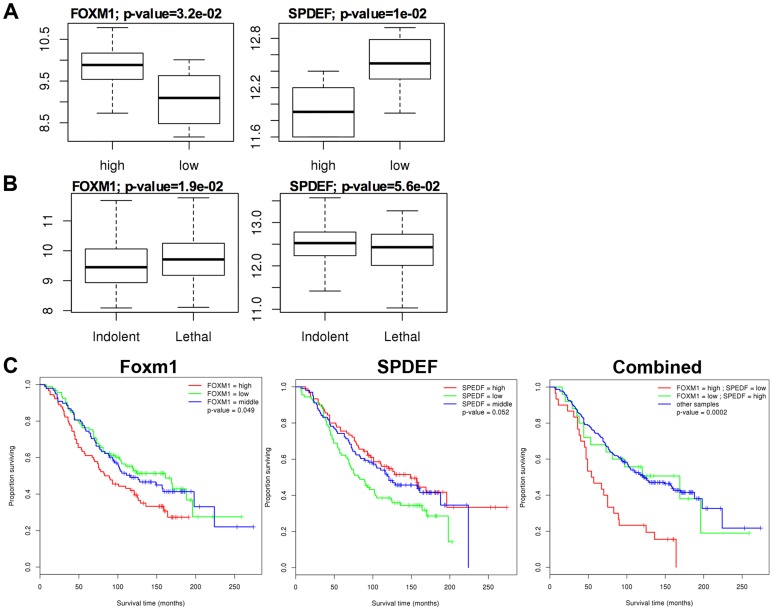
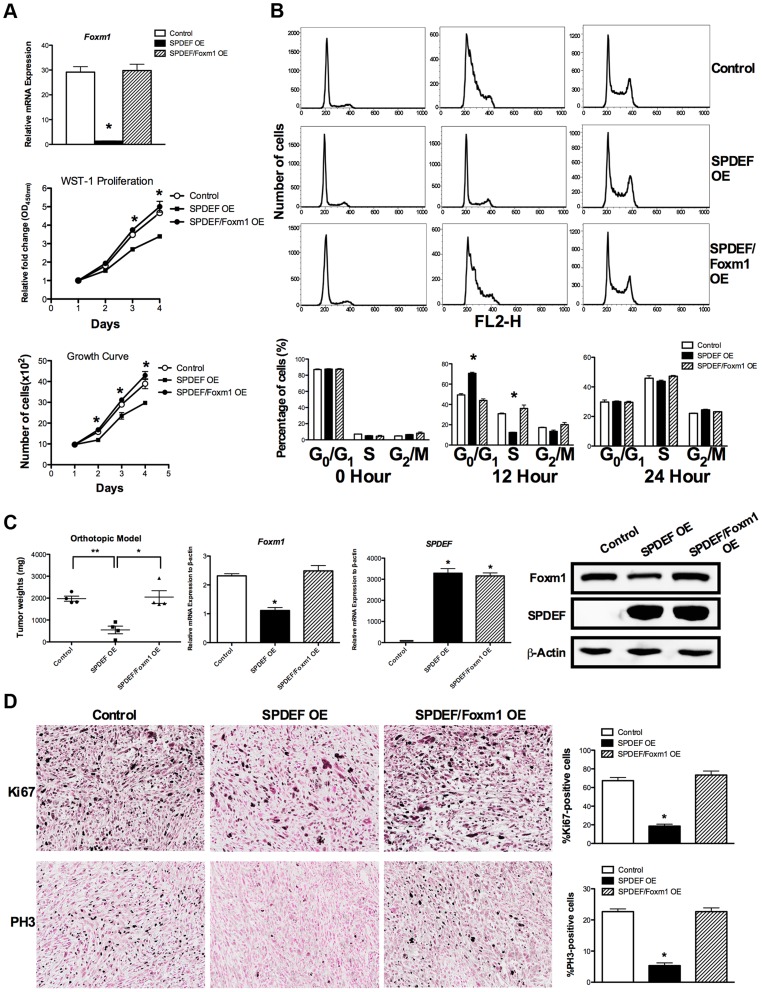
SAM-pointed domain-containing ETS transcription factor (SPDEF) is expressed in normal prostate epithelium. While its expression changes during prostate carcinogenesis (PCa), the role of SPDEF in prostate cancer remains controversial due to the lack of genetic mouse models. In present study, we generated transgenic mice with the loss- or gain-of-function of SPDEF in prostate epithelium to demonstrate that SPDEF functions as tumor suppressor in prostate cancer. Loss of SPDEF increased cancer progression and tumor cell proliferation, whereas over-expression of SPDEF in prostate epithelium inhibited carcinogenesis and reduced tumor cell proliferation in vivo and in vitro. Transgenic over-expression of SPDEF inhibited mRNA and protein levels of Foxm1, a transcription factor critical for tumor cell proliferation, and reduced expression of Foxm1 target genes, including Cdc25b, Cyclin B1, Cyclin A2, Plk-1, AuroraB, CKS1 and Topo2alpha. Deletion of SPDEF in transgenic mice and cultures prostate tumor cells increased expression of Foxm1 and its target genes. Furthermore, an inverse correlation between SPDEF and Foxm1 levels was found in human prostate cancers. The two-gene signature of low SPDEF and high FoxM1 predicted poor survival in prostate cancer patients. Mechanistically, SPDEF bound to, and inhibited transcriptional activity of Foxm1 promoter by interfering with the ability of Foxm1 to activate its own promoter through auto-regulatory site located in the -745/-660 bp Foxm1 promoter region. Re-expression of Foxm1 restored cellular proliferation in the SPDEF-positive cancer cells and rescued progression of SPDEF-positive tumors in mouse prostates. Altogether, SPDEF inhibits prostate carcinogenesis by preventing Foxm1-regulated proliferation of prostate tumor cells. The present study identified novel crosstalk between SPDEF tumor suppressor and Foxm1 oncogene and demonstrated that this crosstalk is required for tumor cell proliferation during progression of prostate cancer in vivo.
含SAM结构域的ETS转录因子(SPDEF)在正常前列腺上皮中表达。虽然其表达在前列腺癌发生过程中会发生变化,但由于缺乏基因小鼠模型,SPDEF在前列腺癌中的作用仍存在争议。在本研究中,我们构建了前列腺上皮中SPDEF功能缺失或功能获得的转基因小鼠,以证明SPDEF在前列腺癌中起肿瘤抑制作用。SPDEF缺失会增加癌症进展和肿瘤细胞增殖,而前列腺上皮中SPDEF的过表达在体内和体外均抑制致癌作用并减少肿瘤细胞增殖。SPDEF的转基因过表达抑制了对肿瘤细胞增殖至关重要的转录因子Foxm1的mRNA和蛋白水平,并降低了Foxm1靶基因的表达,包括Cdc25b、细胞周期蛋白B1、细胞周期蛋白A2、Plk-1、AuroraB、CKS1和拓扑异构酶2α。在转基因小鼠和培养的前列腺肿瘤细胞中删除SPDEF会增加Foxm1及其靶基因的表达。此外,在人类前列腺癌中发现SPDEF和Foxm1水平呈负相关。低SPDEF和高FoxM1的双基因特征预测前列腺癌患者的生存率较差。机制上,SPDEF通过干扰Foxm1通过位于-745/-660 bp Foxm1启动子区域的自调控位点激活其自身启动子的能力,与Foxm1启动子结合并抑制其转录活性。Foxm1的重新表达恢复了SPDEF阳性癌细胞中的细胞增殖,并挽救了小鼠前列腺中SPDEF阳性肿瘤的进展。总之,SPDEF通过阻止Foxm1调节的前列腺肿瘤细胞增殖来抑制前列腺癌发生。本研究确定了SPDEF肿瘤抑制因子和Foxm1癌基因之间的新型相互作用,并证明这种相互作用在体内前列腺癌进展过程中对肿瘤细胞增殖是必需的。