Prati Federica, Goldman-Pinkovich Adele, Lizzi Federica, Belluti Federica, Koren Roni, Zilberstein Dan, Bolognesi Maria Laura
Department of Pharmacy and Biotechnology, Alma Mater Studiorum University of Bologna, Bologna, Italy.
Faculty of Biology, Technion-Israel Institute of Technology, Haifa, Israel.
PLoS One. 2014 Sep 25;9(9):e107994. doi: 10.1371/journal.pone.0107994. eCollection 2014.
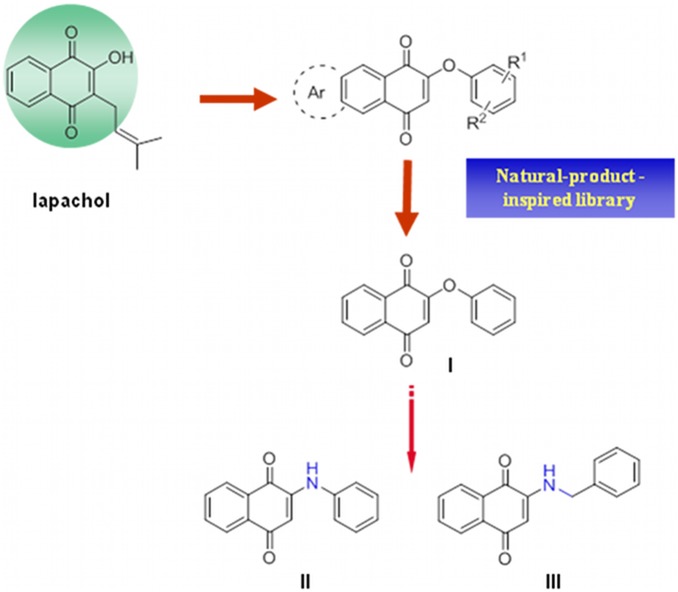
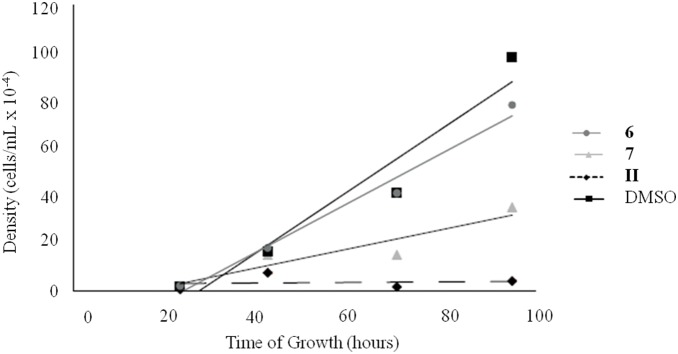
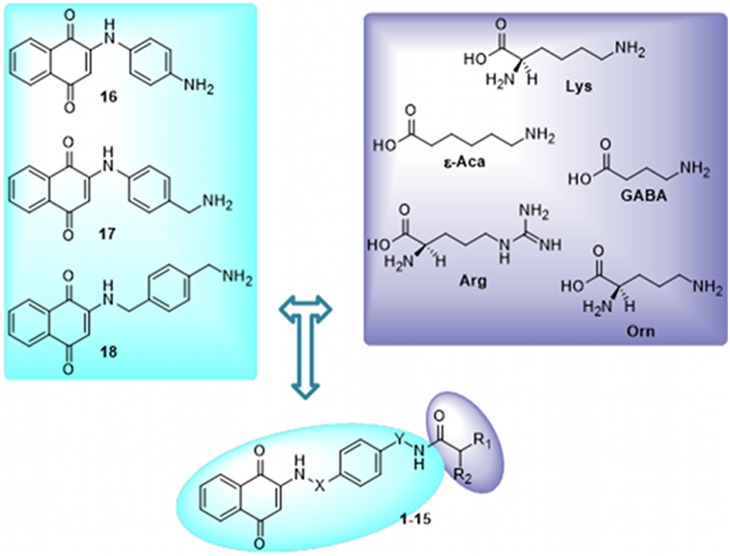
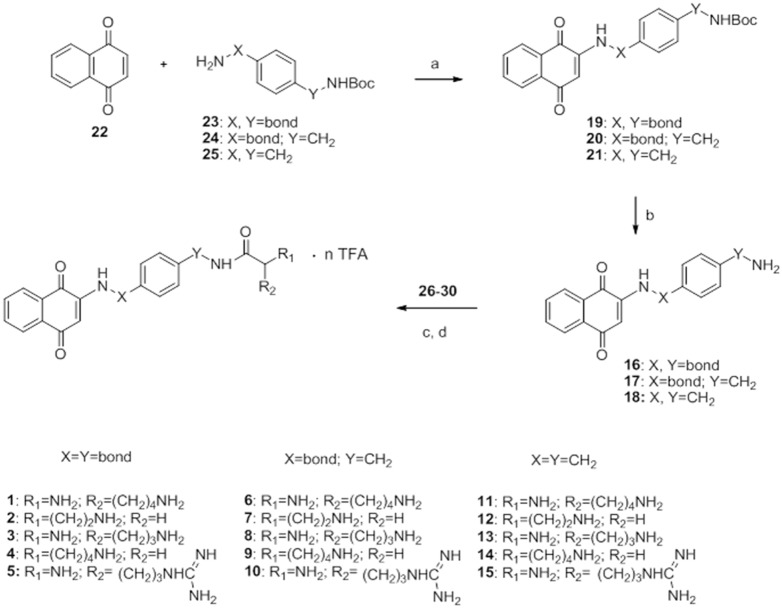
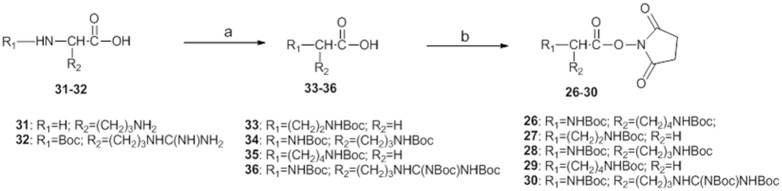
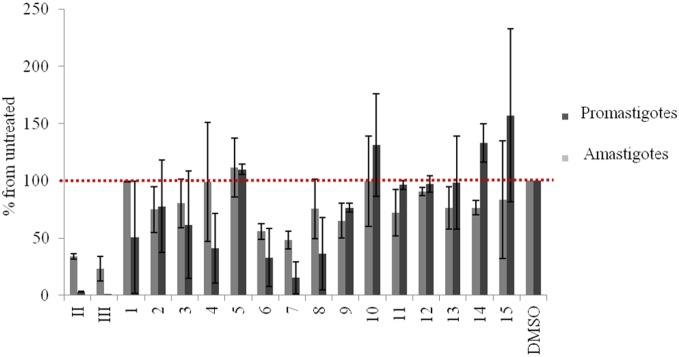
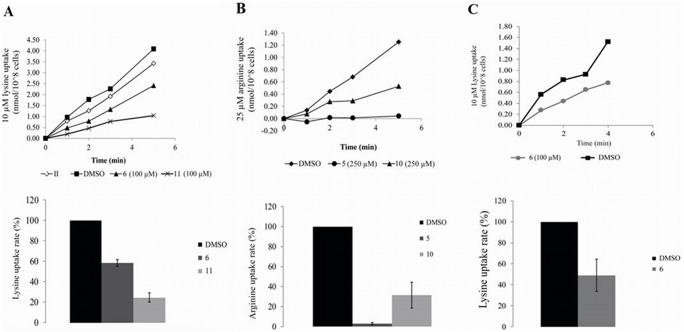
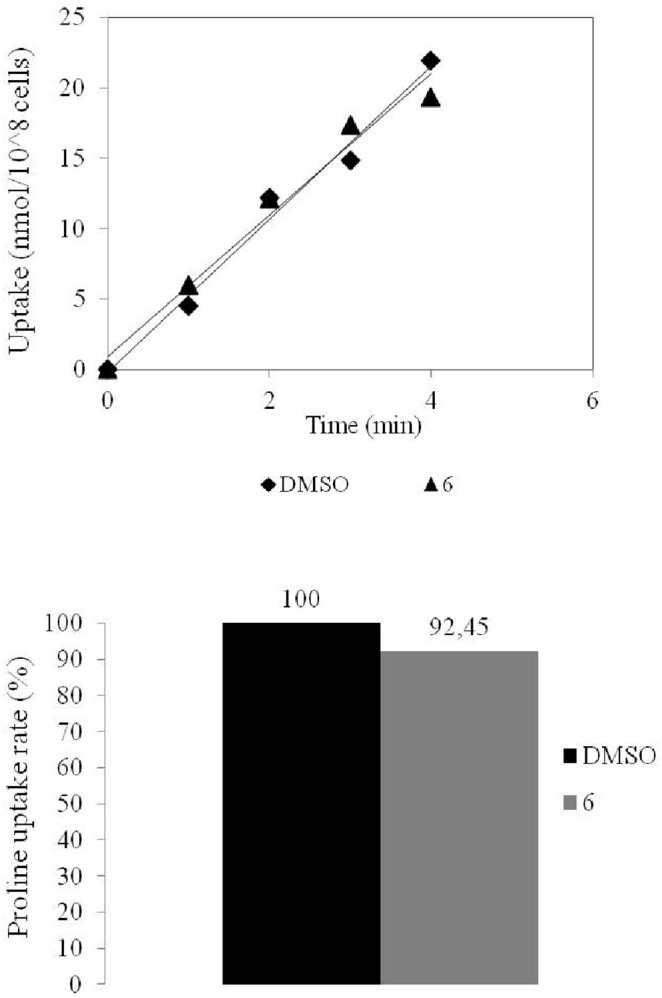
The aim of the present study was to investigate the feasibility of targeting Leishmania transporters via appropriately designed chemical probes. Leishmania donovani, the parasite that causes visceral leishmaniasis, is auxotrophic for arginine and lysine and has specific transporters (LdAAP3 and LdAAP7) to import these nutrients. Probes 1-15 were originated by conjugating cytotoxic quinone fragments (II and III) with amino acids (i.e. arginine and lysine) by means of an amide linkage. The toxicity of the synthesized conjugates against Leishmania extracellular (promastigotes) and intracellular (amastigotes) forms was investigated, as well their inhibition of the relevant amino acid transporters. We observed that some conjugates indeed displayed toxicity against the parasites; in particular, 7 was identified as the most potent derivative (at concentrations of 1 µg/mL and 2.5 µg/mL residual cell viability was reduced to 15% and 48% in promastigotes and amastigotes, respectively). Notably, 6, while retaining the cytotoxic activity of quinone II, displayed no toxicity against mammalian THP1 cells. Transport assays indicated that the novel conjugates inhibited transport activity of lysine, arginine and proline transporters. Furthermore, our analyses suggested that the toxic conjugates might be translocated by the transporters into the cells. The non-toxic probes that inhibited transport competed with the natural substrates for binding to the transporters without being translocated. Thus, it is likely that 6, by exploiting amino acid transporters, can selectively deliver its toxic effects to Leishmania cells. This work provides the first evidence that amino acid transporters of the human pathogen Leishmania might be modulated by small molecules, and warrants their further investigation from drug discovery and chemical biology perspectives.
本研究的目的是通过适当设计的化学探针来研究靶向利什曼原虫转运蛋白的可行性。杜氏利什曼原虫是引起内脏利什曼病的寄生虫,对精氨酸和赖氨酸营养缺陷,并有特定的转运蛋白(LdAAP3和LdAAP7)来导入这些营养物质。探针1 - 15是通过酰胺键将细胞毒性醌片段(II和III)与氨基酸(即精氨酸和赖氨酸)偶联而成。研究了合成的偶联物对利什曼原虫细胞外(前鞭毛体)和细胞内(无鞭毛体)形式的毒性,以及它们对相关氨基酸转运蛋白的抑制作用。我们观察到一些偶联物确实对寄生虫表现出毒性;特别是,7被确定为最有效的衍生物(在1μg/mL和2.5μg/mL的浓度下,前鞭毛体和无鞭毛体中的残余细胞活力分别降至15%和48%)。值得注意的是,6虽然保留了醌II的细胞毒性活性,但对哺乳动物THP1细胞没有毒性。转运试验表明,新型偶联物抑制了赖氨酸、精氨酸和脯氨酸转运蛋白的转运活性。此外,我们的分析表明,有毒的偶联物可能通过转运蛋白转运到细胞内。抑制转运的无毒探针与天然底物竞争结合转运蛋白而不被转运。因此,6很可能通过利用氨基酸转运蛋白,能够将其毒性作用选择性地传递给利什曼原虫细胞。这项工作提供了第一个证据,表明人类病原体利什曼原虫的氨基酸转运蛋白可能受到小分子的调节,并值得从药物发现和化学生物学的角度对其进行进一步研究。